
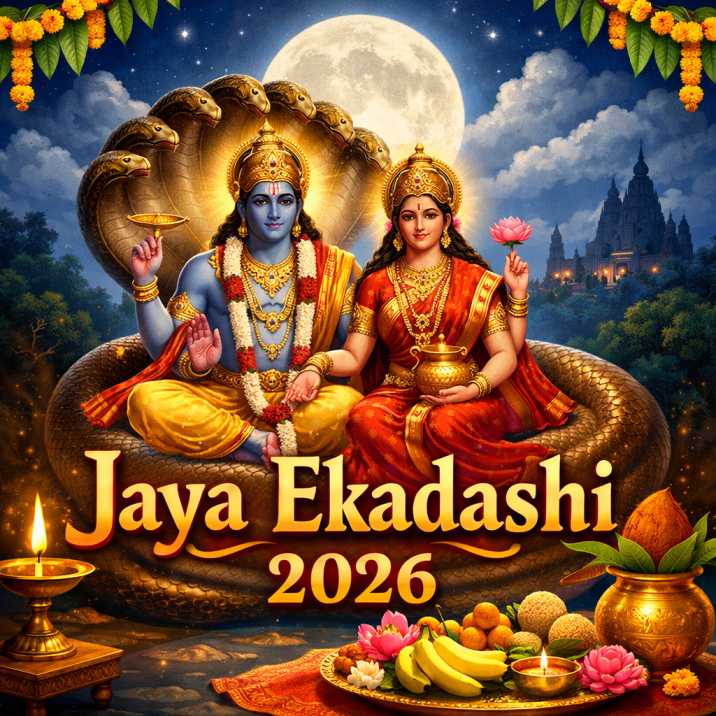
Jaya Ekadashi is one of the most spiritually significant Ekadashis in the Vedic calendar. Observed during the Shukla Paksha of Magha month, Jaya Ekadashi 2026 is traditionally associated with liberation from deep karmic burdens, including unresolved impressions from past lives. Ancient texts describe this Ekadashi as a powerful corrective point where discipline, awareness, and devotion realign a person’s karmic path.
In Vedic astrology, Ekadashi is closely linked with Vishnu tattva, lunar purification, and mind control. Jaya Ekadashi stands out because it addresses subtle karmas stored in the subconscious- patterns that often manifest as repeated struggles in health, relationships, or career. For modern life, its relevance lies in conscious detox mental, emotional, and behavioral, rather than blind ritualism.
Astrological and Scriptural Significance of Jaya Ekadashi
Why Is It Called the “Destroyer of Past-Life Sins”?
According to the Padma Purana, Lord Krishna explains to Yudhishthira that Jaya Ekadashi has the capacity to dissolve papa samskaras– latent karmic impressions that survive across lifetimes. These are not “sins” in a moral sense but unresolved actions and attachments.
A commonly cited reference states:
“जया नाम्ना महापुण्या सर्वपापप्रणाशिनी”
(Jaya Ekadashi destroys all accumulated karmic impurities)
From an astrological perspective, this aligns with the idea that Ekadashi helps neutralize Moon-related afflictions, which govern memory, habits, and emotional conditioning.
Planetary Logic Behind Jaya Ekadashi
Moon, Mind, and Karma
Ekadashi occurs on the 11th lunar day, when the Moon’s influence on the mind is unstable. Fasting and restraint during this period reduce sensory overload, allowing karmic patterns to surface and dissolve.
Key planetary associations include:
- Moon (Chandra): Controls subconscious memory and emotional karma
- Jupiter (Guru): Wisdom, dharma, and purification through knowledge
- Saturn (Shani): Past-life karmas and delayed consequences
Jaya Ekadashi works subtly on Saturn-Moon dynamics, especially for those facing recurring delays, fears, or emotional heaviness.
Zodiac Signs and Houses Most Influenced
While Jaya Ekadashi benefits everyone, certain zodiac signs may feel its impact more strongly in 2026:
- Capricorn & Aquarius: Relief from Saturn-related pressure and mental fatigue
- Cancer & Pisces: Emotional healing and clarity
- Scorpio: Release from obsessive thought patterns
Astrologically, the Ekadashi vibration supports purification of:
- 12th house: Past lives, moksha, subconscious
- 8th house: Deep karma, transformation
- 4th house: Emotional roots and mental peace
Jaya Ekadashi 2026 Fasting Rules (IST)
Jaya Ekadashi in 2026 falls in February (Magha Shukla Paksha) as per North Indian Panchang. Exact tithi timings may vary regionally and should be confirmed locally.
General observance (IST):
- Fasting period: Sunrise to next sunrise
- Parana (fast-breaking): On Dwadashi morning after sunrise (IST)
Simple, Practical Fasting Guidelines
- Avoid grains, beans, and heavy foods
- Prefer fruits, milk, nuts, and water
- Maintain mental discipline along with dietary restraint
Fasting is symbolic; it trains awareness and breaks habitual patterns rather than punishing the body.
Practical Remedies and Observances
Easy Remedies for Modern Life
You don’t need elaborate rituals to benefit from Jaya Ekadashi. Focus on consistency and intention:
- Read or listen to Vishnu Sahasranama or Narayana mantras
- Avoid gossip, anger, and overconsumption of media
- Practice silence (mauna) for a few hours
- Donate food or essentials the next day
Who Should Be Extra Mindful?
- People experiencing repetitive life blocks
- Those under Sade Sati or Dhaiya
- Individuals struggling with anxiety or emotional heaviness
These practices work as psychological and karmic resets, not superstition.
Real-Life Relevance of Jaya Ekadashi
In modern terms, Jaya Ekadashi is about interrupting unconscious patterns. Many people repeat the same mistakes not due to fate but due to unresolved conditioning. The discipline of Ekadashi creates a pause, a conscious reset point.
Astrologically, such pauses reduce the grip of malefic planetary cycles by strengthening free will (purushartha). Over time, this leads to improved emotional regulation, decision-making, and resilience.
Conclusion
Jaya Ekadashi 2026 is called the “Destroyer of Past-Life Sins” not because it magically erases destiny, but because it offers a structured method to dissolve unconscious karmic patterns. Rooted in lunar science, Saturnian karma theory, and Vishnu-centric philosophy, this Ekadashi emphasizes awareness over fear.
When observed with understanding rather than blind belief, Jaya Ekadashi becomes a powerful annual checkpoint, helping individuals realign with clarity, discipline, and inner stability. Even small, mindful observances can create lasting internal change.
FAQs on Jaya Ekadashi 2026
1. What is the main significance of Jaya Ekadashi?
Jaya Ekadashi is believed to dissolve deep-rooted karmic impressions affecting the present life.
Scriptures associate it with purification of subconscious tendencies rather than surface-level actions.
Tips:
- Focus on mental discipline
- Avoid impulsive reactions
- Reflect on recurring life patterns
2. Does Jaya Ekadashi really remove past-life sins?
It symbolically helps neutralize unresolved karmic patterns through awareness and restraint.
From an astrological view, it weakens Moon-Saturn stress influencing memory and fear.
Remedies:
- Fasting with awareness
- Mantra chanting
- Charity without expectation
3. Can working people observe Jaya Ekadashi?
Yes, with flexible and practical adaptations.
Even partial fasting or mental discipline yields benefits.
Suggestions:
- Eat light sattvic food
- Reduce screen time
- Maintain calm speech
4. Which mantra is best for Jaya Ekadashi?
Vishnu or Narayana mantras are traditionally recommended.
They align the mind with stability and clarity.
Simple options:
- “Om Namo Narayanaya”
- Vishnu Sahasranama (listening is enough)
5. What if I cannot fast on Jaya Ekadashi?
Intention matters more than strict fasting.
Self-control and conscious behavior still activate the Ekadashi principle.
Alternatives:
- Avoid grains
- Practice silence
- Donate food or time