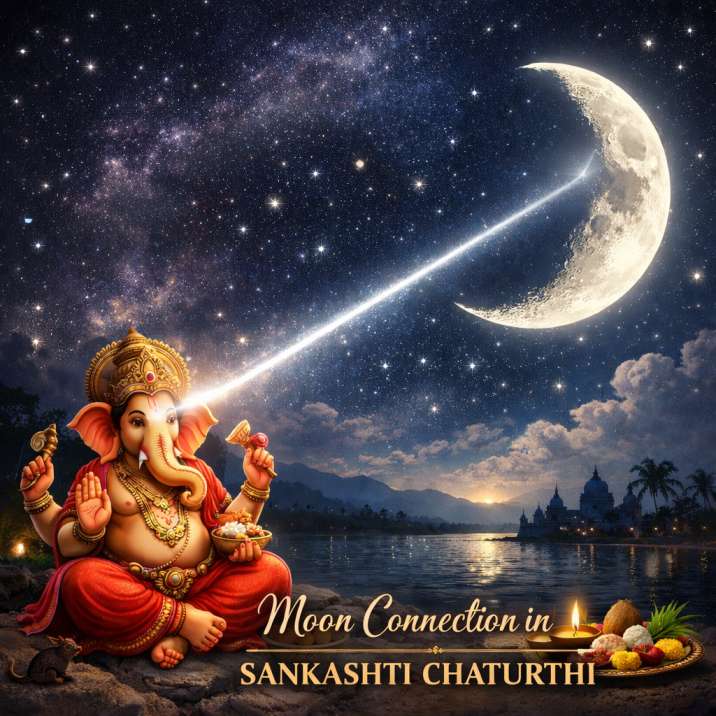
Sankashti Chaturthi is one of the most important monthly observances in Hindu tradition, dedicated to Lord Ganesha and deeply connected with the Moon (Chandra). Observed on the Krishna Paksha Chaturthi (fourth day of the waning Moon), this vrat is known for its unique rule: the fast is broken only after Moonrise (Chandrodaya), unlike many other fasts that end at sunrise or sunset.
From an astrological perspective, this practice is not symbolic alone; it is rooted in lunar energy, mind control, and karmic balance. In Vedic astrology, the Moon governs emotions, mental stability, and memory. Sankashti Chaturthi aligns personal discipline with lunar rhythms, making it both spiritually and psychologically significant in daily life.
Astrological Significance of Sankashti Chaturthi
Why Krishna Paksha Chaturthi Matters
In Vedic astrology, the waning Moon phase represents:
- Letting go of mental burdens
- Reducing emotional turbulence
- Detoxifying negative karmic patterns
The 4th lunar day (Chaturthi) is astrologically linked with obstacles, inner restlessness, and subconscious fears. Worshipping Lord Ganesha- the remover of obstacles, on this specific tithi helps balance these energies.
The Moon’s Role in Sankashti Chaturthi
Moon as the Controller of Mind
According to astrology, the Moon (Chandra):
- Rules the mind (Manas)
- Governs emotions, anxiety, and intuition
- Is associated with nourishment and rhythm
Fasting during Sankashti Chaturthi is believed to discipline the Moon-influenced mind, reducing impulsive reactions and emotional instability.
A commonly referenced idea from classical texts is:
“चन्द्रमा मनसो जातः” — the Moon is the source of the mind.
This makes lunar observances especially relevant for mental clarity and emotional balance.
Why Fasting Ends Only After Moonrise
Astrological Logic Behind Moonrise Timing
Ending the Sankashti fast after Moonrise (in IST, as per local Panchang) has a clear astrological basis:
- The vrat is performed for the Moon, not the Sun
- Energy completion occurs only when the Moon becomes visible
- Breaking the fast before Moonrise is considered astrologically incomplete
In simple terms, the ritual begins with restraint and ends with lunar acknowledgment.
Symbolic Meaning
Moonrise represents:
- Emotional illumination after inner discipline
- Completion of karmic effort
- Mental calm replacing restlessness
Only after sighting the Moon does the practitioner offer Arghya (water) and prayers to Lord Ganesha, aligning mind and intention.
Connection with Zodiac Signs and Houses
Zodiac Impact of the Moon
The Moon changes signs every ~2.25 days, affecting:
- Daily emotional tone
- Mental decision-making
- Relationship responses
Sankashti Chaturthi fasting is especially beneficial for individuals with:
- Weak Moon in birth chart
- Moon afflicted by Saturn, Rahu, or Ketu
- Moon placed in the 6th, 8th, or 12th house
House-Level Significance
- 4th House: Emotional peace, mother, inner stability
- 5th House: Mantra effectiveness, devotion
- 8th House: Removal of chronic obstacles and fears
Practical Benefits in Daily Life
Sankashti Chaturthi is not about superstition but mind–body rhythm:
- Fasting improves emotional awareness
- Waiting for Moonrise builds patience and control
- Regular observance enhances focus and resilience
Many people notice better sleep patterns, reduced anxiety, and improved emotional discipline over time.
Simple Remedies Linked to Sankashti Chaturthi
Astrological Remedies (Easy to Follow)
- Observe fast until Moonrise (as per IST Panchang)
- Chant “ॐ गं गणपतये नमः” 108 times
- Offer Durva grass to Lord Ganesha
- View the Moon calmly for a few minutes after Moonrise
For Strengthening the Moon
- Wear clean white or light-colored clothes
- Consume satvik food after fast
- Practice silence or reduced speech during fasting hours
These remedies are gentle and culturally rooted, suitable for modern lifestyles.
Traditional Reference (Contextual)
A commonly cited belief from regional vrat kathas states that Lord Ganesha himself advised observing Sankashti Chaturthi with Moon darshan for relief from mental and worldly obstacles. While interpretations vary, the core principle remains lunar discipline.
Conclusion
The Moon connection in Sankashti Chaturthi explains clearly why fasting ends only after Moonrise, it is a lunar vrat designed to align the mind with natural cosmic rhythms. Rooted in Vedic astrology, this practice emphasizes emotional balance, patience, and inner clarity rather than blind ritualism.
By synchronizing personal discipline with the Moon’s energy, Sankashti Chaturthi becomes a practical monthly reset for the mind. Whether followed for spiritual reasons or emotional well-being, its relevance remains strong in modern Indian life. Observing it with awareness turns tradition into a meaningful personal practice.
FAQs
1. Why is Sankashti Chaturthi fast broken after Moonrise?
Because Sankashti Chaturthi is a Moon-based vrat, and its energy cycle completes only after Moonrise.
Astrologically, the Moon governs the mind, and the vrat’s purpose is mental discipline. Breaking the fast before Moonrise interrupts this lunar alignment.
Tip: Always check local Moonrise timing in IST using a trusted Panchang.
2. What happens if Moonrise is not visible due to clouds?
The fast can be ended after the calculated Moonrise time if visual sighting is not possible.
Vedic practice prioritizes timing over visibility in such cases.
Tip: Offer prayers mentally and perform arghya facing the Moon’s direction.
3. Is Sankashti Chaturthi more important for people with weak Moon?
Yes, it is especially beneficial for those with a weak or afflicted Moon in their birth chart.
Regular observance can help stabilize emotions and improve mental clarity.
Remedy: Combine fasting with Monday Moon remedies for better results.
4. Can working professionals observe Sankashti Chaturthi?
Yes, even partial fasting or symbolic restraint can be effective.
Astrology values intention and consistency more than extreme austerity.
Tip: Avoid heavy foods and negative speech during the day.
5. Does Moon sign matter during Sankashti Chaturthi?
Yes, the Moon’s transit sign influences the emotional tone of the day.
However, the core benefit of the vrat remains unchanged across zodiac signs.
Tip: Use the day for emotional reflection rather than major decisions.