
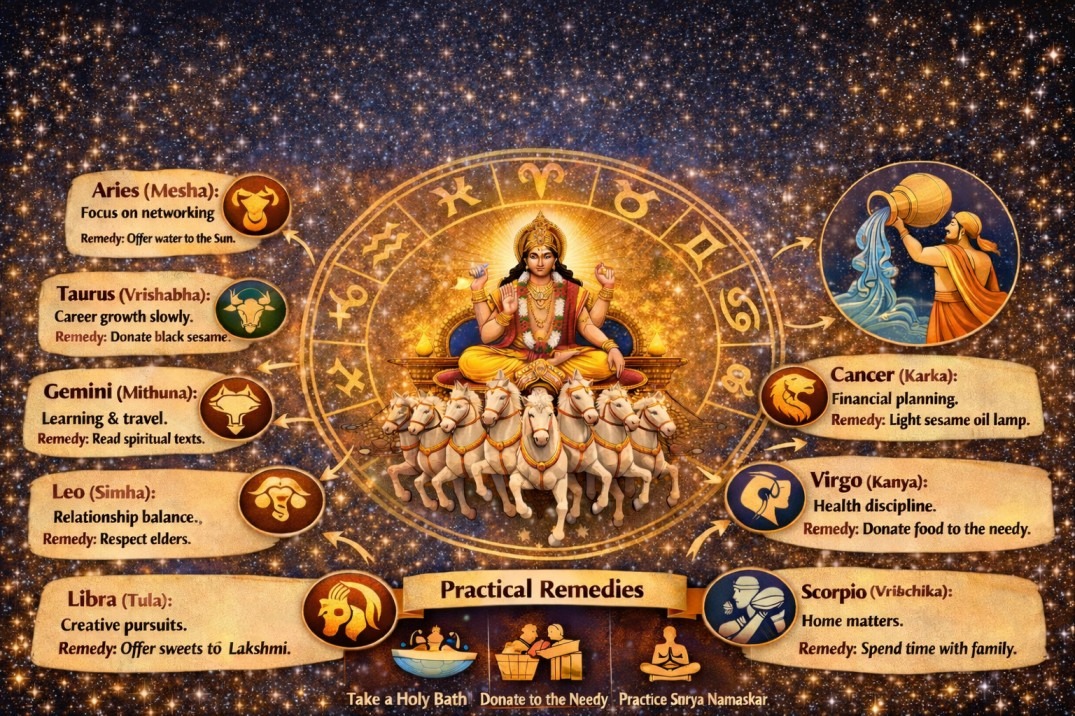
Kumbha Sankranti marks the Sun’s transit into Kumbha Rashi (Aquarius) in Vedic astrology, usually occurring around mid-February, most often between 11:00 AM and 1:00 PM IST, depending on the year. This solar transition holds cultural and astrological importance, especially in India, where Sankranti days are linked with charity, spiritual discipline, and seasonal shifts.
Astrologically, the Sun represents authority, vitality, leadership, and the soul’s purpose. When it enters Aquarius, ruled by Saturn-it moves into a sign associated with social responsibility, innovation, detachment, and collective thinking. This shift subtly changes priorities from personal ambition to community-oriented goals. Understanding the Kumbha Sankranti horoscope effect on all 12 Rashis helps individuals align decisions, habits, and expectations with the prevailing cosmic rhythm.
Astrological Significance of Kumbha Sankranti
Sun’s Transit into Aquarius
In Vedic astrology, the Sun’s movement from Makara (Capricorn) to Kumbha (Aquarius) signifies a shift from structured authority to reformative thinking.
- Ruling planet: Saturn (Shani)
- Nature of Aquarius: Logical, humanitarian, disciplined
- Theme: Society, long-term vision, collective progress
A commonly cited principle from classical texts reflects this balance of duty and detachment:
“न कर्मणामनारम्भान्नैष्कर्म्यं पुरुषोऽश्नुते” — reminding us that right action, not withdrawal, leads to balance.
Kumbha Sankranti Horoscope Effect on All 12 Rashis
Aries (Mesha)
- Focus shifts to networking and long-term goals.
- Career gains through group efforts rather than solo action.
Remedy: Offer water to the Sun at sunrise before 8:00 AM IST.
Taurus (Vrishabha)
- Professional responsibilities increase; recognition comes slowly.
- Patience with authority figures is essential.
Remedy: Donate black sesame or warm clothes on Saturday.
Gemini (Mithuna)
- Favorable for learning, travel, and higher knowledge.
- New ideas may challenge old beliefs.
Remedy: Read spiritual or philosophical texts on Sankranti day.
Cancer (Karka)
- Emotional transformation and financial planning come into focus.
- Good time to settle debts or restructure savings.
Remedy: Light a lamp with sesame oil after sunset around 6:30 PM IST.
Leo (Simha)
- Relationships demand maturity and balance.
- Partnerships improve with clear communication.
Remedy: Respect elders and mentors; avoid ego clashes.
Virgo (Kanya)
- Health routines and work discipline need attention.
- Small lifestyle changes yield long-term benefits.
Remedy: Maintain cleanliness and donate food to the needy.
Libra (Tula)
- Creativity, children, and emotional expression improve.
- Favorable for artists and students.
Remedy: Offer white sweets to Goddess Lakshmi on Friday.
Scorpio (Vrishchika)
- Domestic matters and property-related decisions arise.
- Emotional grounding is important.
Remedy: Spend time with family and avoid harsh speech.
Sagittarius (Dhanu)
- Communication and short travels increase.
- Good phase for writing, teaching, or counseling.
Remedy: Chant Guru mantras or practice gratitude in the morning.
Capricorn (Makara)
- Financial planning becomes a priority after recent Sun transit.
- Steady growth through disciplined efforts.
Remedy: Feed cows or donate grains before 10:00 AM IST.
Aquarius (Kumbha)
- Personal clarity and self-expression increase.
- Ideal time to redefine goals and identity.
Remedy: Serve a social cause or volunteer time.
Pisces (Meena)
- Spiritual reflection and rest are needed.
- Let go of emotional baggage.
Remedy: Meditate quietly for 10–15 minutes at dawn.
Practical Remedies for Kumbha Sankranti
- Take a holy bath before sunrise (ideally before 7:00 AM IST).
- Donate food, clothes, or utensils to the underprivileged.
- Practice Surya Namaskar or light stretching to honor solar energy.
- Avoid major confrontations on Sankranti day.
Conclusion
The Kumbha Sankranti horoscope effect on all 12 Rashis reflects a collective shift toward responsibility, balance, and future-oriented thinking. While individual outcomes vary based on personal charts, this solar transition encourages patience, social awareness, and ethical action. By adopting simple remedies and mindful habits, one can align daily life with the Sun’s Aquarian influence. Rather than predicting dramatic events, Kumbha Sankranti serves as a reminder to harmonize personal goals with collective well-being—a principle deeply rooted in Vedic wisdom.
FAQs
1. What is Kumbha Sankranti in astrology?
It is the Sun’s transit into Aquarius, marking a shift toward social awareness and disciplined thinking.
This transition emphasizes collective goals over personal ambition.
Tip: Focus on teamwork and long-term planning.
2. When does Kumbha Sankranti usually occur?
It typically occurs around mid-February between 11:00 AM and 1:00 PM IST.
Exact timing varies yearly due to astronomical calculations.
Tip: Check a Panchang for precise timings.
3. Is Kumbha Sankranti auspicious?
Yes, it is considered spiritually beneficial rather than materially dramatic.
Charity and self-discipline are emphasized.
Remedy: Donate food or clothes.
4. Which planet influences Kumbha Sankranti the most?
Saturn influences it as the ruler of Aquarius.
This brings themes of patience, duty, and realism.
Tip: Avoid shortcuts; follow ethical paths.
5. Can remedies really help during Sankranti?
Remedies help cultivate discipline and awareness, not instant miracles.
They align personal habits with planetary symbolism.
Remedy: Maintain consistency in simple practices.