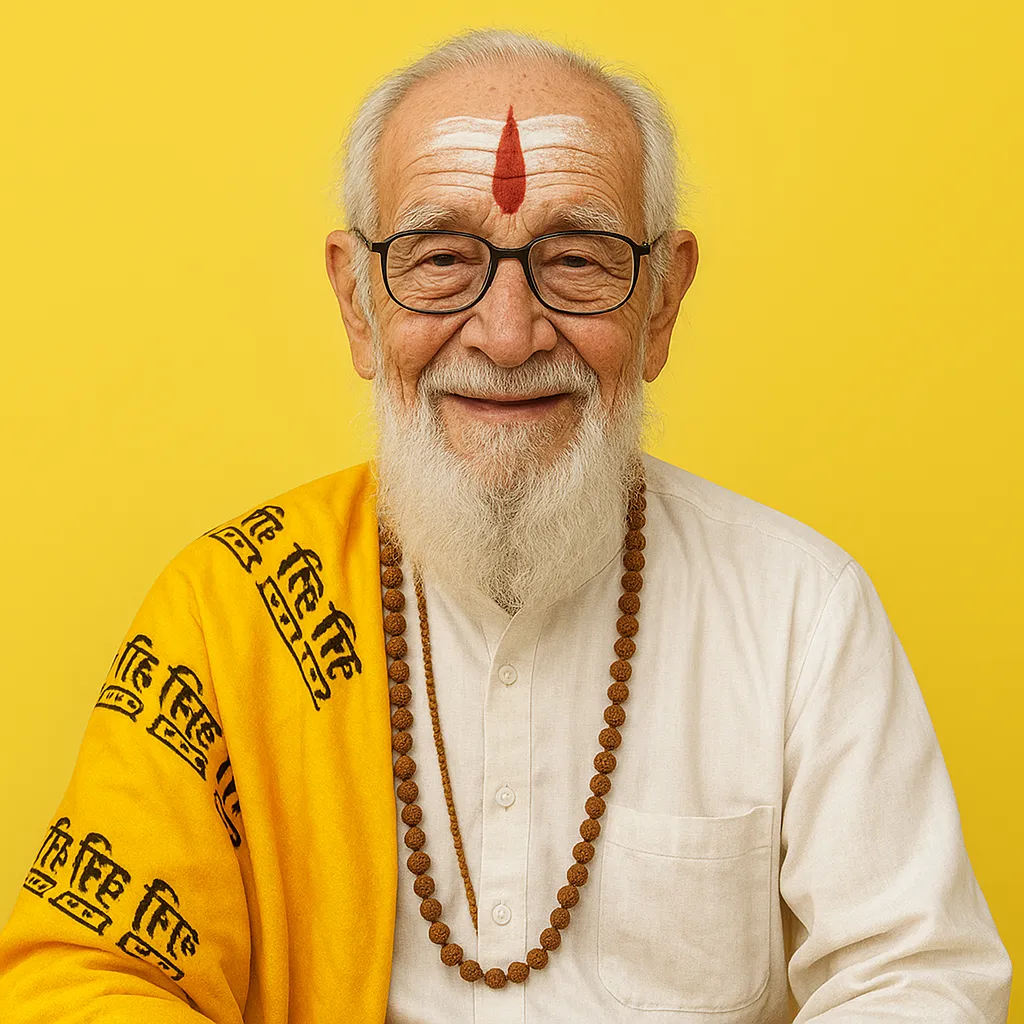
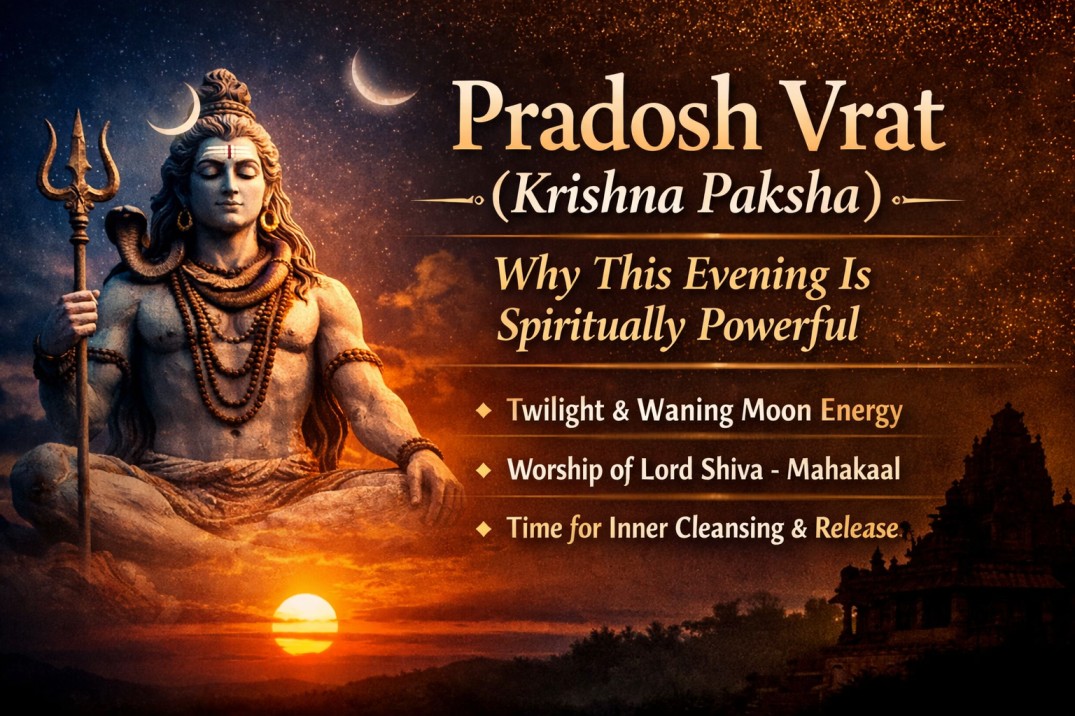
Pradosh Vrat (Krishna Paksha) is a significant Vedic observance dedicated to Lord Shiva, performed during the waning phase of the Moon. The word Pradosh refers to the twilight period after sunset, a time considered astrologically sensitive and spiritually potent. When this vrat falls in Krishna Paksha, it carries a deeper inward, karmic, and cleansing energy.
In Vedic astrology, evening hours combined with lunar depletion symbolize release of emotional burdens, past karmas, and unresolved mental patterns. For householders, professionals, and spiritual seekers alike, Pradosh Vrat offers a structured way to realign with discipline, clarity, and inner stability. Rather than blind belief, its relevance lies in planetary logic, circadian rhythm, and the symbolic psychology of letting go.
What Is Pradosh Vrat (Krishna Paksha)?
Pradosh Vrat is observed on the Trayodashi Tithi of Krishna Paksha, usually twice a month. Devotees fast or follow light dietary discipline and worship Lord Shiva during the Pradosh Kaal, approximately 1.5 hours before and after sunset (around 6:00 PM–8:30 PM IST, depending on location).
Why Krishna Paksha Matters
Krishna Paksha represents:
- Declining Moon energy
- Introspection and karmic clearing
- Closure rather than initiation
This makes Krishna Paksha Pradosh ideal for:
- Resolving long-standing issues
- Seeking relief from mental stress
- Spiritual detox rather than material gain
Astrological Logic Behind Pradosh Evening
Moon, Mind, and Twilight Energy
In astrology, the Moon governs:
- Emotions
- Subconscious patterns
- Mental stability
During Krishna Paksha, the Moon’s light reduces, symbolizing withdrawal from external noise. Pradosh Kaal, the meeting point of day and night, enhances this effect. Shiva, as Mahakaal, represents timeless awareness beyond fluctuations, making this window uniquely powerful.
Planetary Associations
Pradosh Vrat is especially relevant when one is facing:
- Moon-related stress (anxiety, mood swings)
- Saturn influence (delays, karmic pressure)
- Rahu–Ketu imbalance (confusion, instability)
Traditional texts suggest that Shiva worship during Pradosh harmonizes these energies gradually rather than dramatically.
Benefits of Observing Pradosh Vrat (Krishna Paksha)
Spiritual Benefits
- Enhances inner calm and emotional balance
- Encourages detachment from unhealthy attachments
- Improves focus in meditation and prayer
Practical Life Relevance
- Better decision-making under pressure
- Reduced impulsive reactions
- Emotional resilience during transitions
Who Benefits Most?
- Professionals facing stagnation
- Individuals with Moon or Saturn afflictions in their chart
- People seeking mental clarity rather than material expansion
Simple Pradosh Vrat Ritual (IST-Based)
You do not need elaborate arrangements. Consistency matters more than complexity.
Basic Steps
- Fasting: Optional partial fast or light sattvic food
- Timing: Shiva puja during Pradosh Kaal (approx. 6:00–8:30 PM IST)
- Offerings: Water, milk, bilva leaves, white flowers
- Mantra:
“ॐ नमः शिवाय” – chanted 108 times
Meaningful Shloka (Optional)
करचरण कृतं वाक्कायजं कर्मजं वा
श्रवणनयनजं वा मानसं वापराधम्
This shloka emphasizes surrender and forgiveness, aligning with Krishna Paksha’s theme of release.
Zodiac & Horoscope Insights
Signs That Benefit Strongly
- Cancer & Pisces: Emotional grounding
- Capricorn & Aquarius: Saturn balance
- Scorpio: Deep karmic cleansing
House-Level Impact
- 4th House: Mental peace and domestic harmony
- 8th House: Release of fears and hidden stress
- 12th House: Spiritual growth and better sleep patterns
Rather than instant results, Pradosh Vrat works cumulatively, much like disciplined meditation.
Practical Remedies Aligned With Modern Life
- Light a lamp with sesame oil on Pradosh evening
- Avoid arguments or harsh speech after sunset
- Spend 10 minutes in silence or breath awareness
- Journal what you wish to release emotionally
These practices align with neurological calming and traditional symbolism simultaneously.
Conclusion
Pradosh Vrat (Krishna Paksha) is not about fear or reward but about timing and awareness. Astrologically, it combines lunar withdrawal, twilight sensitivity, and Shiva’s stabilizing principle. Spiritually, it teaches pause, reflection, and conscious release—qualities often missing in modern life.
By observing this vrat with clarity rather than superstition, one can experience gradual mental balance, emotional maturity, and spiritual grounding. Even minimal, sincere practice during Pradosh Kaal can create noticeable inner shifts over time. The true power of this evening lies in what you choose to let go of.
SEO Tags
Pradosh Vrat, Krishna Paksha Pradosh, Lord Shiva Worship, Vedic Astrology Remedies, Hindu Fasting Rituals
FAQs
1. What makes Krishna Paksha Pradosh different from Shukla Paksha?
Answer: Krishna Paksha Pradosh focuses on release and introspection, while Shukla Paksha emphasizes growth.
It aligns with decreasing Moon energy, making it suitable for emotional cleansing rather than new beginnings.
Tip: Use this vrat to consciously drop negative habits or unresolved thoughts.
2. Is fasting mandatory on Pradosh Vrat?
Answer: No, fasting is optional and should suit your health and lifestyle.
Traditional texts prioritize mental discipline over physical austerity.
Tip: Even avoiding heavy food and distractions is sufficient.
3. Which planet is most influenced by Pradosh Vrat?
Answer: The Moon is most directly influenced, with secondary impact on Saturn.
This is why the vrat helps with stress, patience, and emotional maturity.
Remedy: Chant “Om Namah Shivaya” during Pradosh Kaal for lunar balance.
4. Can working professionals observe Pradosh Vrat effectively?
Answer: Yes, the vrat is highly adaptable to modern schedules.
A short evening prayer or silent reflection during Pradosh Kaal is enough.
Tip: Avoid multitasking during worship for better impact.
5. How soon can one see results from Pradosh Vrat?
Answer: Results are gradual and cumulative rather than immediate.
Like meditation or therapy, consistency matters more than intensity.
Reminder: Observe for inner calm first, not external outcomes.