
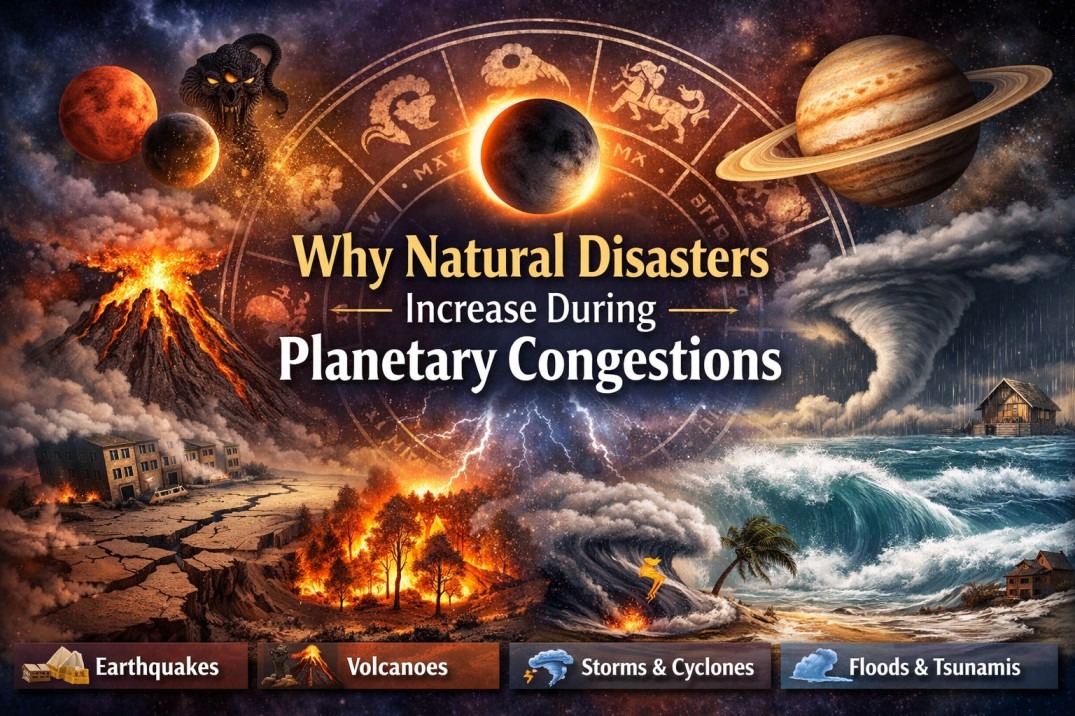
In Vedic astrology, planetary positions and their interactions are believed to influence not only personal life but also broader environmental patterns. Planetary congestions, when multiple planets cluster in one zodiac sign or house can intensify energies that affect the earth, atmosphere, and natural elements. These congestions are often linked to unusual weather patterns, earthquakes, floods, and other natural calamities.
Understanding these influences can help individuals and communities prepare better and harmonize their environment with astrological cycles. While astrology does not replace scientific forecasting, Vedic texts emphasize awareness of planetary cycles as a tool for mitigation and preparedness.
Planetary Influences Behind Natural Disasters
1. Key Planets Linked to Natural Events
- Mars (Mangal): Associated with fire, earthquakes, and volcanic activity. Mars in congestion or in critical degrees can amplify seismic movements.
- Rahu and Ketu: Nodes of the Moon often trigger sudden, unpredictable natural events like storms or tsunamis when in strong conjunctions with other planets.
- Saturn (Shani): Linked with slow-moving destruction, such as droughts, famines, or structural collapses. Saturn’s influence is felt when planets cluster with it in the 4th or 8th house.
- Jupiter (Guru): Expansionary planet; its congestion can lead to overflowing rivers, floods, and unusual rainfall patterns.
2. Zodiac Signs and Houses
- Aries and Scorpio: Mars-ruled signs can indicate fire-related disasters, volcanic eruptions, or intense storms.
- Cancer and Pisces: Water signs; congestion here may increase floods or cyclones.
- 8th House: Associated with sudden upheavals and transformations, including natural calamities.
- 12th House: Tied to loss and destruction; planetary congestion here can trigger global-scale environmental events.
How Planetary Yogas Intensify Natural Disasters
Certain planetary combinations, or yogas, indicate heightened environmental turbulence:
- Grahan Yoga (Eclipse-related congestion): Eclipses with multiple planets close to Rahu-Ketu often precede storms, cyclones, or seismic shifts.
- Shoola Yoga (Malefic conjunctions in the 8th house): Can indicate sudden calamities like earthquakes or volcanic eruptions.
- Chatushpada Yoga (Clustered planets in one sign): The energy accumulation can manifest as extreme weather events or environmental stress.
Practical Insights and Remedies
While planetary positions cannot be changed, Vedic astrology offers practical ways to harmonize energy and mitigate risks:
- Rituals and Prayers: Reciting Mangal or Shani mantras on specific days can reduce malefic impacts.
- Environmental Measures: Planting trees, conserving water, and community-based disaster preparedness can align human activity with planetary cycles.
- Astrological Planning: Avoid large-scale construction or critical projects during heavy planetary congestions, especially in 8th or 12th house periods.
- Personal Awareness: Strengthen personal and family safety measures during predicted periods of congestion.
Shloka Reference:
“सर्वे भवन्तु सुखिनः, सर्वे सन्तु निरामयाः।”
May all beings be happy and free from harm; an ancient Vedic prayer that promotes harmony with nature.
Conclusion
Planetary congestions in Vedic astrology act as an indicator of environmental stress and natural disturbances. Understanding these cycles allows individuals and communities to prepare better, adopt protective measures, and respect natural rhythms. While astrology provides insights, combining it with scientific awareness ensures a safer and more harmonious approach to natural disasters.
By staying mindful of planetary energies, practicing preventive remedies, and supporting environmental balance, we can reduce the risks associated with these cosmic patterns.
FAQs
1. How does planetary congestion cause natural disasters?
Planetary congestion amplifies cosmic energy in a particular zodiac or house, affecting Earth’s natural elements.
When multiple planets cluster, they create tension that can manifest as extreme weather, floods, earthquakes, or fires. Vedic astrology links specific planets to elements: Mars with fire, Saturn with slow-moving disasters, and Jupiter with water-related events.
Tips & Remedies:
-
Recite mantras for malefic planets
-
Plant trees and conserve water
-
Avoid critical projects during congested periods
2. Which planets are most responsible for natural calamities?
Mars, Saturn, Rahu, and Ketu are the key planetary influencers of environmental disturbances.
Mars often triggers fire or seismic events, Saturn indicates slow destruction like droughts, and Rahu-Ketu conjunctions can cause sudden storms or tsunamis. Observing these planetary cycles can help anticipate risks.
Tips & Remedies:
-
Monitor planetary transits in astrology apps
-
Perform Mangal or Shani puja
-
Strengthen community disaster awareness
3. Can astrology predict earthquakes or floods?
Astrology can indicate periods of heightened environmental stress but cannot precisely predict specific disasters.
Vedic texts associate natural calamities with critical planetary positions, houses, and yogas. While this guidance helps with preparedness, exact timing requires scientific observation and monitoring.
Tips & Remedies:
-
Combine astrological awareness with scientific alerts
-
Keep emergency supplies ready during high-risk periods
4. Are there mantras to reduce planetary congestion effects?
Yes, reciting specific mantras helps mitigate malefic effects of congested planets.
-
For Mars: “ॐ मंगलाय नमः”
-
For Saturn: “ॐ शनिाय नमः”
Regular chanting aligns personal energy with cosmic forces and promotes safety during turbulent periods.
Tips & Remedies:
-
Chant daily, ideally at sunrise or sunset (IST)
-
Combine with meditation and mindful practices
5. How can communities prepare during high planetary congestion periods?
Community preparedness is key to reducing disaster impact during planetary congestions.
Planning safe infrastructure, conducting disaster drills, and promoting environmental conservation align human activity with planetary cycles. Astrology serves as a reminder for proactive measures rather than fear.
Tips & Remedies:
-
Conduct local disaster preparedness workshops
-
Maintain emergency kits and shelters
-
Promote sustainable environmental practices