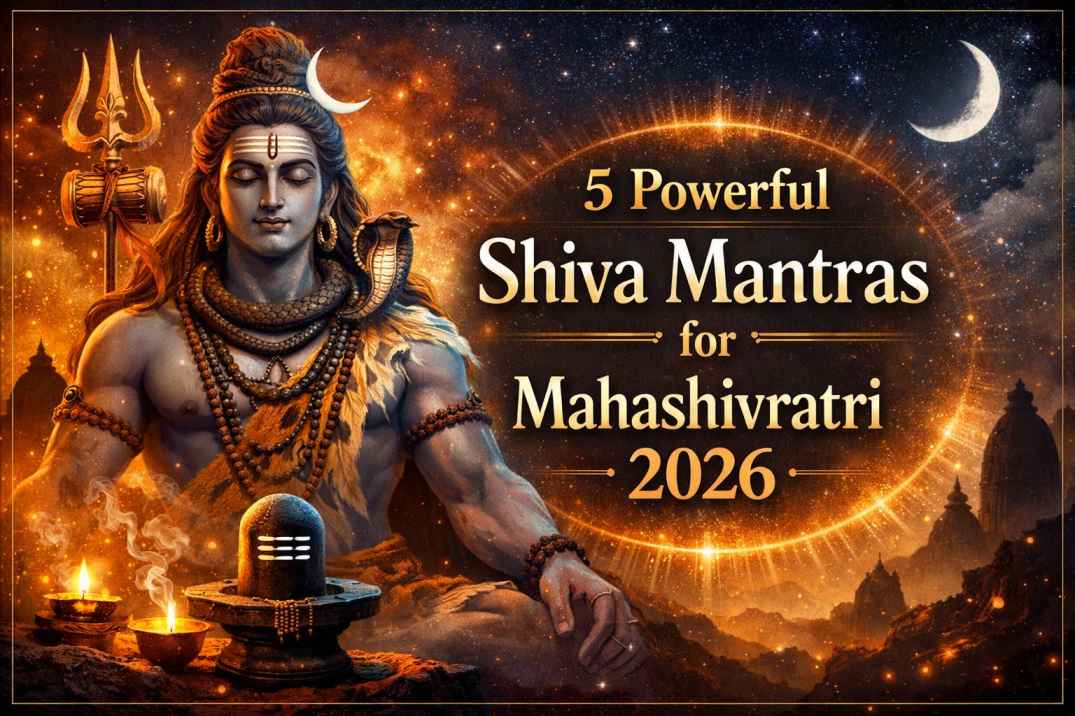
Mahashivratri is one of the most spiritually significant nights in Vedic tradition, dedicated to Lord Shiva; the symbol of transformation, inner stillness, and cosmic balance. In 2026, Mahashivratri falls on Sunday, 15 February 2026 (IST), a time astrologically linked with deep purification and karmic reset. According to Vedic astrology, planetary alignments during this night support meditation, mantra chanting, and spiritual remedies that calm the mind and strengthen life direction.
Chanting Shiva mantras is believed to stabilize the Moon (mind), pacify malefic planetary effects, and enhance inner resilience. For many people, these practices translate into practical outcomes- reduced stress, improved focus, better decision-making, and emotional balance. This guide presents five powerful Shiva mantras that can be chanted on Mahashivratri 2026 for peace, success, and protection, along with correct methods and timing in IST.
Why Mahashivratri Is Astrologically Powerful
Mahashivratri occurs on the Krishna Paksha Chaturdashi (14th lunar day) of the Phalguna month. On this night:
- The Moon is at its weakest phase, making the mind vulnerable yet receptive
- Spiritual practices help stabilize emotional fluctuations
- Fasting and chanting conserve energy and sharpen awareness
- Meditation is believed to yield faster results
The most auspicious time for Shiva worship is Nishita Kaal (midnight period), approximately 11:45 PM to 12:35 AM IST on Mahashivratri night. However, chanting throughout the night is considered beneficial.
5 Powerful Shiva Mantras for Mahashivratri 2026
1. Maha Mrityunjaya Mantra — For Protection & Healing
Mantra:
“ॐ त्र्यम्बकं यजामहे सुगन्धिं पुष्टिवर्धनम् ।
उर्वारुकमिव बन्धनान् मृत्योर्मुक्षीय माऽमृतात् ॥”
This ancient Vedic mantra is associated with protection from fear, illness, and negative influences. Astrologically, it is often recommended during difficult planetary periods (like Saturn or Rahu transits).
Benefits:
- Reduces anxiety and fear
- Supports physical and emotional healing
- Strengthens resilience during challenges
How to chant:
- 108 times during Nishita Kaal (around midnight IST)
- Sit facing east or north
- Use a Rudraksha mala if available
2. Om Namah Shivaya — For Inner Peace
Mantra:
“ॐ नमः शिवाय”
Known as the Panchakshari Mantra, this is the most widely chanted Shiva mantra. It balances the five elements within the body and calms the nervous system.
Benefits:
- Stabilizes emotions
- Improves concentration
- Brings mental clarity
Best time:
Any time during Mahashivratri, especially sunset to midnight IST
This mantra is ideal for beginners because it requires no complex rituals and can be repeated silently.
3. Rudra Gayatri Mantra — For Success & Wisdom
Mantra:
“ॐ तत्पुरुषाय विद्महे महादेवाय धीमहि
तन्नो रुद्रः प्रचोदयात् ॥”
This mantra invokes Shiva as Rudra—the force that removes obstacles and ignorance. It is often associated with career growth, leadership, and clarity of purpose.
Benefits:
- Enhances decision-making ability
- Supports professional progress
- Improves confidence
Recommended practice:
Chant 27 or 54 times during early morning hours of Mahashivratri, around 4:30 AM – 6:00 AM IST
4. Shiva Beej Mantra — For Energy & Protection
Mantra:
“ॐ हौं जूं सः”
Beej (seed) mantras carry concentrated vibrational energy. This mantra is traditionally used for spiritual protection and activation of inner strength.
Benefits:
- Creates a protective mental shield
- Boosts vitality
- Helps overcome fear and negativity
How to chant:
- Chant slowly with awareness of breath
- Ideal during meditation sessions at night
Because of its intensity, beginners should chant a limited number (11 or 21 repetitions).
5. Lingashtakam — For Blessings & Harmony
Opening verse:
“ब्रह्ममुरारि सुरार्चित लिङ्गम्
निर्मलभासित शोभित लिङ्गम् …”
This devotional hymn praises the Shiva Lingam as the symbol of cosmic creation and dissolution. Chanting it is believed to harmonize relationships and household energy.
Benefits:
- Promotes family peace
- Reduces conflicts
- Enhances spiritual connection
Best time:
During evening puja, around 6:00 PM – 8:00 PM IST
Practical Remedies for Mahashivratri 2026
To enhance the effect of mantra chanting:
- Observe a light fast or eat sattvic food
- Offer water or milk to a Shiva Lingam
- Avoid negative speech and distractions
- Practice silence or meditation for at least 10–15 minutes
- Stay awake if possible, as night vigil is considered auspicious
Even simple, sincere practice can bring noticeable psychological and emotional benefits.
Conclusion
Mahashivratri 2026 offers a rare opportunity to reset the mind, release accumulated stress, and align with deeper purpose. The five Shiva mantras discussed above address different aspects of life; peace, protection, success, healing, and harmony. While rooted in ancient tradition, their real-life impact often comes through improved emotional stability, clearer thinking, and disciplined intention.
Rather than viewing these practices as superstition, they can be approached as structured meditation tools that combine sound, breath, and focus. This Mahashivratri, choose one mantra that resonates with you and chant it mindfully during the auspicious hours (IST). Consistency matters more than perfection.
FAQs
1. Which mantra is best for beginners on Mahashivratri?
Om Namah Shivaya is the best mantra for beginners.
It is simple, safe, and requires no special initiation. The repetitive sound pattern naturally calms the mind and improves focus.
Tips:
- Chant silently if in a public space
- Maintain steady breathing
- Aim for at least 108 repetitions
2. What is the most powerful time to chant on Mahashivratri?
Nishita Kaal (around midnight IST) is considered the most powerful.
This period corresponds to peak spiritual stillness when distractions are minimal and concentration is naturally deeper.
Helpful practices:
- Sit in a quiet place
- Avoid phone use beforehand
- Light a lamp or candle if possible
3. Can I chant Shiva mantras without fasting?
Yes, fasting is optional but helpful.
Fasting reduces physical heaviness and supports mental alertness, but sincere chanting is effective regardless of diet.
Alternative approach:
- Eat light vegetarian food
- Avoid overeating
- Stay hydrated
4. How many times should I chant a mantra?
Traditionally, 108 repetitions are recommended.
However, even smaller counts done with full attention can be beneficial.
Common counts:
- 11 times — beginners
- 27 times — moderate practice
- 108 times — traditional full cycle
5. Do Shiva mantras help with stress and anxiety?
Yes, they function similarly to sound-based meditation.
Rhythmic chanting regulates breathing, slows heart rate, and reduces mental clutter, which can ease stress symptoms.
For best results:
- Chant daily for a few minutes
- Combine with slow breathing
- Practice at the same time each day