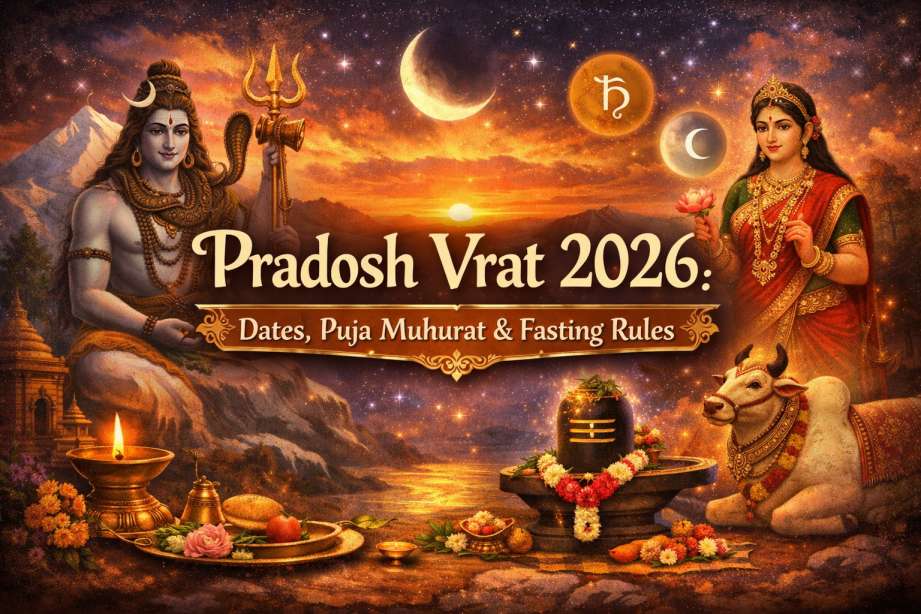
Pradosh Vrat is one of the most sacred fasts dedicated to Lord Shiva, observed twice every lunar month on Trayodashi Tithi (13th day) during the evening twilight period known as “Pradosh Kaal.” In Vedic astrology, this time is believed to be highly charged with spiritual energy, making prayers more effective. Devotees fast, perform Shiva puja, and seek blessings for health, prosperity, and removal of obstacles.
In daily life, Pradosh Vrat is often observed for marital harmony, financial stability, and relief from karmic burdens. Many believe that sincere worship during Pradosh can balance planetary influences, especially those related to Saturn (Shani) and Moon (Chandra). The vrat is accessible to everyone and does not require elaborate rituals, making it popular across India.
Pradosh Vrat 2026 Dates (IST)
Pradosh Vrat occurs twice each month during Shukla Paksha (waxing moon) and Krishna Paksha (waning moon).
Important Pradosh Vrat Dates in 2026 (IST):
- January 1 — Shukla Pradosh (Thursday)
- January 16 — Krishna Pradosh (Friday)
- January 30 — Shukla Pradosh (Friday)
- February 14 — Krishna Pradosh (Saturday) — Shani Pradosh
- February 28 — Shukla Pradosh (Saturday) — Shani Pradosh
- March 15 — Krishna Pradosh (Sunday)
- March 29 — Shukla Pradosh (Sunday)
- April 13 — Krishna Pradosh (Monday) — Som Pradosh
- April 27 — Shukla Pradosh (Monday) — Som Pradosh
- May 12 — Krishna Pradosh (Tuesday) — Bhaum Pradosh
- May 27 — Shukla Pradosh (Wednesday)
- June 10 — Krishna Pradosh (Wednesday)
- June 25 — Shukla Pradosh (Thursday)
- July 9 — Krishna Pradosh (Thursday)
- July 24 — Shukla Pradosh (Friday)
- August 7 — Krishna Pradosh (Friday)
- August 22 — Shukla Pradosh (Saturday) — Shani Pradosh
- September 5 — Krishna Pradosh (Saturday) — Shani Pradosh
- September 20 — Shukla Pradosh (Sunday)
- October 4 — Krishna Pradosh (Sunday)
- October 19 — Shukla Pradosh (Monday) — Som Pradosh
- November 2 — Krishna Pradosh (Monday) — Som Pradosh
- November 18 — Shukla Pradosh (Wednesday)
- December 2 — Krishna Pradosh (Wednesday)
- December 17 — Shukla Pradosh (Thursday)
- December 31 — Krishna Pradosh (Thursday)
Puja Muhurat (IST)
Pradosh Kaal Timing
Pradosh Kaal typically falls around 1.5 hours before and after sunset.
- Approximate window: 5:30 PM – 8:00 PM IST
- Exact timing varies by location and date
- Most auspicious moment: During twilight when day transitions into night
Astrologically, this sandhya period balances solar and lunar energies, symbolizing inner harmony.
Astrological Significance of Pradosh Vrat
In Vedic astrology, Lord Shiva is associated with transformation, karma dissolution, and higher consciousness.
Planetary Connections
- Saturn (Shani): Shani Pradosh is believed to reduce hardships, delays, and karmic burdens
- Moon (Chandra): Helps stabilize emotions and mental peace
- Mars (Mangal): Bhaum Pradosh is linked to courage and marital harmony
- Ascendant & 8th House: Worship is said to protect from sudden obstacles
Pradosh fasting is often recommended during challenging planetary periods such as Sade Sati or difficult Saturn transits.
Pradosh Vrat Vidhi (Step-by-Step Ritual)
Morning Preparation
- Wake up early and take a bath
- Clean the home and puja area
- Take a sankalp (vow) to observe the fast
During the Day
- Observe fast — full or partial
- Maintain calm behavior and avoid negativity
- Chant Shiva mantras or listen to spiritual texts
Evening Puja (Pradosh Kaal)
- Bathe again before sunset
- Set up Shiva Lingam or image
- Offer the following:
- Water and milk abhishek
- Bilva (Bel) leaves
- White flowers
- Sandalwood paste
- Fruits and sweets
- Light a diya and incense
- Chant mantras such as:
“ॐ नमः शिवाय” - Perform aarti and circumambulation
Fasting Rules for Pradosh Vrat
Fasting discipline varies based on personal capacity.
Common Fasting Types
- Nirjala: No food or water (strict)
- Phalahar: Fruits, milk, nuts allowed
- Satvik Meal Once: After evening puja
Foods Allowed
- Fruits, milk, curd
- Sabudana, makhana, nuts
- Rock salt (sendha namak)
Foods to Avoid
- Grains and pulses
- Onion and garlic
- Non-vegetarian food
- Alcohol or stimulants
Breaking the fast after puja with satvik food is considered ideal.
Practical Benefits & Real-Life Relevance
Devotees observe Pradosh Vrat for both spiritual and practical reasons.
Believed Benefits
- Mental peace and emotional stability
- Improvement in marital relationships
- Relief from financial stress
- Removal of obstacles in career
- Protection from negative influences
From a psychological perspective, fasting combined with meditation promotes discipline, mindfulness, and emotional control.
Types of Pradosh Vrat
Each weekday Pradosh has unique significance:
- Som Pradosh (Monday): Health and peace
- Bhaum Pradosh (Tuesday): Strength and marriage matters
- Shani Pradosh (Saturday): Karma relief and stability
- Guru Pradosh (Thursday): Wisdom and prosperity
Conclusion
Pradosh Vrat 2026 offers multiple opportunities throughout the year to connect with spiritual discipline and inner balance. Observed during the powerful twilight phase, this vrat combines fasting, prayer, and self-reflection. Whether approached from a devotional or astrological perspective, it encourages restraint, mindfulness, and positive intention.
Rather than viewing it as mere ritual, Pradosh Vrat can be seen as a structured method to pause from routine life and reset mentally and emotionally. If performed sincerely, it may bring clarity, calmness, and resilience in facing life’s challenges. Consider starting with one Pradosh that aligns with your intention and observe its impact on your well-being.
FAQs
1. What is the main purpose of Pradosh Vrat?
Pradosh Vrat is observed to seek blessings for health, prosperity, and removal of obstacles.
It is believed that worship during Pradosh Kaal enhances spiritual merit and reduces karmic burdens. Many devotees observe it for marital harmony or relief from difficult planetary influences.
Helpful tips:
- Maintain a calm mindset
- Perform sincere prayer rather than elaborate rituals
- Focus on positive intentions
2. Can anyone observe Pradosh Vrat?
Yes, the vrat can be observed by men, women, and even elderly people with suitable modifications.
Strict fasting is not mandatory; devotees may choose fruit-based or partial fasting depending on health. The emphasis is on devotion and discipline rather than physical hardship.
Suggested approach:
- Choose fasting type based on health
- Stay hydrated if needed
- Consult a doctor if you have medical conditions
3. What is Shani Pradosh and why is it important?
Shani Pradosh occurs when Pradosh falls on Saturday and is considered especially powerful for karmic relief.
Traditionally, it is associated with easing Saturn-related challenges such as delays, financial strain, or prolonged struggles. Many people observe this vrat during Sade Sati.
Recommended practices:
- Light a sesame oil lamp
- Pray for patience and stability
- Engage in acts of charity
4. When should the fast be broken?
The fast is typically broken after the evening puja during Pradosh Kaal.
Some devotees wait until the next day depending on tradition. Breaking the fast with satvik food helps maintain the spiritual intent of the vrat.
Best foods to break fast:
- Fruits or milk
- Light khichdi (if allowed)
- Nuts or prasad
5. Is visiting a temple necessary for Pradosh Vrat?
No, the puja can be performed at home with equal devotion.
While temple visits enhance the collective spiritual atmosphere, sincere worship at home is considered equally effective. Many people perform simple abhishek with available items.
Home puja tips:
- Keep the space clean and peaceful
- Use minimal but pure offerings
- Focus on mantra chanting and meditation