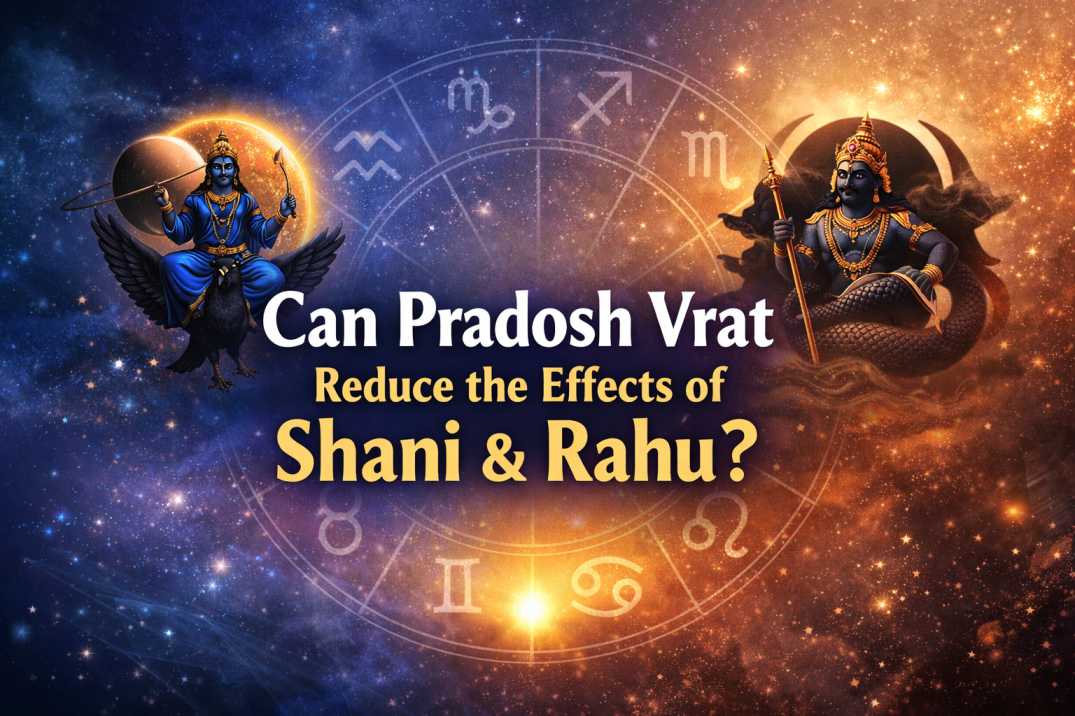
In Vedic astrology, challenging planetary influences; especially from Shani (Saturn) and Rahu (North Node) are often linked with delays, obstacles, anxiety, karmic lessons, and sudden upheavals. Many traditional remedies focus on strengthening inner discipline and spiritual grounding rather than “removing” karma entirely. One such widely observed practice is Pradosh Vrat, a sacred fast dedicated to Lord Shiva, observed twice a month during the Trayodashi tithi (13th lunar day).
Astrologically, Pradosh Vrat is believed to balance karmic energies, calm malefic planetary effects, and promote mental stability. For people facing Shani Sade Sati, Dhaiya, or Rahu Mahadasha, this vrat is often recommended as a gentle yet powerful spiritual remedy relevant to daily life.
What Is Pradosh Vrat and When Is It Observed?
Pradosh Vrat falls on the evening of Trayodashi in both Shukla Paksha and Krishna Paksha. The key worship period is Pradosh Kaal, which occurs around sunset.
Pradosh Kaal timing: Approximately 1.5 hours before and after sunset (IST).
Devotees typically perform puja between 4:30 PM and 7:30 PM IST, depending on the season.
The fast involves:
- Day-long fasting (full or partial)
- Evening Shiva worship
- Lighting lamps
- Chanting mantras
- Offering water, milk, and bilva leaves
Why Is Pradosh Vrat Linked to Shani and Rahu?
Shani’s Influence in Astrology
Shani represents karma, discipline, justice, delays, and endurance. Difficult placements can manifest as:
- Career stagnation
- Financial pressure
- Loneliness or isolation
- Chronic obstacles
- Legal or responsibility burdens
Shani rewards patience and sincerity. Since Lord Shiva is considered Shani’s guru and protector, worshipping Shiva is believed to soften Saturn’s harsh lessons.
Rahu’s Influence in Astrology
Rahu governs illusion, obsession, sudden events, foreign connections, and unconventional paths. When afflicted, it can cause:
- Anxiety and confusion
- Addictions or compulsions
- Sudden rise and fall
- Relationship instability
- Fear or uncertainty
Shiva worship is said to stabilize the mind, reducing Rahu’s chaotic influence.
Astrological Logic Behind Pradosh Vrat
Rather than “cancelling” planetary effects, Pradosh Vrat works through psychological and spiritual alignment.
1. Strengthens Saturnian Qualities
Shani favors discipline, humility, and service qualities cultivated through fasting and prayer.
How the vrat helps:
- Builds patience and endurance
- Encourages minimalism and restraint
- Promotes responsibility and reflection
2. Calms the Mind (Countering Rahu)
Rahu amplifies restlessness and fear. Structured rituals reduce mental turbulence.
Benefits include:
- Emotional stability
- Reduced impulsiveness
- Better decision-making
- Improved focus
3. Balances the Moon’s Energy
Since Pradosh occurs in the lunar cycle, it also influences emotional patterns governed by the Moon—often disturbed during Rahu periods.
4. Encourages Positive Karma
Shani responds strongly to ethical behavior.
Many devotees combine the vrat with:
- Charity to the poor
- Feeding animals
- Acts of service
- Forgiveness practices
Practical Ways Pradosh Vrat May Reduce Difficult Effects
During Shani Sade Sati or Dhaiya
Regular observance can help manage the psychological weight of this period.
Possible benefits:
- Greater resilience during delays
- Acceptance of life lessons
- Improved work ethic
- Reduction in fear about the future
During Rahu Mahadasha or Antardasha
Rahu periods often bring instability. The vrat provides grounding.
You may notice:
- Reduced anxiety
- Clearer thinking
- Less attraction toward risky choices
- Improved sleep patterns
For Career and Financial Stress
Since both Shani and Rahu affect professional life, devotees often report gradual improvement in:
- Consistency at work
- Decision clarity
- Long-term planning ability
Simple Pradosh Vrat Ritual (Home-Friendly)
You don’t need elaborate arrangements. A sincere, simple practice is considered sufficient.
Step-by-step guide (IST):
- Wake early and take a bath.
- Observe fast (water, fruits, or one meal depending on health).
- Clean the puja area in the evening.
- Begin worship during Pradosh Kaal (around sunset).
- Offer water, milk, bilva leaves to Shiva.
- Light a diya with sesame oil or ghee.
- Chant mantras such as:
ॐ नमः शिवाय
- Perform aarti and break the fast after prayer.
Important Considerations (Avoid Misconceptions)
- Pradosh Vrat does not erase karma instantly.
- Results are gradual and subtle.
- Consistency matters more than intensity.
- It should complement practical actions, not replace them.
From an E-E-A-T perspective, traditional texts emphasize inner transformation rather than miracle outcomes.
Conclusion
Pradosh Vrat is less about “neutralizing planets” and more about aligning oneself with patience, discipline, and inner stability—qualities that naturally reduce the difficult manifestations of Shani and Rahu. By fostering calmness, responsibility, and ethical living, the vrat can make challenging planetary periods more manageable.
For modern life, its greatest benefit may be psychological resilience and spiritual grounding. If observed sincerely and consistently—along with practical effort—it can become a powerful tool for navigating karmic cycles with clarity and strength.
FAQs Section
1. Can Pradosh Vrat completely remove Shani dosha?
No, it cannot remove Shani dosha entirely but can reduce its harsh effects.
Shani represents karmic lessons that must be experienced. Spiritual practices like Pradosh Vrat help individuals develop patience and discipline, which align with Saturn’s energy and reduce suffering.
Helpful additions:
- Maintain honesty in work
- Avoid shortcuts or unethical gains
- Donate to the needy on Saturdays
2. Does Pradosh Vrat help during Rahu Mahadasha?
Yes, it can help stabilize the mind and reduce confusion during Rahu periods.
Rahu amplifies fear and unpredictability. Regular worship and fasting create routine and grounding, which counteracts Rahu’s chaotic influence.
Supportive practices:
- Meditation or breathing exercises
- Avoid intoxicants
- Maintain structured daily habits
3. How many Pradosh Vrats are needed to see results?
There is no fixed number; consistency over months matters more than counting.
Some people observe 11, 21, or 108 Pradosh fasts, but traditional belief emphasizes sincerity and regularity.
For best outcomes:
- Choose sustainable fasting style
- Maintain positive behavior
- Combine with prayer and service
4. Can anyone observe Pradosh Vrat?
Yes, it is generally safe for most people regardless of age or gender.
However, those with health conditions should opt for a partial fast (fruits, milk, or one meal) instead of strict fasting.
Health-friendly approach:
- Stay hydrated
- Avoid extreme fasting
- Consult a doctor if needed
5. Is evening worship essential for Pradosh Vrat?
Yes, the main puja should ideally be done during Pradosh Kaal around sunset (IST).
The spiritual significance of the vrat is tied to this specific twilight period, believed to be highly conducive for Shiva worship.
If timing is difficult:
- Perform a shorter puja at home
- Chant mantras during sunset
- Maintain devotion even with simple rituals