
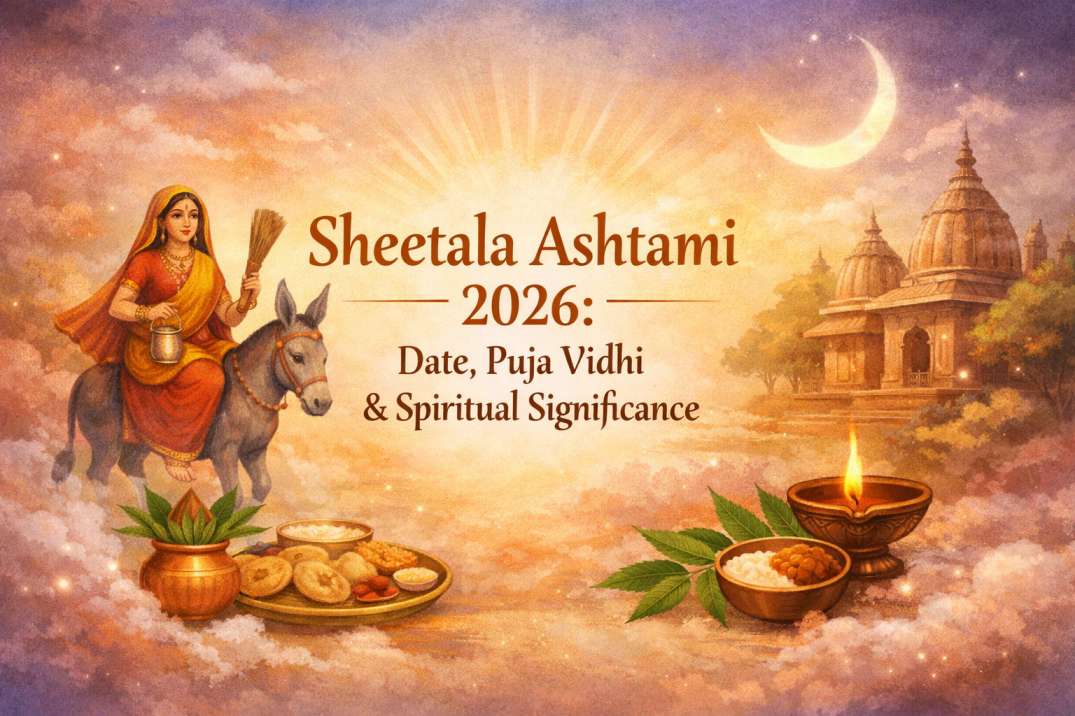
Sheetala Ashtami is an important Hindu festival dedicated to Goddess Sheetala, revered as the divine protector against infectious diseases and seasonal illnesses. Observed mainly in North and Central India after Holi, the festival reflects ancient health wisdom blended with spiritual devotion.
In the Hindu Panchang, Sheetala Ashtami falls on the Krishna Paksha Ashtami of the Chaitra month. In 2026, it will be observed on Wednesday, 11 March 2026. The Ashtami Tithi begins at 01:54 AM IST on 11 March and ends at 04:19 AM IST on 12 March, while the auspicious puja window lasts roughly from 06:36 AM to 06:27 PM IST.
Astrologically, this observance symbolizes purification, emotional cooling, and health protection as the Moon transitions through the waning phase after Holi. The rituals highlight discipline, gratitude, and respect for nature’s healing cycles.
Sheetala Ashtami 2026: Date and Timings (IST)
| Event | Date & Time (IST) |
| Sheetala Ashtami | 11 March 2026 (Wednesday) |
| Ashtami Tithi Begins | 01:54 AM, 11 March 2026 |
| Ashtami Tithi Ends | 04:19 AM, 12 March 2026 |
| Puja Muhurat | 06:36 AM – 06:27 PM |
Sheetala Saptami, observed a day earlier, falls on 10 March 2026, when devotees prepare food offerings for the next day.
Astrological Meaning of Sheetala Ashtami
Lunar Energy and Seasonal Transition
Sheetala Ashtami occurs during the Krishna Paksha (waning Moon phase). In Vedic astrology, this phase represents:
- Detoxification and purification
- Emotional release and healing
- Cooling down excess energy after festive celebrations like Holi
The symbolic “cooling” theme aligns with the name Sheetala, meaning one who cools or calms.
Planetary Symbolism
From an astrological perspective:
- Moon: Governs emotional and physical health.
- Mars: Represents heat, infections, and inflammatory conditions.
- Saturn: Represents discipline and karmic cleansing.
Traditional rituals aim to balance lunar energy and reduce Mars-related “heat” in the body, symbolically protecting families from illness.
Cultural and Health Logic
Historically, the festival emerged when seasonal diseases such as smallpox or measles were common during spring. Worship of Sheetala Mata served both spiritual and preventive roles. Devotees believe her blessings bring health protection and family wellbeing.
Sheetala Ashtami Puja Vidhi (Step-by-Step)
The rituals are simple and rooted in traditional household practices.
1. Preparation on Sheetala Saptami
Food is prepared the night before the festival.
Common offerings include:
- Puri or roti
- Sweet rice or kheer
- Halwa
- Curd and jaggery
- Seasonal vegetables
These dishes are stored overnight and offered the next morning.
2. Morning Rituals
On Sheetala Ashtami morning:
- Wake up early and take a bath.
- Wear clean, preferably light-coloured clothes.
- Visit a temple of Sheetala Mata or worship at home.
3. Worship Procedure
- Place the idol or image of Sheetala Mata.
- Offer cold or previously prepared food (Basoda).
- Light incense or diya.
- Offer neem leaves, water, and flowers.
A simple prayer often recited is:
“वन्देऽहं शीतलां देवीं रासभस्थां दिगम्बराम्।”
(I bow to Goddess Sheetala, who rides a donkey and protects from diseases.)
4. No Fresh Cooking
Traditionally:
- The stove is not lit on this day.
- Families eat the previously prepared food as prasad, symbolizing discipline and cooling energy.
Rituals and Traditions (Basoda Festival)
Sheetala Ashtami is also called Basoda in many regions.
Key traditions include:
- Eating food prepared the previous day
- Offering neem leaves to the goddess
- Visiting Sheetala Mata temples
- Listening to Sheetala Vrat Katha
- Avoiding hot or spicy food
Symbolic Meaning of “Cold Food”
Modern researchers also suggest that mildly fermented food kept overnight can contain beneficial microbes that support digestion and immunity.
Thus, the festival combines spiritual symbolism with seasonal health wisdom.
Astrological Remedies for Health and Peace
Devotees often follow simple remedies during Sheetala Ashtami.
Spiritual Remedies
- Offer neem leaves to Sheetala Mata.
- Donate curd, rice, or jaggery to the needy.
- Recite the Sheetala Ashtami Vrat Katha.
Astrological Remedies
- Avoid anger or heated arguments.
- Consume simple, cooling foods.
- Practice meditation or prayer for emotional balance.
Household Remedies
- Keep neem leaves at the entrance.
- Clean and purify the house with water mixed with neem.
These practices symbolically reduce Mars-related heat and negative energies.
Real-Life Relevance in Modern Times
In today’s context, Sheetala Ashtami highlights:
- Seasonal health awareness
- Hygienic food practices
- Community prayer and gratitude
The festival reminds people to respect natural cycles and maintain balance between body, mind, and environment.
While ancient traditions connected the goddess with epidemic protection, modern readers can see the deeper message: discipline, preventive care, and spiritual mindfulness.
Conclusion
Sheetala Ashtami 2026, observed on 11 March, carries deep spiritual and cultural significance. Through simple rituals, devotees seek protection, purification, and family wellbeing.
Astrologically, the festival reflects the cooling and cleansing energy of the waning Moon after Holi. Its traditions—like eating pre-cooked food and honoring nature—demonstrate how ancient wisdom addressed both health and spirituality.
In a fast-paced modern life, Sheetala Ashtami offers a gentle reminder: sometimes healing begins with simplicity, gratitude, and mindful living.
FAQs
1. When is Sheetala Ashtami in 2026?
Sheetala Ashtami will be observed on Wednesday, 11 March 2026.
The Ashtami Tithi begins at 01:54 AM IST on 11 March and ends at 04:19 AM IST on 12 March, with puja performed during the daytime on March 11.
The festival follows the sunrise rule in the Hindu calendar.
Tips:
- Perform puja during the morning hours if possible.
- Begin preparation on Sheetala Saptami (10 March 2026).
2. Why is stale food eaten on Sheetala Ashtami?
Eating food prepared the previous day symbolizes the cooling nature of Goddess Sheetala.
Traditionally, the festival discourages lighting the stove to represent calmness and discipline. It also reflects ancient seasonal practices during the transition from spring to summer.
Practical Insights:
- Consume simple, sattvic food.
- Avoid freshly cooked or spicy dishes.
- Offer the food first to the deity before eating.
3. What is the spiritual significance of Sheetala Mata?
Sheetala Mata is worshipped as the goddess who protects devotees from infectious diseases and seasonal illnesses.
Historically, communities prayed to her during times when epidemics like smallpox were common, seeking divine protection and healing.
Symbolic Meaning:
- Healing energy
- Purification
- Protection from illness
4. What are the main rituals of Sheetala Ashtami?
The main rituals include early morning worship, offering Basoda food, and reciting prayers dedicated to Sheetala Mata.
These rituals emphasize simplicity and devotion rather than elaborate ceremonies.
Common Ritual Steps:
- Bath early in the morning
- Offer cold food and neem leaves
- Listen to Sheetala Vrat Katha
- Share prasad with family members
5. What are some astrological remedies for health on this day?
Simple remedies focus on calming planetary energies associated with heat and illness.
In astrology, reducing Mars-related heat and balancing Moon energy is considered beneficial.
Remedies to Follow:
- Donate cooling foods like curd or rice
- Avoid anger and stressful conversations
- Practice meditation or chanting
- Keep neem leaves in the home