
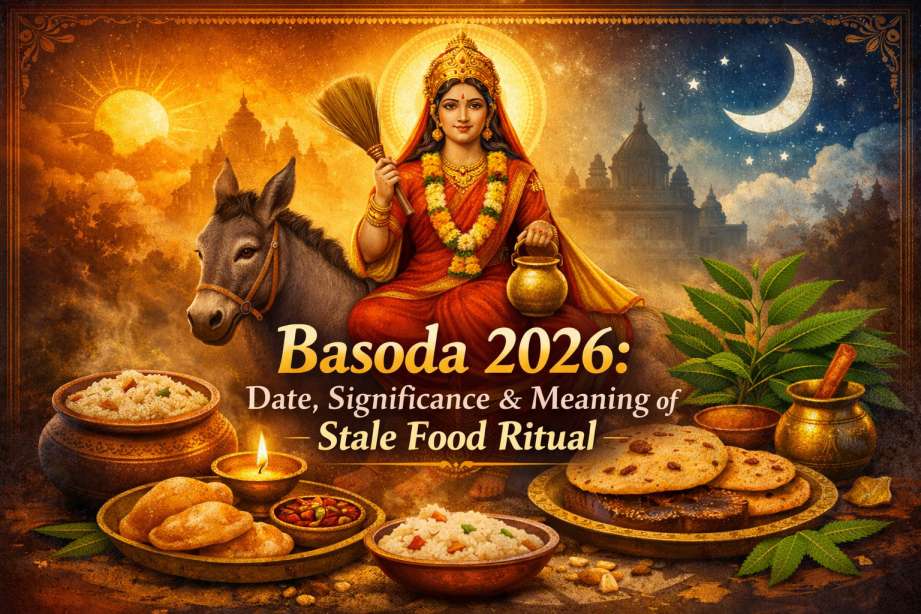
Basoda, also known as Sheetala Ashtami, is a traditional Hindu festival dedicated to the worship of Goddess Sheetala—the divine protector from heat-related diseases and epidemics. The festival is widely celebrated in northern and western India, especially after the festival of Holi.
In 2026, Basoda will be observed on Wednesday, 11 March 2026 (IST). The Ashtami Tithi begins at 01:54 AM on 11 March and ends at 04:19 AM on 12 March IST, making 11 March the main day for the vrat and puja.
The most unique feature of this festival is that devotees prepare food a day before and offer “stale” or cold food to the goddess, symbolizing calmness, health protection, and seasonal transition. While the ritual appears unusual, both spiritual symbolism and practical logic lie behind it.
Basoda 2026: Date and Timing (IST)
Important Panchang Details
- Festival Date: 11 March 2026 (Wednesday)
- Ashtami Tithi Begins: 11 March 2026 – 01:54 AM IST
- Ashtami Tithi Ends: 12 March 2026 – 04:19 AM IST
- Recommended Puja Time: Morning hours after sunrise (approx. 06:36 AM – evening)
According to traditional Panchang rules, the vrat is observed on the Udaya Tithi (sunrise-based date), which is why the festival is celebrated on 11 March.
Astrological Significance of Basoda
Basoda occurs during Chaitra Krishna Ashtami, a lunar phase when the Moon begins to wane after the vibrant energy of Holi. In Vedic astrology, this phase represents cooling, detoxification, and restoration of balance.
1. Transition from Spring to Summer
This period marks the seasonal shift toward hotter temperatures. In Ayurveda and astrology:
- Pitta (heat energy) begins to increase.
- The body becomes more susceptible to infections and skin diseases.
- Worship of Goddess Sheetala symbolizes invoking cooling and protective energies.
2. Lunar Influence
The Krishna Paksha Ashtami Moon represents introspection and purification.
Astrologically, it is associated with:
- Healing karma
- Protection from illness
- Strengthening emotional resilience
Devotees often pray for health, immunity, and family protection during this period.
3. Planetary Symbolism
The festival also symbolically relates to certain planetary influences:
- Moon (Chandra): Emotional stability and bodily fluids
- Mars (Mangal): Fever, infections, and inflammation
- Saturn (Shani): Collective karma and disease cycles
Rituals performed during Basoda symbolically pacify fiery planetary influences and restore energetic balance.
Why Is Stale Food Offered on Basoda?
One of the most distinctive aspects of Basoda is offering “Basi Khana” (food prepared the previous day) to the goddess.
Spiritual Meaning
In traditional belief, Goddess Sheetala represents coolness, calmness, and healing.
Offering cold food symbolizes:
- Cooling the body and mind
- Reducing aggressive or fiery energies
- Respecting nature’s seasonal rhythm
Many households avoid lighting the stove on this day as a symbolic act of maintaining calmness.
Cultural and Practical Logic
Historically, the ritual also had practical significance:
- It marked the last traditional day when stale food could be consumed before summer heat increased.
- After this day, families were advised to eat freshly cooked food to avoid infections.
- Mild fermentation in overnight food could support digestion and gut health.
Thus, the ritual blends spiritual symbolism with seasonal health awareness.
Traditional Basoda Foods
Foods prepared on the previous night are offered to the goddess as prasad.
Common Basoda dishes include:
- Sweet rice (Meetha Chawal)
- Rabri or kheer
- Puri
- Bajra roti
- Curd and jaggery
- Halwa
These dishes are offered first to the goddess and then shared with family members.
Basoda Puja Rituals
Typical Basoda observance includes the following steps:
Preparation (Previous Evening)
- Clean the house and kitchen.
- Cook all food before sunset.
- Store the prepared dishes for next day’s offering.
Morning Ritual
- Take a bath early in the morning.
- Visit a temple or worship at home.
- Offer cold food to Goddess Sheetala.
- Recite prayers or bhajans.
A commonly recited verse is:
“वन्देऽहं शीतलां देवीं रासभस्थां दिगम्बराम्।
मार्जनी कलशोपेतां शूर्पालंकृत मस्तकाम्॥”
Meaning:
“I bow to Goddess Sheetala, seated on a donkey, holding a broom and a pot of healing water.”
Simple Astrological Remedies for Health
Devotees often follow simple remedies on Basoda:
- Offer cool water, neem leaves, and curd to the goddess.
- Donate food to the needy.
- Keep the house clean and well-ventilated.
- Avoid anger and heated arguments.
These practices symbolically promote coolness, health, and emotional balance.
Conclusion
Basoda is more than a regional tradition; it reflects a deep understanding of seasonal rhythms, health awareness, and spiritual symbolism. Observed on 11 March 2026 (IST), the festival honors the healing power of Goddess Sheetala and emphasizes balance between nature and human life.
The ritual of offering stale food, though unusual at first glance, carries meaningful messages about cooling the body, preventing illness, and respecting traditional wisdom.
In modern life, Basoda reminds us that ancient festivals often combined astrology, health science, and cultural harmony.
FAQs
1. When is Basoda in 2026?
Basoda in 2026 will be celebrated on 11 March 2026 (Wednesday) in India.
This date is based on the Chaitra Krishna Ashtami lunar day, which begins at 01:54 AM on 11 March and ends at 04:19 AM on 12 March IST. According to the sunrise rule of Hindu Panchang, the festival is observed on 11 March.
Tips for observance:
- Perform puja after sunrise.
- Prepare prasad the previous evening.
- Avoid cooking on the day of Basoda.
2. Why is stale food eaten on Basoda?
Stale food is eaten to symbolize the cooling energy of Goddess Sheetala and seasonal health awareness.
Spiritually, cold food represents calmness and balance, qualities associated with the goddess. Culturally, it also marks the transition into warmer months when people should begin avoiding stale food.
Traditional practices include:
- Cooking food one day before
- Offering it to the goddess first
- Eating it as sacred prasad
3. Who is Goddess Sheetala?
Goddess Sheetala is worshipped as the protector against infectious diseases and heat-related illnesses.
In traditional Hindu belief, she protects devotees from ailments like smallpox, measles, and fevers. Her name “Sheetala” literally means “the one who cools.”
Symbols associated with the goddess:
- Donkey (vehicle)
- Broom (cleansing)
- Pot of healing water
- Neem leaves
4. What foods are offered on Basoda?
Foods prepared the previous day are offered as prasad to Goddess Sheetala.
These foods are simple, cooling, and easy to store overnight.
Common offerings include:
- Sweet rice
- Puri
- Halwa
- Rabri
- Bajra roti with jaggery
5. What is the spiritual message of Basoda?
The spiritual message of Basoda is balance, health protection, and harmony with nature.
The festival teaches devotees to cool down physical and emotional energies as seasons change. It also highlights ancient awareness of hygiene and disease prevention.
Practical takeaways:
- Maintain cleanliness.
- Eat seasonal foods.
- Practice calmness and gratitude.
- Support community wellbeing.