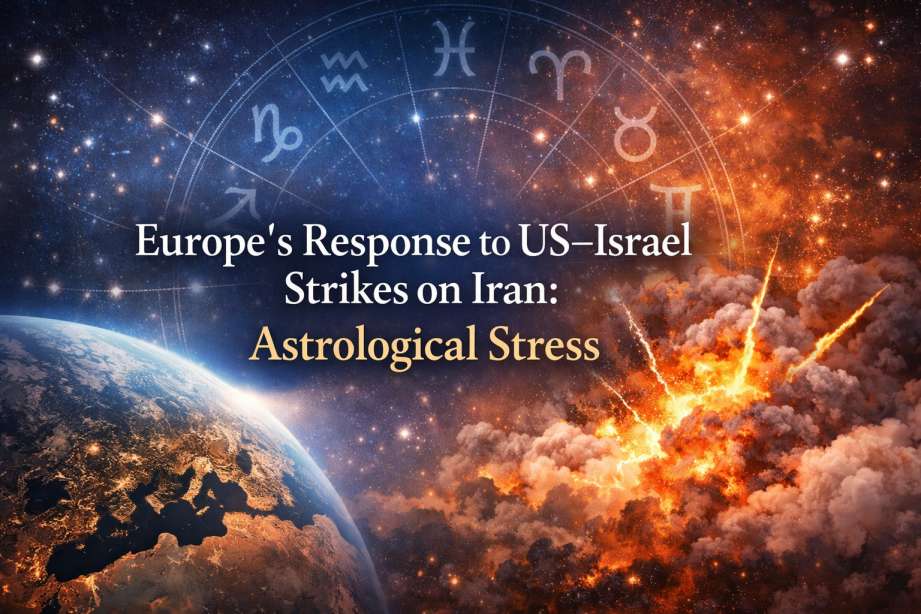
Global politics often reflects deeper collective patterns, and Vedic astrology suggests that planetary cycles can influence how nations react to crises. Europe’s cautious diplomatic response to the recent military tension between the United States, Israel, and Iran has raised questions about whether global leaders are under cosmic pressure as well as political constraints.
From an astrological perspective, current planetary alignments, especially the influence of Saturn (Shani), Mars (Mangal), and Rahu– can create periods of hesitation, diplomatic balancing, and strategic restraint. These cosmic forces may symbolize why many European countries are urging dialogue rather than direct escalation.
For observers in India, where Vedic astrology has long connected planetary movements with global events, this situation offers an interesting example of how celestial patterns sometimes mirror geopolitical caution.
In this article, we explore the astrological factors behind Europe’s diplomatic tone, their possible effects on global stability, and simple remedies that align with traditional wisdom.
Astrological Factors Behind Europe’s Diplomatic Caution
Saturn’s Influence: Pressure for Responsibility
In Vedic astrology, Saturn (Shani) represents responsibility, caution, and long-term consequences. When Saturn forms tense planetary relationships with Mars or Rahu, global decision-making can slow down.
Currently, astrologers observe a strong Saturn influence over leadership charts and global political cycles.
Possible effects include:
- Leaders preferring measured diplomatic statements instead of aggressive action
- Increased focus on economic and humanitarian consequences
- Governments attempting to avoid long-term conflict escalation
This cosmic pattern often encourages restraint. Saturn reminds leaders that actions taken in haste may bring karmic consequences later.
A traditional Sanskrit reminder about patience during difficult periods is:
“धैर्यं सर्वत्र साधनम्”
Patience is the ultimate tool in every challenge.
This reflects the kind of careful diplomacy many European nations are currently demonstrating.
Mars and Rahu: Tension and Sudden Escalation
While Saturn promotes caution, Mars (Mangal) represents aggression, warfare, and military actions. Rahu amplifies unpredictability.
When Mars and Rahu energies interact strongly in global charts, several patterns may appear:
- Rapid military developments
- Unexpected geopolitical reactions
- Heightened rhetoric between nations
These planetary influences often correlate with short bursts of conflict or sudden escalations.
However, Saturn’s balancing presence can prevent situations from turning into prolonged wars. In astrology, this combination sometimes produces controlled conflict followed by diplomatic negotiations.
Air Sign Influence: Diplomacy and Strategic Dialogue
Another important astrological factor is the influence of air signs (Gemini, Libra, Aquarius), which govern communication, alliances, and negotiations.
When key planetary movements occur through these signs:
- Diplomacy becomes the preferred tool
- Alliances and treaties gain importance
- Leaders prioritize dialogue over confrontation
Europe traditionally emphasizes multilateral diplomacy, which resonates strongly with air-sign symbolism.
This astrological pattern may explain why many European countries are urging restraint and dialogue rather than immediate escalation.
How These Planetary Patterns Affect Global Stability
Astrology does not determine events with certainty, but it often highlights periods when tension or cooperation is more likely.
Under current planetary influences, global trends may include:
1. Diplomatic Balancing
European leaders may try to maintain relationships with multiple sides while avoiding direct military involvement.
2. Strategic Statements
Official responses could appear cautious or carefully worded to avoid worsening the crisis.
3. Focus on Economic Stability
Saturn’s presence often shifts attention toward trade routes, energy supplies, and financial stability.
For countries dependent on Middle Eastern energy markets, maintaining stability becomes a priority.
Astrological Remedies for Collective Peace
While geopolitical decisions are made by leaders, Vedic astrology suggests that collective spiritual practices can promote harmony.
Here are a few traditional remedies believed to strengthen peaceful planetary influences.
1. Strengthening Saturn’s Positive Energy
Saturn rewards discipline and ethical behavior.
Simple practices:
- Donate black sesame or mustard oil on Saturdays
- Help elderly or underprivileged people
- Chant “Om Sham Shanicharaya Namah” 108 times
2. Balancing Mars Energy
Mars can bring courage but also conflict.
Remedies:
- Recite Hanuman Chalisa on Tuesdays
- Offer red flowers to Lord Hanuman
- Practice physical discipline like yoga or exercise
3. Calming Rahu’s Uncertainty
Rahu often represents confusion and misinformation.
Helpful practices:
- Meditation and grounding exercises
- Avoid spreading rumors or panic
- Chant “Om Raam Rahave Namah”
These remedies encourage calmness and clarity, which are essential during times of global tension.
Conclusion
Europe’s cautious diplomatic response to the US–Israel strikes on Iran reflects a complex blend of political strategy and global responsibility. From an astrological viewpoint, strong influences of Saturn, Mars, and Rahu may symbolize the current atmosphere of tension mixed with restraint.
While Mars can ignite conflict and Rahu may amplify unpredictability, Saturn encourages leaders to think about long-term consequences. This cosmic balance may explain why many European nations are advocating dialogue rather than escalation.
For individuals observing global events from India or elsewhere, astrology reminds us that cycles of tension and resolution are natural parts of collective evolution.
Maintaining patience, wisdom, and constructive dialogue both globally and personally, remains the most powerful remedy during uncertain times.
FAQs
1. Can astrology really explain geopolitical reactions?
Astrology does not predict political decisions but can highlight energetic patterns influencing collective behavior.
Planetary cycles often coincide with periods of tension, negotiation, or transformation in world affairs. Astrologers study these patterns to understand timing and psychological influences.
For example, strong Mars activity may coincide with aggressive actions, while Saturn periods encourage restraint and accountability.
Helpful insights:
- Astrology shows cycles, not certainties
- It complements political analysis rather than replacing it
- Planetary symbolism reflects collective moods
2. Why is Saturn associated with caution in global politics?
Saturn represents responsibility, discipline, and long-term consequences in Vedic astrology.
When Saturn dominates planetary alignments, leaders often become more careful and strategic in their decisions. Policies may focus on stability and long-term outcomes.
This can lead to slower responses but more calculated diplomacy.
Saturn-related guidance:
- Focus on patience
- Avoid impulsive reactions
- Think about long-term consequences
3. How does Mars influence conflicts between countries?
Mars symbolizes war, military power, and assertive action.
Strong Mars transits often coincide with heightened tensions, military movements, or aggressive rhetoric between nations.
However, Mars also represents courage and protection, which can sometimes lead to defensive actions rather than offensive wars.
Mars-balancing tips:
- Channel energy into discipline or physical activity
- Practice anger management
- Strengthen calm decision-making
4. What role does Rahu play in global uncertainty?
Rahu is associated with sudden developments, confusion, and unexpected events.
During strong Rahu periods, misinformation, rapid political changes, and unpredictable diplomatic moves may occur.
This energy can amplify tensions but also push societies toward innovation and new solutions.
Ways to manage Rahu energy:
- Verify information before reacting
- Avoid panic-driven decisions
- Maintain mental clarity through meditation
5. Can spiritual remedies influence global peace?
Spiritual practices mainly influence personal consciousness, which indirectly contributes to collective harmony.
Vedic philosophy teaches that collective energy is shaped by individual actions. When more people cultivate patience, compassion, and clarity, social harmony improves.
Although these remedies cannot directly change geopolitics, they help create a more balanced environment.
Simple peace-oriented practices:
- Daily meditation
- Charity and service
- Mantra chanting for planetary balance