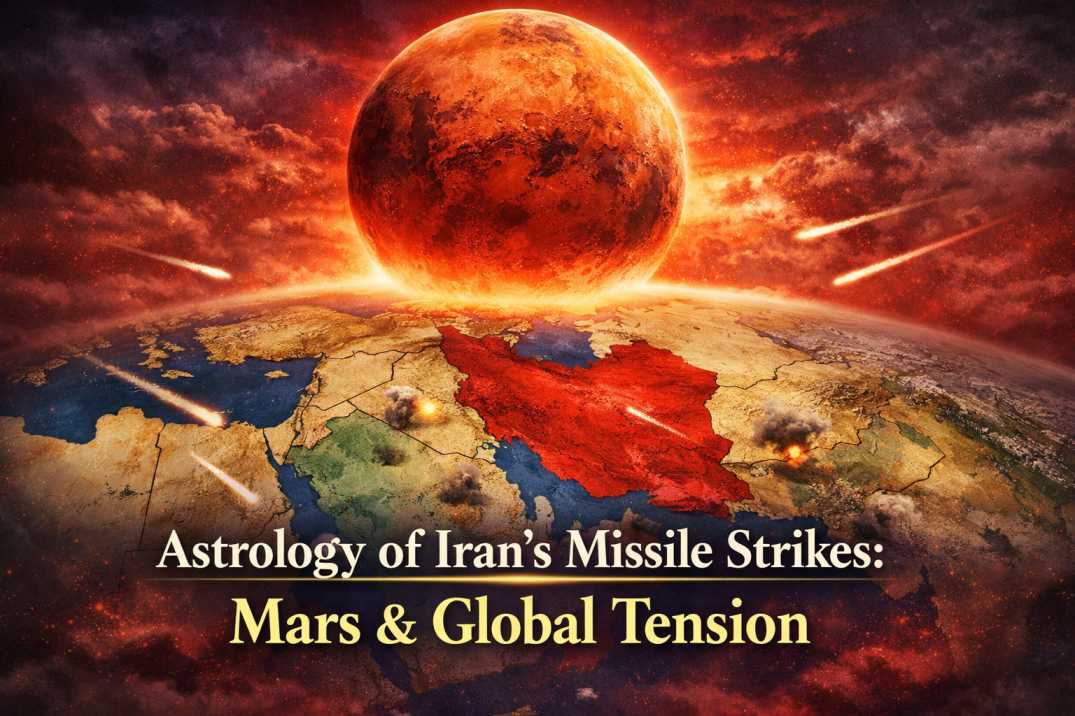
Global conflicts often trigger strong emotional reactions, but in Vedic astrology, such events are also examined through planetary patterns. The recent missile strikes by Iran on US and Israeli targets have drawn worldwide attention. While geopolitical experts analyze strategy and diplomacy, astrology looks at the cosmic cycles influencing collective behavior and national decisions.
Around the time these strikes were reported internationally (approximately 1:30 AM – 3:30 AM IST through global news updates), several intense planetary alignments were active. In Vedic astrology, planets like Mars (Mangal), Saturn (Shani), and Rahu are often associated with aggression, conflict, sudden escalation, and technological warfare.
Understanding these planetary patterns does not predict events with certainty, but it helps identify periods when global tensions are more likely. For Indian readers interested in astrology, these cosmic patterns also offer insights into collective karma, leadership pressure, and ways to maintain personal balance during turbulent global times.
Planetary Forces Behind Sudden Retaliation
Mars: The Planet of War and Action
In astrology, Mars (Mangal) represents:
- Military actions
- Aggression and retaliation
- Weapons and explosives
- Courage and conflict
When Mars becomes strongly activated or forms challenging aspects with other planets, it often correlates with heightened geopolitical tensions.
Astrologically significant Mars periods may manifest as:
- Military exercises or missile tests
- Border conflicts
- Sudden retaliatory actions
Mars energy is not always negative; it also symbolizes defense, protection, and strategic action. However, when combined with volatile planetary influences, the energy may escalate quickly.
Saturn’s Pressure on Leadership
Another key influence is Saturn (Shani). Saturn represents:
- Responsibility
- Karma and consequences
- Long-term geopolitical pressure
- Strategic caution
When Saturn interacts with Mars, astrology often describes a “pressure cooker effect.”
This combination can create:
- Delayed conflicts suddenly erupting
- Leaders facing intense decision-making pressure
- Strategic retaliation rather than impulsive action
The cautious diplomatic responses seen globally during these events often reflect Saturn’s influence, where leaders act carefully despite rising tensions.
A traditional Sanskrit verse describes Saturn’s karmic nature:
“शनि कर्मफलदाता च”
(Shani is the giver of the results of karma.)
This reminds us that astrology views global events as part of longer karmic cycles rather than isolated incidents.
Rahu and Modern Warfare
Modern warfare often involves technology, cyber operations, and missiles. In astrology, these themes are frequently associated with Rahu.
Rahu represents:
- Advanced technology
- Sudden events
- Unpredictable escalation
- Psychological warfare
When Rahu interacts with Mars or Saturn, astrologers sometimes observe patterns linked to:
- Missile strikes
- Drone warfare
- Cyber conflicts
- Sudden geopolitical shocks
Such combinations can amplify uncertainty and global anxiety.
Collective Astrology: Why Global Tension Feels Stronger
Astrology also examines the concept of collective planetary influence. Certain transits affect not just individuals but entire nations.
Key indicators of global tension include:
1. Mars–Saturn Interactions
These combinations may correlate with:
- Military pressure
- Strategic retaliation
- Long-standing geopolitical disputes resurfacing
2. Rahu Activation
This can bring:
- Surprise attacks
- Rapid escalation
- Global media attention
3. Strong Fire Sign Activity
Fire signs in astrology symbolize energy, action, and confrontation.
During such cycles, the world may witness:
- Military demonstrations
- Defense alliances strengthening
- Rapid diplomatic responses
However, astrology emphasizes that planetary energies manifest differently depending on human choices and leadership decisions.
Practical Astrological Remedies for Peace and Balance
While individuals cannot control global conflicts, Vedic astrology suggests spiritual practices that help maintain mental stability during turbulent periods.
1. Strengthen Mars Positively
Mars represents courage and discipline.
Simple practices include:
- Offering red flowers to Lord Hanuman on Tuesdays
- Chanting “Om Hanumate Namah”
- Engaging in physical exercise or yoga
These activities channel Mars energy constructively.
2. Balance Saturn’s Influence
To harmonize Saturn energy:
- Light a sesame oil lamp on Saturdays
- Practice patience and disciplined routines
- Donate black sesame seeds or blankets to those in need
These actions symbolically align with Saturn’s karmic lessons.
3. Calm Rahu’s Restless Energy
For Rahu-related anxiety:
- Practice meditation or breathing exercises
- Reduce excessive news consumption during tense periods
- Chant “Om Raam Rahave Namah”
Such practices help maintain emotional stability.
Real-Life Relevance for Indian Readers
Why should people in India care about the astrology of global conflicts?
Because planetary cycles influence collective emotions, markets, diplomacy, and international relations.
Possible ripple effects may include:
- Oil price fluctuations
- Global stock market volatility
- Increased diplomatic negotiations
Astrology does not replace political analysis, but it provides another lens to understand why certain periods feel more intense globally.
By staying informed and practicing personal balance, individuals can remain calm even when world events appear uncertain.
Conclusion
The astrology behind Iran’s missile strikes on US and Israeli targets highlights the powerful symbolism of Mars, Saturn, and Rahu. Mars represents action and retaliation, Saturn symbolizes pressure and responsibility, and Rahu reflects sudden technological warfare.
Together, these planetary energies often coincide with periods of geopolitical tension. However, astrology also reminds us that human choices, diplomacy, and wisdom play crucial roles in shaping outcomes.
For individuals, the best response during such periods is maintaining mental balance, practicing patience, and focusing on constructive actions. Cosmic cycles may influence the atmosphere, but collective wisdom ultimately determines the path forward.
FAQs
1. Does astrology really predict wars or missile strikes?
Astrology does not directly predict specific wars but identifies planetary patterns linked with periods of tension.
Certain planetary combinations; especially involving Mars, Saturn, and Rahu—are traditionally associated with aggression, pressure, and sudden escalation. When such combinations occur globally, astrologers observe increased chances of geopolitical events.
Key insights:
- Mars symbolizes military activity
- Saturn represents long-term pressure
- Rahu relates to sudden technological actions
2. Why is Mars considered the planet of war?
Mars represents energy, courage, and action in Vedic astrology.
Because Mars governs weapons, soldiers, and defense forces, astrologers historically associated it with military conflicts. Ancient texts link Mars with the warrior archetype and decisive action.
Ways to balance Mars energy:
- Chant Hanuman mantras
- Practice physical activity
- Avoid impulsive reactions
3. Can planetary movements influence global events?
Astrology suggests that planetary cycles influence collective human behavior rather than forcing events.
When intense planetary alignments occur, they may correspond with heightened emotions, stronger political reactions, and rapid decision-making among leaders.
Common global astrology triggers:
- Mars–Saturn conjunctions
- Rahu–Mars alignments
- Major eclipses
4. How can individuals stay calm during global conflicts?
Maintaining emotional balance is the most practical response during tense global periods.
Astrology recommends spiritual practices, meditation, and reducing unnecessary stress. Staying informed without becoming overwhelmed is also important.
Helpful practices:
- Daily meditation
- Chanting calming mantras
- Limiting exposure to stressful news cycles
5. What does Vedic astrology say about peace during difficult times?
Vedic astrology emphasizes that difficult planetary periods are temporary phases in larger karmic cycles.
Ancient scriptures remind us that wisdom and discipline can transform challenging energies into growth opportunities.
A famous Sanskrit thought reflects this idea:
“धर्मो रक्षति रक्षितः”
(Dharma protects those who protect it.)
Practical reminders:
- Practice patience
- Focus on constructive actions
- Strengthen spiritual discipline