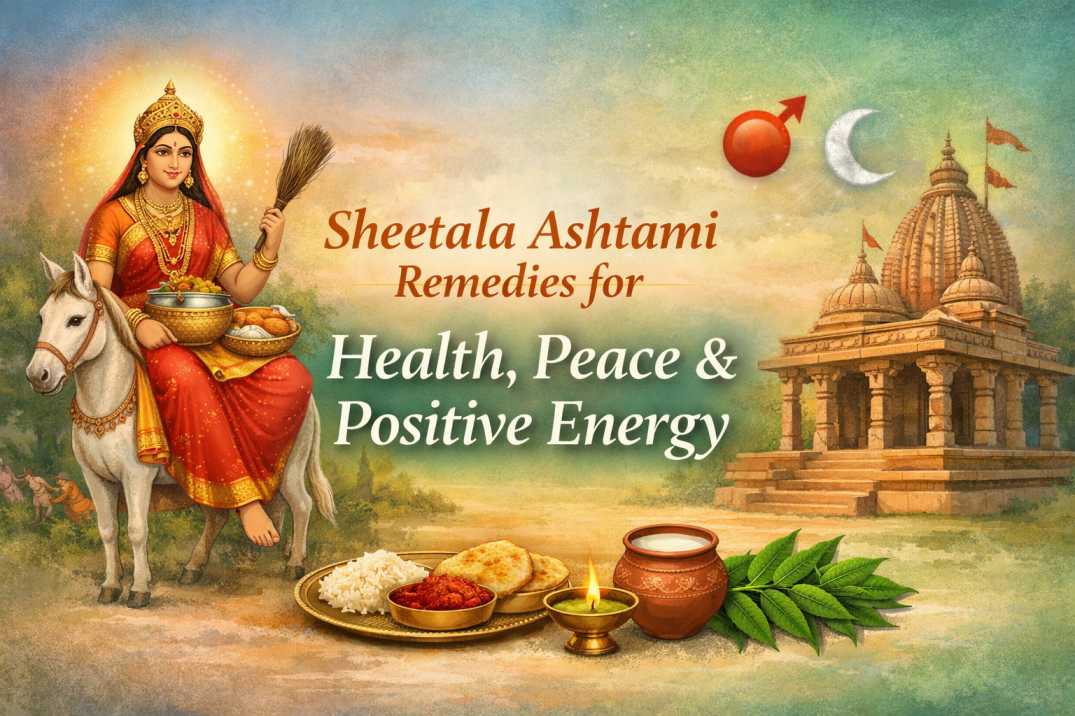
Sheetala Ashtami is an important Hindu observance dedicated to Goddess Sheetala, the divine protector associated with healing, immunity, and protection from diseases. Celebrated on the Ashtami tithi of Krishna Paksha in the month of Chaitra, the festival is widely observed across North and Eastern India.
In 2026, Sheetala Ashtami will be observed on 11 March 2026, with the Ashtami Tithi beginning at 08:22 AM IST and ending at 10:48 AM IST on 12 March 2026 (approx.).
From a Vedic astrology perspective, Sheetala Ashtami rituals are believed to pacify fiery planetary influences such as Mars (Mangal) and imbalanced Pitta energy, both traditionally linked with infections, fevers, and inflammation. Devotees perform special remedies, offer stale food (Basoda) prepared a day earlier, and pray for the health and well-being of their families.
These rituals are not merely religious customs; they symbolically promote cooling, healing, and energetic balance in the home and mind.
Astrological Significance of Sheetala Ashtami
Connection with Mars and Health Karma
In Vedic astrology, Mars governs heat, blood, infections, and inflammation. When Mars is afflicted in a birth chart—such as in the 6th house (diseases) or 8th house (chronic conditions)—it may manifest as recurring health issues, fevers, or skin problems.
Sheetala Ashtami remedies symbolically cool the fiery energy of Mars and restore balance.
Traditional astrologers also associate Goddess Sheetala with the healing aspect of the Moon, which governs emotional stability and immunity. When Moon energy is strengthened through devotion and prayer, it supports mental peace and physical recovery.
Spiritual Symbolism of Cooling Energy
The word “Sheetala” literally means cooling or calming. The rituals focus on avoiding fire and consuming previously prepared food to symbolically reduce heat and aggression in life.
This spiritual symbolism reflects three key ideas:
- Calming physical and mental heat
- Encouraging patience and emotional balance
- Inviting protective divine energy into the home
A traditional mantra often recited during worship is:
“ॐ शीतलायै नमः”
Om Sheetalayai Namah
Chanting this mantra is believed to invoke healing vibrations and protective blessings.
Powerful Sheetala Ashtami Remedies
Below are practical remedies widely followed in traditional households.
1. Prepare Basoda (Stale Food Offering)
One of the most unique rituals of Sheetala Ashtami is offering food cooked the previous day.
Common offerings include:
- Sweet rice
- Puri
- Halwa
- Rabri
- Curd
- Bajra or wheat dishes
The food is offered to Goddess Sheetala in the morning and then shared among family members.
Astrological meaning
This ritual represents:
- Cooling Mars energy
- Symbolic humility and simplicity
- Respect for nature’s balance
2. Avoid Lighting the Stove
Traditionally, no cooking is done on Sheetala Ashtami.
Spiritual reasoning
Avoiding fire for a day is believed to:
- Reduce aggressive energy
- Promote calmness in the household
- Honor the cooling nature of the goddess
Many astrologers consider this a symbolic remedy to balance fiery planetary influences.
3. Offer Neem Leaves
Neem leaves are considered sacred during Sheetala Ashtami.
Devotees place Neem leaves near the deity or entrance of the home.
Benefits according to tradition
- Symbolic protection from illness
- Purification of the environment
- Strengthening immunity energy
Neem has also been historically recognized in Ayurveda for its antibacterial and healing properties.
4. Visit a Sheetala Mata Temple
Devotees often visit temples dedicated to the goddess during early morning hours.
Typical rituals include:
- Offering water
- Applying turmeric and vermillion
- Lighting incense
- Chanting prayers
Astrological significance
Temple visits strengthen:
- Moon energy (peace and emotional stability)
- Spiritual protection
- Collective family karma
5. Donate Cooling Foods
Donation is an important remedy in Vedic traditions.
On Sheetala Ashtami, people donate:
- Curd
- Buttermilk
- Fruits
- Rice
- White clothes
Why this matters astrologically
Charity is believed to:
- Reduce negative karmic influences
- Strengthen Jupiter’s blessings
- Improve family harmony and prosperity
6. Clean the Home and Worship the Kitchen
Another traditional practice is cleaning the kitchen thoroughly the previous day.
This act symbolizes:
- Removing negative energy
- Creating a sacred domestic environment
- Respecting food as divine nourishment
In Vedic philosophy, the kitchen is considered the energetic heart of the home.
Who Should Especially Perform These Remedies?
These rituals are particularly recommended for people experiencing:
- Frequent illnesses in the family
- Children with weak immunity
- Disturbed domestic peace
- Astrological afflictions of Mars or Moon
- Stress and emotional instability
Even if someone does not strictly follow astrology, the practices promote discipline, hygiene, gratitude, and mindfulness.
Modern Relevance of Sheetala Ashtami Rituals
While these traditions originated centuries ago, their underlying philosophy remains relevant.
The festival encourages:
- Rest from daily routines
- Conscious eating
- Family bonding
- Spiritual reflection
In today’s fast-paced world, such rituals remind us to slow down, reconnect with tradition, and prioritize health and emotional balance.
Conclusion
Sheetala Ashtami is more than a religious festival, it is a cultural and spiritual practice focused on healing, protection, and balance.
The remedies associated with this day from offering Basoda to donating cooling foods; symbolically reduce fiery energies linked with illness and stress. Astrologically, these rituals are believed to calm Mars influences and strengthen the nurturing energy of the Moon.
Whether viewed through the lens of faith, astrology, or cultural wisdom, Sheetala Ashtami encourages families to cultivate peace, cleanliness, and gratitude.
Taking a moment to honor these traditions can bring a deeper sense of harmony, health, and positive energy into everyday life.
FAQs
1. What are the main remedies performed on Sheetala Ashtami?
The main remedies include offering stale food (Basoda), avoiding cooking, worshipping Goddess Sheetala, and donating cooling foods.
These practices symbolically reduce heat-related energies in Vedic astrology and promote healing and protection from diseases. Many traditions link these rituals with calming Mars energy and strengthening immunity.
Common remedies include:
- Offering stale food prepared the previous day
- Chanting “Om Sheetalayai Namah”
- Visiting a Sheetala Mata temple
- Donating curd or buttermilk
2. Why is stale food offered during Sheetala Ashtami?
Stale food is offered because the festival emphasizes cooling energy and avoiding fire.
The ritual reflects the belief that excessive heat; symbolically represented by fire and cooking can increase illness or imbalance. By eating previously cooked food, devotees honor the cooling nature of Goddess Sheetala.
Typical Basoda offerings include:
- Puri
- Sweet rice
- Halwa
- Rabri
- Curd dishes
3. Which planets are associated with Sheetala Ashtami rituals?
Mars and the Moon are most commonly associated with Sheetala Ashtami rituals.
Mars represents heat, blood, and infections, while the Moon governs emotional calmness and immunity. The rituals symbolically reduce Mars imbalance while strengthening lunar harmony.
Astrological practices include:
- Chanting cooling mantras
- Offering white foods linked to Moon energy
- Performing charity to strengthen Jupiter’s blessings
4. Can Sheetala Ashtami remedies improve family health?
Traditionally, these remedies are believed to invite divine protection and positive energy for family well-being.
While astrology views them as symbolic remedies for planetary imbalance, the rituals also encourage cleanliness, calmness, and mindful eating—habits that support physical and mental health.
Helpful practices include:
- Cleaning the kitchen and home
- Offering Neem leaves
- Practicing gratitude during meals
- Spending time in prayer or meditation
5. What mantra is chanted during Sheetala Ashtami?
The most commonly chanted mantra is “Om Sheetalayai Namah.”
This short mantra invokes the healing and protective energy of Goddess Sheetala. Devotees often chant it during morning prayers or temple visits on the day of the festival.
For deeper practice:
- Chant the mantra 108 times
- Offer flowers or water to the deity
- Meditate for a few minutes afterward