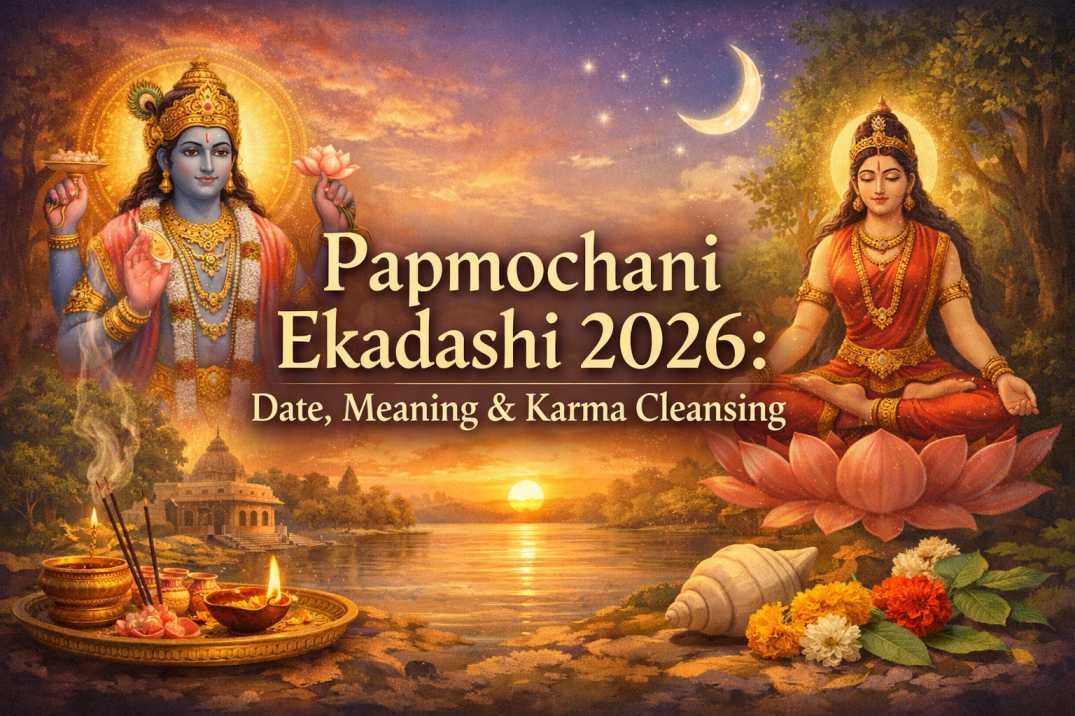
Papmochani Ekadashi is one of the spiritually significant fasting days in the Hindu lunar calendar. Observed during the Krishna Paksha of Chaitra month, this Ekadashi is dedicated to Lord Vishnu and is believed to help devotees cleanse negative karma accumulated through past actions.
In 2026, Papmochani Ekadashi falls on Sunday, 15 March, making it an important spiritual opportunity before the start of the new Hindu lunar cycle in Chaitra. According to the Panchang, the Ekadashi Tithi begins at 08:10 AM on 14 March 2026 and ends at 09:16 AM on 15 March 2026 (IST). The fast is traditionally broken during Parana time on 16 March 2026 between 06:30 AM and 08:54 AM IST.
From an astrological perspective, Papmochani Ekadashi represents a day for mental purification, karmic reflection, and spiritual discipline. Through fasting, prayer, and mindful living, devotees aim to reduce the impact of negative actions and strengthen positive intentions.
Papmochani Ekadashi 2026: Date and Puja Timing (IST)
Key Panchang Details
- Ekadashi Date: 15 March 2026 (Sunday)
- Ekadashi Tithi Begins: 14 March 2026 – 08:10 AM
- Ekadashi Tithi Ends: 15 March 2026 – 09:16 AM
- Parana (Fast Breaking): 16 March 2026 – 06:30 AM to 08:54 AM
- Dwadashi End Moment: 16 March 2026 – 09:40 AM IST
Devotees usually observe the fast on the sunrise day when Ekadashi prevails.
Astrological Meaning of Papmochani Ekadashi
In Vedic astrology, Ekadashi is associated with mental discipline and control of the senses. The Moon governs emotions and habits, and during the 11th lunar day, the mind is considered more receptive to spiritual practices.
Key Astrological Themes
- Moon’s Influence on Mind
Ekadashi occurs when the Moon is at a phase that supports introspection. Fasting and meditation help calm emotional fluctuations. - Karmic Cleansing Energy
The word Papmochani comes from:- Paap: Negative actions or karmic debts
- Mochani: Liberation or release
- Symbolically, the day represents the opportunity to release guilt, regret, and unhealthy patterns.
- Connection with Jupiter and Vishnu Energy
Lord Vishnu represents preservation, balance, and dharma. In astrology, this aligns with Jupiter’s qualities of wisdom and ethics. - Spiritual Detox for the Mind and Body
Traditional fasting reduces sensory distractions, making it easier for the mind to focus on prayer and reflection.
Traditional Reference in Scriptures
Papmochani Ekadashi is described in the Bhavishyottara Purana, where Lord Krishna explains its significance to King Yudhishthira. The story teaches that sincere repentance combined with spiritual discipline can transform past mistakes.
A commonly recited prayer is:
“ॐ नमो भगवते वासुदेवाय”
This mantra is believed to promote clarity, devotion, and spiritual focus.
Practical Remedies for Papmochani Ekadashi
Spiritual traditions emphasize simple practices rather than complicated rituals.
1. Observe a Simple Fast
Common fasting methods include:
- Nirjala fast (without water)
- Phalahar fast (fruits and milk)
- Light sattvic diet
Fasting symbolizes self-control and purification.
2. Chant Vishnu Mantras
Recommended chants:
- Om Namo Bhagavate Vasudevaya
- Vishnu Sahasranama
- Hare Krishna Maha Mantra
Even 108 repetitions can bring mental stability.
3. Donate or Help Others
Charity is considered a powerful karmic remedy.
Suggested donations:
- Food grains
- Clothes
- Fruits
- Support for temples or spiritual institutions
4. Reflect on Personal Actions
Instead of focusing only on rituals, many spiritual teachers recommend:
- Writing down past mistakes
- Forgiving others
- Setting positive intentions
5. Practice Silence or Meditation
Even 15–20 minutes of meditation on Ekadashi can improve emotional balance.
Real-Life Relevance in Modern Life
In modern terms, Papmochani Ekadashi can be understood as a psychological and spiritual reset day.
Many people use it for:
- Digital detox
- Reduced consumption of heavy food
- Mindfulness practices
- Spiritual reading
These practices help create mental clarity and emotional healing, which is why Ekadashi traditions remain relevant even today.
Conclusion
Papmochani Ekadashi 2026, observed on 15 March, carries deep spiritual and astrological meaning. It reminds us that human life naturally includes mistakes and emotional burdens. However, through awareness, discipline, and devotion, it is possible to transform those experiences into wisdom.
Fasting, prayer, and reflection on this day act as symbolic tools for karmic cleansing and inner renewal. Whether one follows strict rituals or simple mindfulness practices, the core message remains the same: conscious actions today can reshape the karmic patterns of tomorrow.
Taking even a small step toward spiritual awareness on Papmochani Ekadashi can become the beginning of a more balanced and mindful life.
FAQs
1. What is the main purpose of Papmochani Ekadashi?
Papmochani Ekadashi is observed to spiritually cleanse negative karma and seek the blessings of Lord Vishnu.
In Vedic tradition, fasting and prayer on Ekadashi help reduce the influence of harmful habits and emotional negativity. The day encourages devotees to focus on self-discipline and spiritual awareness.
Helpful practices:
- Chant Vishnu mantras
- Observe fasting or sattvic diet
- Donate food or clothes
2. When is Papmochani Ekadashi in 2026?
Papmochani Ekadashi in 2026 will be observed on 15 March (Sunday).
The Ekadashi Tithi starts on 14 March at 08:10 AM and ends on 15 March at 09:16 AM IST. Devotees usually keep the fast on the sunrise day when Ekadashi prevails.
Key timing summary:
- Ekadashi fast: 15 March 2026
- Parana: 16 March 06:30–08:54 AM IST
3. How does Papmochani Ekadashi remove past karma?
It symbolically reduces negative karma through repentance, discipline, and spiritual focus.
In spiritual philosophy, karma is shaped by intention and action. Fasting and prayer help the mind detach from impulses and encourage ethical awareness.
Suggested remedies:
- Meditation or prayer
- Charity and service
- Forgiving others
4. Can everyone observe the Papmochani Ekadashi fast?
Yes, but the type of fasting can be adjusted based on health and lifestyle.
Many people follow a phalahar fast with fruits and milk instead of a strict waterless fast. The spiritual intention matters more than the intensity of the ritual.
Balanced fasting tips:
- Drink enough water
- Avoid heavy grains and processed food
- Focus on calm activities
5. Which mantra is best to chant on Papmochani Ekadashi?
The mantra “Om Namo Bhagavate Vasudevaya” is widely recommended for Ekadashi worship.
This mantra invokes Lord Vishnu’s energy of protection and balance. Regular chanting is believed to calm the mind and strengthen spiritual focus.
Suggested chanting practice:
- Chant 108 times with a mala
- Read Vishnu Sahasranama
- Perform evening Vishnu prayer