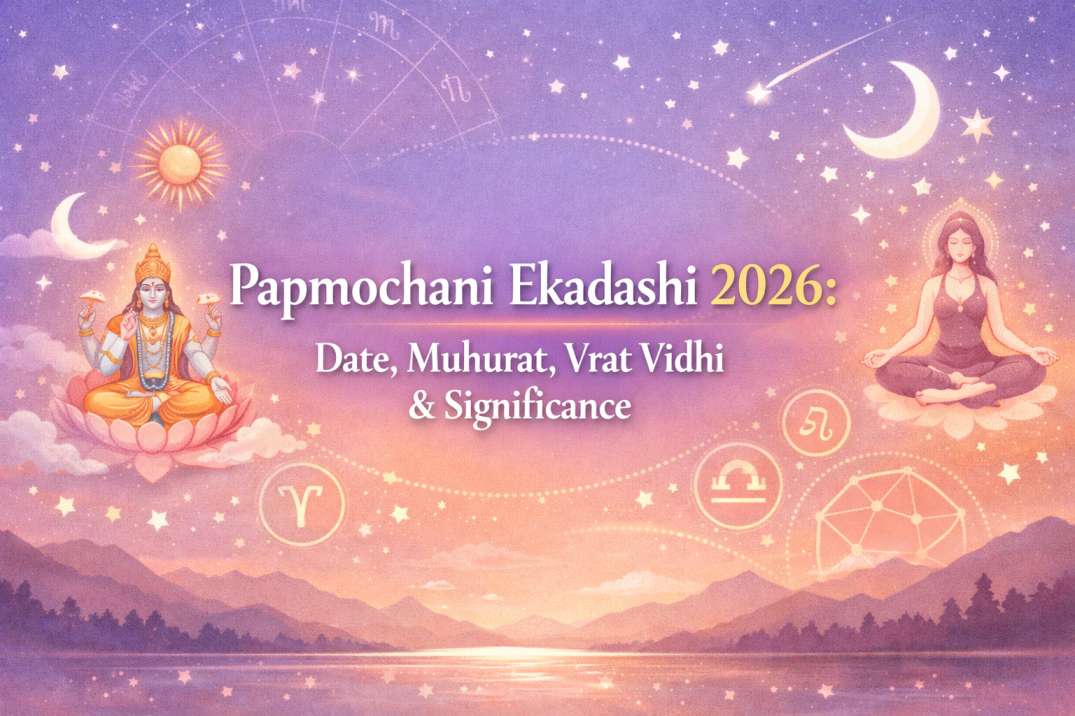
Papmochani Ekadashi is an important fasting day dedicated to Lord Vishnu in the Hindu lunar calendar. Observed during the Krishna Paksha (waning phase) of the Chaitra month, this Ekadashi is believed to symbolize spiritual purification and self-reflection. The word “Papmochani” literally means the one that releases from past karmic burdens or negative actions.
In Vedic astrology and traditional scriptures such as the Bhavishyottara Purana, this Ekadashi is considered an opportunity for introspection, discipline, and devotion. Devotees observe fasting, chant Vishnu mantras, and perform charity to cultivate positive karma and mental clarity.
In 2026, Papmochani Ekadashi occurs in March and falls close to important seasonal transitions in the Hindu calendar, making it spiritually meaningful for many households across India.
Papmochani Ekadashi 2026 Date and Shubh Muhurat
According to the Hindu Panchang, Papmochani Ekadashi in 2026 will be observed on Sunday, 15 March 2026.
Important Timings (IST)
- Ekadashi Tithi Begins: 14 March 2026 – 08:10 AM
- Ekadashi Tithi Ends: 15 March 2026 – 09:16 AM
- Recommended Puja Muhurat: 08:01 AM – 12:30 PM
- Vrat Parana (Fast Breaking): 16 March 2026 – 06:30 AM to 08:54 AM
- Dwadashi Tithi Ends: 16 March 2026 – 09:40 AM
Traditionally, devotees keep the fast on the day when Ekadashi tithi is present at sunrise.
Astrological Significance of Papmochani Ekadashi
In Vedic astrology, Ekadashi occurs on the 11th lunar day, a time associated with mental discipline and spiritual focus. The Moon governs emotions and the mind, and during Ekadashi its influence encourages restraint and introspection.
Key Astrological Factors
- Lunar Influence and Mind Purification
The Moon is believed to affect mental patterns and emotional cycles. Fasting on Ekadashi symbolically helps control impulses, aligning the mind with spiritual practices.
- Connection with Karma and Spiritual Detox
Papmochani Ekadashi is linked with the idea of releasing accumulated karmic patterns. Rituals performed on this day are believed to encourage reflection and corrective action in daily life.
- Seasonal Transition Energy
This Ekadashi occurs near the end of the Hindu lunar year and before major spring festivals. Astrologically, this period is considered suitable for:
- Spiritual cleansing
- Ending negative habits
- Preparing for new beginnings
- Planetary Symbolism
Devotional practices toward Lord Vishnu are traditionally associated with balance and preservation in the cosmic order. In astrology, this symbolism relates to maintaining harmony in life and relationships.
Papmochani Ekadashi Vrat Vidhi (Fasting Procedure)
The vrat is observed with discipline, devotion, and simplicity. The purpose is not only fasting but also mental purification.
Step-by-Step Vrat Vidhi
- Early Morning Preparation
- Wake up during Brahma Muhurat.
- Take a bath and wear clean clothes.
- Clean the home temple or puja space.
- Sankalp (Vow)
Take a vow to observe the Ekadashi fast with sincerity and positive intention.
- Vishnu Puja
Offer prayers to Lord Vishnu using:
- Tulsi leaves
- Incense and ghee lamp
- Fruits or sattvic food offerings
A commonly recited mantra:
ॐ नमो भगवते वासुदेवाय
Om Namo Bhagavate Vasudevaya
- Fasting Practice
Devotees may follow different fasting methods:
- Nirjala Vrat: No food or water
- Phalahar Vrat: Fruits and milk only
- Sattvic Diet: Light vegetarian meals without grains
- Evening Prayer
- Chant Vishnu Sahasranama or bhajans.
- Light a lamp near the Tulsi plant.
- Parana (Breaking the Fast)
Break the fast on Dwadashi during the prescribed time window with simple food such as fruits or khichdi.
Practical Remedies and Spiritual Practices
Papmochani Ekadashi is often used as a day for mindful spiritual discipline rather than ritualistic complexity.
Simple Remedies
- Donate food or clothes to the needy.
- Offer water to a Tulsi plant.
- Read or listen to the Bhagavad Gita.
- Avoid negative speech and conflicts.
Lifestyle Insights
From an analytical perspective, Ekadashi fasting may also provide:
- Digestive rest
- Mental clarity through discipline
- Increased mindfulness through prayer and reflection
These practices align with traditional wellness principles found in Ayurveda and yoga.
Cultural and Scriptural Context
The story associated with Papmochani Ekadashi is described in the Bhavishyottara Purana. It narrates a dialogue between Lord Krishna and King Yudhishthira explaining the spiritual significance of the fast.
The narrative emphasizes that sincere devotion and disciplined living help individuals overcome past mistakes and cultivate inner harmony.
Rather than focusing on superstition, the story highlights ethical living, repentance, and spiritual awareness.
Conclusion
Papmochani Ekadashi 2026 will be observed on 15 March 2026 (Sunday) and offers devotees a meaningful opportunity for reflection, discipline, and spiritual renewal. The combination of fasting, prayer, and charitable acts encourages a balanced approach to personal growth.
From an astrological and cultural perspective, this Ekadashi symbolizes cleansing the mind and preparing for a fresh cycle in the Hindu lunar year.
Whether observed strictly or symbolically, the day reminds us that mindful living and positive actions play a vital role in shaping our future.
FAQs
1. When is Papmochani Ekadashi in 2026?
Papmochani Ekadashi will be observed on 15 March 2026 (Sunday).
The Ekadashi tithi begins on 14 March 2026 at 08:10 AM and ends on 15 March 2026 at 09:16 AM (IST). Devotees usually observe the fast on the day when Ekadashi tithi is present at sunrise.
Helpful tips:
- Start the fast early morning on Ekadashi.
- Perform Vishnu puja during the morning muhurat.
- Break the fast on 16 March during the parana time.
2. What is the significance of Papmochani Ekadashi?
Papmochani Ekadashi symbolizes spiritual cleansing and self-reflection.
Traditional scriptures describe it as a day dedicated to Lord Vishnu where devotees focus on prayer, discipline, and ethical living. The observance is meant to encourage individuals to learn from past mistakes and cultivate positive actions.
Suggested practices:
- Chant Vishnu mantras
- Donate food or clothes
- Read spiritual texts
3. How is the Papmochani Ekadashi fast observed?
The fast involves abstaining from grains and following spiritual practices throughout the day.
Devotees begin the day with a ritual bath, perform Vishnu puja, and observe a disciplined diet. Some choose complete fasting, while others take fruits and milk.
Common fasting options:
- Nirjala (without water)
- Phalahar (fruits and milk)
- Sattvic vegetarian meals without grains
4. When should the Papmochani Ekadashi fast be broken?
The fast should be broken during the Dwadashi Parana time on 16 March 2026 between 06:30 AM and 08:54 AM (IST).
Breaking the fast within this time window is considered part of the traditional observance.
Parana guidelines:
- Begin with water or fruits
- Eat light sattvic food
- Offer prayers before eating
5. Which deity is worshipped on Papmochani Ekadashi?
Lord Vishnu is the primary deity worshipped on Papmochani Ekadashi.
Devotees believe that prayers to Vishnu help maintain balance and harmony in life. Worship often includes chanting the Vishnu Sahasranama and offering Tulsi leaves.
Simple worship steps:
- Offer Tulsi leaves and flowers
- Light a ghee lamp
- Chant “Om Namo Bhagavate Vasudevaya”
- Read Vishnu-related scriptures