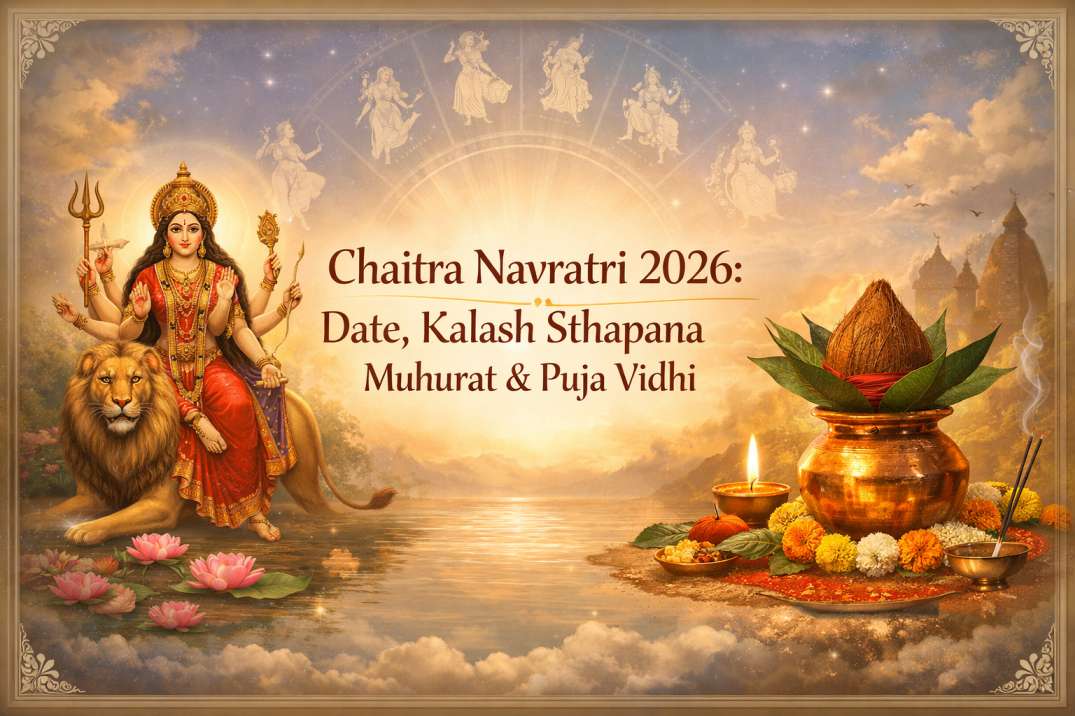
Chaitra Navratri is one of the most spiritually significant Hindu festivals dedicated to the worship of Goddess Durga and her nine divine forms known as Navadurga. Celebrated during the Chaitra month of the Hindu lunar calendar, this nine-day festival marks the beginning of the Hindu New Year in many regions of India. It also aligns with the arrival of spring, symbolizing renewal, spiritual awakening, and positive energy.
In Vedic astrology, Chaitra Navratri is considered a powerful time when cosmic energies support spiritual practices, fasting, and devotion. Many devotees perform Kalash Sthapana (Ghatasthapana) on the first day to invoke divine blessings for prosperity, health, and protection. Understanding the correct date, muhurat, and puja rituals helps align your worship with auspicious planetary influences.
Chaitra Navratri 2026 Date and Kalash Sthapana Muhurat
Chaitra Navratri begins on Pratipada Tithi of Shukla Paksha in the Chaitra month.
Important Dates (IST)
- Chaitra Navratri Begins: March 19, 2026 (Thursday)
- Kalash Sthapana Muhurat: 06:29 AM – 10:34 AM IST
- Abhijit Muhurat Option: 12:02 PM – 12:50 PM IST
- Chaitra Navratri Ends (Ram Navami): March 27, 2026 (Friday)
Kalash Sthapana should ideally be performed during the Pratipada Tithi and auspicious morning muhurat when the Sun’s energy supports new beginnings.
Astrological Significance of Chaitra Navratri
In Vedic astrology, Chaitra Navratri occurs when the Sun transitions through the Pisces–Aries seasonal period, symbolizing closure of one cycle and the start of another.
Planetary and Cosmic Influence
- Sun’s transition period: Supports renewal and vitality
- Moon’s waxing phase: Enhances emotional clarity and devotion
- Spring equinox energy: Aligns nature and spiritual practices
Astrologically, the festival represents Shakti (cosmic energy) overcoming negative forces. Worshipping Goddess Durga during this time is believed to strengthen inner courage, discipline, and spiritual awareness.
Many astrologers recommend spiritual practices during Navratri because the positive cosmic vibrations are believed to amplify prayers and intentions.
Kalash Sthapana Ritual (Ghatasthapana)
Kalash Sthapana marks the formal beginning of Navratri worship. The Kalash represents divine energy and the presence of Goddess Durga.
Items Required
- Copper or clay Kalash (pot)
- Mango leaves
- Coconut
- Red cloth
- Rice or wheat grains
- Holy water (Ganga Jal if available)
- Turmeric and kumkum
- Soil for sowing barley (jau)
Kalash Sthapana Procedure
Follow these traditional steps:
- Clean the worship area and place a wooden platform.
- Spread soil in a small container and sow barley seeds.
- Fill the Kalash with water and add betel nut, coins, and mango leaves.
- Place a coconut wrapped in red cloth on the Kalash.
- Invoke Goddess Durga through prayer and lighting a lamp.
A common invocation mantra is:
“या देवी सर्वभूतेषु शक्तिरूपेण संस्थिता।
नमस्तस्यै नमस्तस्यै नमस्तस्यै नमो नमः॥”
This mantra acknowledges the divine feminine energy present in all beings.
Nine Forms of Goddess Durga Worshipped During Navratri
Each day of Navratri is dedicated to a different form of the goddess.
Navadurga Sequence
- Shailputri – Symbol of strength and purity
- Brahmacharini – Represents devotion and discipline
- Chandraghanta – Associated with courage and protection
- Kushmanda – Creator of cosmic energy
- Skandamata – Symbol of motherhood and nurturing
- Katyayani – Warrior goddess removing negativity
- Kalaratri – Destroyer of darkness and fear
- Mahagauri – Represents purity and peace
- Siddhidatri – Grants spiritual powers and blessings
Devotees often wear specific colors or offer particular flowers corresponding to each day.
Puja Vidhi for Chaitra Navratri
Performing the puja with sincerity and discipline is considered more important than elaborate rituals.
Daily Puja Steps
- Wake up early and take a bath before sunrise.
- Clean the puja space and light a diya.
- Offer flowers, fruits, and sweets to Goddess Durga.
- Recite Durga Chalisa or Durga Saptashati.
- Perform aarti and distribute prasad.
Fasting Practices
Many devotees observe Navratri fasts for spiritual purification.
Common fasting rules include:
- Eating only satvik foods such as fruits, milk, and nuts.
- Avoiding onion, garlic, and grains.
- Consuming kuttu or singhara flour preparations.
- Drinking plenty of water to maintain balance.
Fasting is believed to detoxify the body while strengthening spiritual discipline.
Practical Spiritual Remedies During Navratri
Navratri is considered an ideal time for simple remedies that enhance positivity and mental clarity.
Suggested Practices
- Light a ghee lamp daily during evening prayers.
- Chant Durga Beej Mantra: “ॐ ऐं ह्रीं क्लीं चामुण्डायै विच्चे”.
- Donate food, clothes, or grains to the needy.
- Feed young girls (Kanya Puja) on Ashtami or Navami.
- Meditate for at least 10 minutes each day.
These practices are believed to help balance emotional and spiritual energies.
Cultural and Spiritual Significance
Chaitra Navratri is not only a religious festival but also a symbol of renewal and inner transformation. The nine days represent the gradual removal of negativity and awakening of higher consciousness.
Across India, different regions celebrate the festival with unique traditions:
- North India: Fasting, Kanya Puja, and Ram Navami celebrations
- Maharashtra: Gudi Padwa marks the new year
- South India: Temple rituals and community prayers
The festival ultimately emphasizes discipline, devotion, and gratitude toward the divine feminine energy.
Conclusion
Chaitra Navratri 2026 offers a spiritually powerful period for reflection, devotion, and positive beginnings. Performing Kalash Sthapana at the correct muhurat, following the traditional puja vidhi, and observing mindful fasting can help devotees connect with the deeper meaning of the festival.
From an astrological perspective, Navratri aligns with seasonal and cosmic transitions, making it an ideal time to set new intentions and release negative patterns. Whether through prayer, meditation, or acts of charity, these nine days encourage spiritual growth and inner balance.
As the festival approaches, take time to prepare your home and mind for this sacred celebration and welcome the blessings of Goddess Durga with devotion and gratitude.
FAQs
1. When does Chaitra Navratri start in 2026?
Chaitra Navratri in 2026 begins on March 19, 2026 (Thursday).
This date corresponds to the Shukla Paksha Pratipada Tithi in the Chaitra month of the Hindu lunar calendar. The day marks the beginning of the nine-day festival dedicated to Goddess Durga.
Devotees perform Kalash Sthapana in the morning muhurat to formally begin the Navratri rituals.
Tips for the first day:
- Wake up early and clean the worship space
- Perform Kalash Sthapana during the morning muhurat
- Begin fasting or spiritual discipline
2. What is the Kalash Sthapana muhurat for Chaitra Navratri 2026?
The Kalash Sthapana muhurat on March 19, 2026 is 06:29 AM – 10:34 AM IST.
This time window is considered auspicious because the planetary positions favor new beginnings and spiritual practices.
If the morning muhurat is not possible, some devotees choose Abhijit Muhurat, which is also considered favorable.
Important reminders:
- Avoid performing the ritual during Rahu Kalam
- Complete the setup before noon if possible
- Maintain cleanliness and focus during the puja
3. Why is Chaitra Navratri spiritually important?
Chaitra Navratri symbolizes the victory of divine energy over negative forces.
From a spiritual perspective, the festival represents the awakening of Shakti, the cosmic feminine power that sustains the universe. Devotees use these nine days for prayer, fasting, and self-discipline.
This period also coincides with seasonal change, which many traditions consider ideal for mental and spiritual renewal.
Ways to connect spiritually:
- Chant Durga mantras
- Practice meditation
- Engage in charitable acts
4. What foods are allowed during Navratri fasting?
During Navratri fasting, devotees usually eat satvik foods that are light and pure.
The fasting diet avoids grains, onion, garlic, and processed foods. Instead, it focuses on fruits, dairy, and special fasting flours.
The purpose of this diet is to support physical detoxification and spiritual discipline.
Common fasting foods include:
- Fruits and dry fruits
- Milk, yogurt, and paneer
- Kuttu or singhara flour dishes
- Sabudana preparations
5. What is Kanya Puja and when is it performed?
Kanya Puja is a ritual where young girls are worshipped as forms of Goddess Durga.
It is typically performed on Ashtami or Navami during Navratri. Devotees invite young girls to their homes, wash their feet, and offer food and gifts as a symbol of respect for the divine feminine energy.
This ritual emphasizes the cultural value of honoring purity, innocence, and feminine power.
Common offerings during Kanya Puja:
- Halwa, puri, and chana
- Fruits and sweets
- Small gifts or clothing
- Red chunri or bangles