
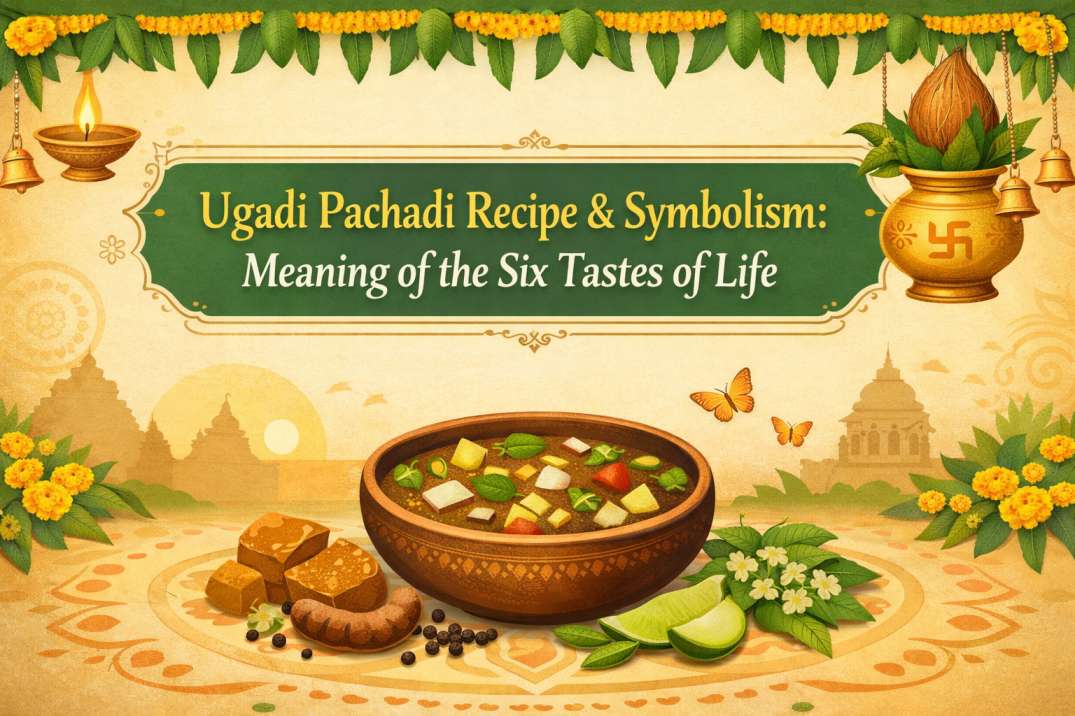
Ugadi Pachadi is a sacred festive dish prepared during the Hindu festival of Ugadi, which marks the Telugu and Kannada New Year. Celebrated mainly in the states of Andhra Pradesh, Telangana, and Karnataka, this unique preparation represents the philosophy of life through six distinct tastes.
From an astrological perspective, Ugadi also marks the beginning of the Chaitra month in the Hindu lunar calendar, when the Sun transitions close to Aries, symbolizing renewal, action, and fresh beginnings. Ugadi Pachadi is not just food; it is a symbolic reminder that life includes happiness, sadness, anger, fear, surprise, and peace.
Each ingredient in the dish reflects one emotional experience of life and is associated with planetary influences described in Vedic astrology. Consuming this mixture at the start of the year is believed to help individuals mentally accept the varied experiences that the upcoming year may bring.
What Is Ugadi Pachadi?
Ugadi Pachadi is a traditional festive mixture made with six ingredients that represent the six tastes (Shadruchulu) in life.
These tastes symbolize different human emotions and life experiences:
- Sweet – happiness
- Sour – surprises
- Bitter – sadness
- Spicy – anger or intensity
- Salty – interest and balance
- Astringent – challenges and discipline
This philosophical interpretation aligns with the Hindu belief that life is a balanced mix of positive and negative experiences.
A traditional Sanskrit verse reflects this idea:
“षड्रसं जीवनं प्रोक्तं सुखदुःखसमन्वितम्।”
(Life contains six tastes, combining joy and sorrow.)
Ugadi Pachadi Recipe (Traditional Method)
Ingredients
The ingredients used in Ugadi Pachadi are simple yet deeply symbolic.
- Neem flowers or tender neem leaves – bitterness
- Jaggery (gud) – sweetness
- Raw mango pieces – tangy taste
- Tamarind pulp – sourness
- Green chilli or black pepper – spice
- Salt – balance
Optional additions in some regions include:
- Coconut pieces
- Banana
- Roasted gram powder
Preparation Steps
- Soak tamarind in warm water and extract the pulp.
- Add finely chopped raw mango pieces into the tamarind water.
- Mix grated jaggery until it dissolves completely.
- Add crushed neem flowers or leaves.
- Sprinkle salt and green chilli for flavor.
- Mix all ingredients thoroughly to create a balanced blend.
The dish is traditionally prepared in the morning on Ugadi day before prayers and consumed after performing household rituals.
Symbolism of the Six Tastes of Life
The deeper meaning of Ugadi Pachadi lies in the symbolic connection between food, emotions, and planetary influences described in Vedic traditions.
1. Sweet – Jaggery (Happiness)
Jaggery represents joy, success, and positive experiences in life.
Astrologically, sweetness is often associated with Venus, the planet of pleasure, relationships, and harmony.
It reminds individuals that:
- Happiness comes from gratitude.
- Love and kindness bring sweetness into life.
2. Sour – Tamarind (Surprise)
The sour taste symbolizes unexpected events and surprises.
In astrology, sudden changes are connected with Rahu, which represents unpredictability and transformation.
This taste reminds people to stay adaptable when life presents unexpected opportunities or challenges.
3. Bitter – Neem (Sadness)
Neem is the most important ingredient in Ugadi Pachadi and symbolizes sadness or difficult experiences.
Bitter experiences are often linked to Saturn, the planet of discipline, karma, and life lessons.
It teaches that:
- Hardships build resilience.
- Difficult phases eventually lead to wisdom and maturity.
4. Spicy – Chilli or Pepper (Anger and Energy)
The spicy element represents anger, intensity, and emotional reactions.
This taste is connected to Mars, the planet of energy, courage, and action.
The symbolism suggests:
- Strong emotions should be channelled constructively.
- Determination can turn challenges into achievements.
5. Salty – Salt (Interest and Balance)
Salt represents interest, curiosity, and balance in life.
It is often linked to Moon, which governs emotions, nourishment, and mental stability.
Salt reminds us that:
- Balance is essential for emotional well-being.
- Small elements bring harmony to life.
6. Astringent – Raw Mango (Challenges and Growth)
Raw mango represents the astringent taste and symbolizes challenges that lead to growth.
Astrologically, it relates to Mercury, which governs intellect, adaptability, and learning.
This taste suggests:
- Every challenge carries a lesson.
- Growth comes through experience.
Astrological Significance of Ugadi Pachadi
Ugadi occurs during the Chaitra Shukla Pratipada, which marks the beginning of the Hindu lunar year.
Key astrological aspects include:
- The Sun begins a new cycle of energy around Aries, the first zodiac sign.
- The Moon phase symbolizes renewal and emotional beginnings.
- Planetary transitions during mid-March often indicate new karmic cycles.
From a Vedic astrology perspective, eating Ugadi Pachadi symbolizes acceptance of destiny and prepares the mind for the varied experiences that the upcoming year may bring.
Practical Spiritual Insights for Ugadi
Ugadi Pachadi is also connected with simple spiritual practices followed on Ugadi morning (usually between 6:00 AM and 10:00 AM IST, depending on local sunrise and muhurat).
Some traditional practices include:
- Cleaning the house and decorating with mango leaves.
- Listening to Panchanga Shravanam (yearly horoscope reading).
- Offering Ugadi Pachadi to deities before consumption.
Simple remedies for positivity during the new year:
- Light a ghee lamp facing east.
- Chant “ॐ सूर्याय नमः” 11 times to honour the Sun.
- Donate food or fruits to those in need.
These practices encourage gratitude, humility, and awareness of life’s cyclical nature.
Conclusion
Ugadi Pachadi beautifully represents the philosophical wisdom of Indian culture: life is a combination of many experiences, not just happiness. The six tastes remind individuals that joy, sorrow, anger, surprise, fear, and balance all play essential roles in shaping personal growth.
From an astrological perspective, the preparation and consumption of Ugadi Pachadi on Ugadi morning (IST) symbolize acceptance of the new cosmic cycle and readiness to embrace the year ahead.
By reflecting on the symbolism of this simple dish, people can begin the new year with mindfulness, gratitude, and emotional balance. As the new lunar year unfolds, the message of Ugadi Pachadi remains timeless, accept life in all its flavours and continue growing with wisdom.
FAQs
1. Why is Ugadi Pachadi eaten on Ugadi?
Ugadi Pachadi is eaten to symbolize the six emotional experiences of life.
The mixture contains six tastes that represent joy, sadness, anger, fear, surprise, and peace. Consuming it reminds people that the upcoming year will include both pleasant and challenging moments.
Traditional belief suggests that accepting all emotions with balance helps individuals face life with maturity.
Tips:
- Eat it after morning prayers.
- Offer it to deities before consuming.
- Share it with family members to symbolize unity.
2. What do the six tastes in Ugadi Pachadi represent?
The six tastes represent the emotional diversity of human life.
In Vedic philosophy, these tastes mirror real experiences people encounter throughout the year, encouraging acceptance and emotional balance.
Each taste corresponds to a specific life lesson.
Symbolic meanings:
- Sweet – happiness
- Bitter – sadness
- Sour – surprise
- Spicy – anger
- Salty – interest
- Astringent – challenges
3. What is the spiritual meaning of neem in Ugadi Pachadi?
Neem symbolizes the bitter experiences that teach life lessons.
In traditional Ayurvedic and spiritual beliefs, neem represents purification, discipline, and protection from negativity.
Its bitterness reminds people that hardships often lead to wisdom and growth.
Practical insight:
- Neem is also considered medicinal.
- It supports immunity during seasonal transitions.
- Symbolically, it encourages patience and resilience.
4. Can Ugadi Pachadi be prepared in different ways?
Yes, the recipe may vary slightly by region and family tradition.
Some households add coconut, banana, or roasted gram powder to enhance flavour, while others keep the mixture very simple.
Despite variations, the six primary tastes remain essential.
Common variations include:
- Adding coconut pieces for texture
- Including banana for natural sweetness
- Adjusting chilli levels for spice
5. Is Ugadi Pachadi related to astrology?
Yes, the dish symbolically aligns with the beginning of a new lunar year in Vedic astrology.
Ugadi marks the start of the Chaitra month and represents new cosmic cycles that influence human life.
The six tastes reflect the diverse planetary energies that individuals may experience during the year.
Astrological reflection:
- Accept both favourable and challenging planetary periods.
- Begin the year with gratitude and awareness.
- Maintain emotional balance regardless of circumstances.