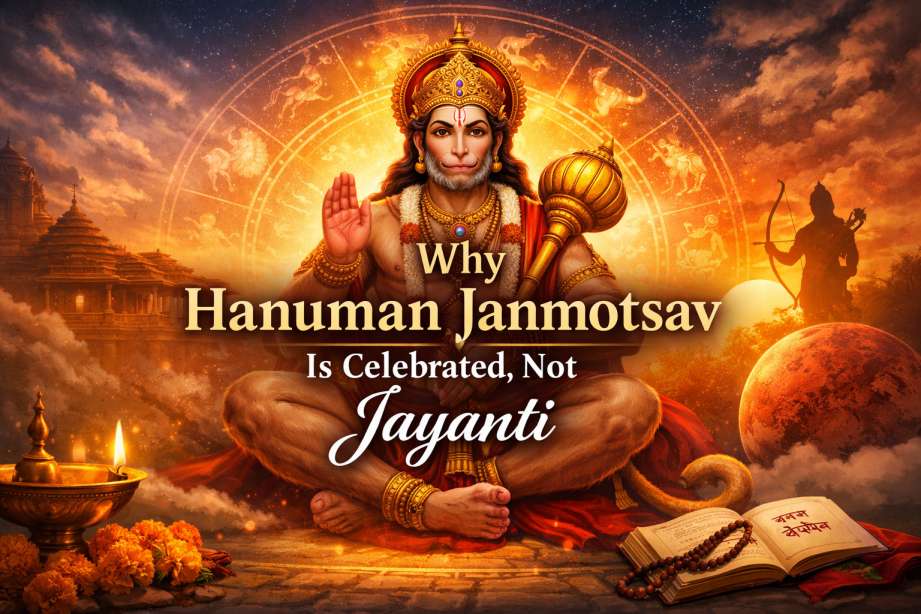
In Hindu tradition, most divine incarnations are commemorated through Jayanti, marking their birth anniversary. However, in the case of Lord Hanuman, devotees often refer to the occasion as Hanuman Janmotsav rather than Jayanti. This distinction is not merely linguistic; it reflects a profound spiritual and astrological truth.
Hanuman is considered Chiranjivi (immortal), meaning his presence transcends time and continues even today. In Vedic astrology and spiritual philosophy, this eternal existence aligns with the concept of continuous cosmic energy rather than a fixed birth event. Understanding this helps us connect Hanuman Janmotsav with planetary influences, especially Mars (Mangal), and its relevance in daily life.
Why “Janmotsav” and Not “Jayanti”?
The Concept of Eternal Birth
The term Janmotsav means “celebration of birth,” while Jayanti refers to a fixed birth anniversary. Hanuman is believed to exist beyond time cycles (Kaal), making his birth not a past event but an ongoing divine presence.
According to scriptures:
“अजर अमर गुणनिधि सुत होऊ”
(You are immortal and full of divine virtues)
This suggests that Hanuman’s energy is ever-active, which aligns with the idea of Janmotsav—a celebration of a living force.
Astrological Interpretation
In astrology:
- Hanuman is associated with Mars (Mangal)
- Mars represents:
- Strength
- Courage
- Discipline
- Protection from negative energies
Unlike other deities tied to specific planetary cycles, Hanuman’s energy is considered constant, much like a stabilizing force in a fluctuating horoscope.
Astrological Significance of Hanuman Janmotsav
Connection with Mars (Mangal)
Mars governs:
Hanuman’s worship is believed to balance Mars-related issues such as:
- Anger and impulsiveness
- Blood-related health issues
- Legal conflicts or disputes
Impact on Zodiac Signs
Hanuman Janmotsav is especially significant for:
- Aries & Scorpio: Enhances courage and decision-making
- Cancer: Reduces emotional instability
- Leo: Strengthens leadership qualities
- Capricorn & Aquarius: Helps overcome obstacles and delays
Planetary Yogas and Remedies
People with the following placements benefit greatly:
- Weak or afflicted Mars (Mangal Dosha)
- Mars in 6th, 8th, or 12th house
- Conjunction of Mars with Rahu or Saturn
Spiritual and Practical Relevance in Daily Life
Hanuman Janmotsav is not just a ritual—it offers practical tools for modern challenges.
Emotional Strength and Mental Stability
Regular Hanuman worship helps:
- Reduce anxiety and fear
- Improve focus and discipline
- Build resilience during tough times
Protection from Negative Energies
In Vedic belief, Hanuman protects against:
- Evil eye (Nazar)
- Black magic (Tantrik dosh)
- Negative planetary influences
Simple Remedies for Hanuman Janmotsav
Daily or Weekly Practices
- Chant “ॐ हनुमते नमः” 108 times
- Recite Hanuman Chalisa on Tuesdays and Saturdays
- Offer sindoor and jasmine oil
Astrological Remedies
- Strengthen Mars by:
- Donating red lentils (masoor dal)
- Feeding monkeys or cows
- Wearing red on Tuesdays
Time-Specific Rituals (IST)
- Ideal पूजा time: Sunrise to 11:30 AM IST
- Evening prayers: After sunset, around 6:30–8:00 PM IST
Deeper Symbolism: Hanuman as a Cosmic Force
Hanuman represents:
- Mind control (Manas Shakti)
- Breath energy (Prana)
- Devotion (Bhakti)
In yogic science:
- Hanuman symbolizes control over the root chakra (Muladhara)
- His energy helps awaken inner strength and spiritual discipline
This makes Janmotsav not just a celebration, but a reminder to activate these energies within ourselves.
Conclusion
The celebration of Hanuman Janmotsav instead of Jayanti reflects a deeper spiritual understanding—Hanuman is not bound by time, but is an eternal presence guiding humanity. Astrologically, his connection with Mars makes him a powerful force for strength, protection, and discipline.
By aligning with Hanuman’s energy through simple practices, individuals can overcome obstacles, stabilize their emotions, and lead a more balanced life. Instead of viewing this day as a past event, it becomes an opportunity to awaken divine strength within.
FAQs Section
1. Why is Hanuman called Chiranjivi?
Answer: Hanuman is called Chiranjivi because he is believed to be immortal and present in all ages.
Hanuman was blessed with eternal life to continue serving Lord Rama and protecting devotees. This makes his existence ongoing rather than limited to a historical timeline.
Tips:
- Chant Hanuman mantras regularly
- Visit Hanuman temples on Tuesdays
- Practice discipline and service
2. How does Hanuman worship affect Mars in astrology?
Answer: Hanuman worship strengthens and balances the planet Mars.
Mars governs energy, courage, and action. Worshipping Hanuman helps reduce negative Mars effects like anger, conflicts, and impulsive decisions.
Remedies:
- Recite Hanuman Chalisa
- Donate red items
- Avoid aggression and impulsive actions
3. What is the best time to perform Hanuman puja?
Answer: The best time is early morning between sunrise and 11:30 AM IST.
Morning hours are considered spiritually active and ideal for ग्रह शांति (planetary balance).
Tips:
- Maintain cleanliness
- Light a diya with jasmine oil
- Sit facing east while praying
4. Can Hanuman remove negative energies?
Answer: Yes, Hanuman is believed to protect against negative energies and fears.
His energy symbolizes strength and protection, making him a guardian against unseen forces.
Practices:
- Chant “ॐ हनुमते नमः”
- Keep Hanuman Chalisa at home
- Avoid negative thoughts and environments
5. Why is Hanuman Janmotsav important in modern life?
Answer: It helps individuals build mental strength, discipline, and emotional stability.
In today’s fast-paced life, Hanuman’s qualities—focus, courage, and devotion—offer practical solutions to stress and uncertainty.
Action Steps:
- Practice daily meditation
- Follow a disciplined routine
Engage in selfless service (Seva)