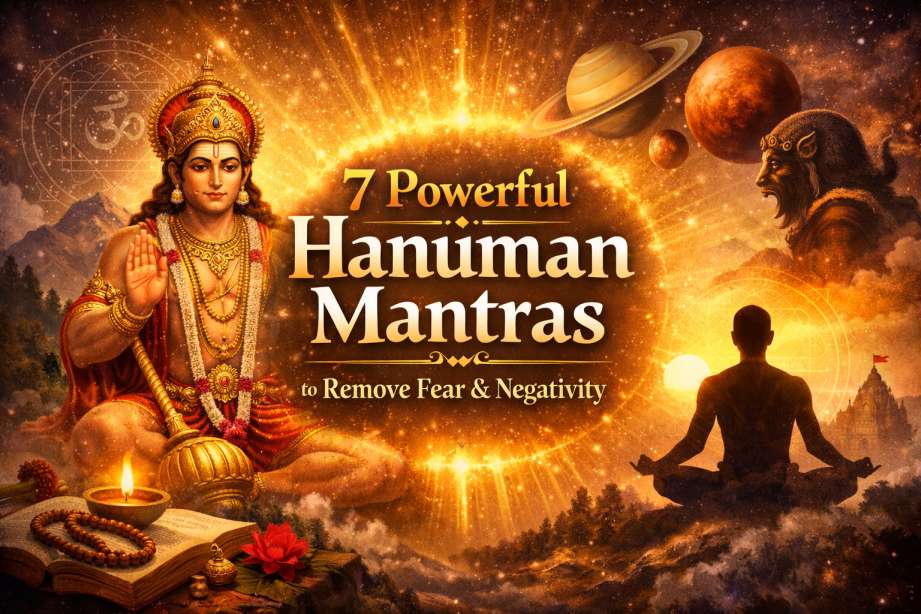
In Vedic astrology, fear and negativity are often linked with imbalanced planetary energies; especially Shani (Saturn), Mangal (Mars), and Rahu. These influences can create anxiety, self-doubt, delays, and mental unrest in daily life. Worship of Lord Hanuman is considered one of the most effective spiritual remedies to neutralize such effects.
Lord Hanuman symbolizes courage, strength, devotion, and protection. Chanting Hanuman mantras is not just a religious act, it is a psychological and energetic practice that stabilizes the mind and improves resilience. Especially on Tuesdays and Saturdays (IST), these mantras are believed to be more impactful due to their connection with Mars and Saturn.
This blog explores 7 powerful Hanuman mantras, their meanings, and how they help remove fear and negativity in a practical, grounded way.
Astrological Significance of Hanuman Worship
Connection with Planets
- Saturn (Shani): Causes delays, fear, and karmic challenges
- Mars (Mangal): Governs courage, action, and confidence
- Rahu: Linked to confusion, illusion, and anxiety
Hanuman worship is traditionally recommended during:
- Sade Sati (Saturn transit over Moon)
- Weak Mars in the birth chart
- Rahu-related mental disturbances
Why Hanuman Mantras Work
- Sound vibrations regulate breathing and calm the nervous system
- Repetition improves focus and reduces overthinking
- Cultural belief systems reinforce emotional strength
7 Powerful Hanuman Mantras
1. Hanuman Beej Mantra
“ॐ ऐं भ्रीम हनुमते श्री राम दूताय नमः”
Benefits:
- Enhances courage and clarity
- Reduces irrational fears
- Strengthens mental focus
How to Chant:
- 108 times daily, preferably at sunrise (around 6:00–7:00 AM IST)
2. Hanuman Moola Mantra
“ॐ हनुमते नमः”
Benefits:
- Simple and effective for beginners
- Removes negative thought patterns
- Builds inner stability
Best Time:
- Early morning or before sleep (IST)
3. Bajrang Baan (Short Invocation)
“जय हनुमंत संत हितकारी”
Benefits:
- Protection from external negativity
- Useful during stressful situations
- Strengthens emotional boundaries
Note: Traditionally recited with discipline and sincerity.
4. Hanuman Gayatri Mantra
“ॐ आंजनेयाय विद्महे वायुपुत्राय धीमहि तन्नो हनुमत् प्रचोदयात्”
Benefits:
- Enhances wisdom and decision-making
- Improves concentration
- Balances emotional fluctuations
Ideal Practice:
- Chant during meditation for 10–15 minutes (IST)
5. Sankat Mochan Hanuman Ashtak (Opening Line)
“बाल समय रवि भक्ष लियो तब”
Benefits:
- Removes obstacles (Sankat)
- Helps during difficult life phases
- Builds faith and patience
6. Hanuman Chalisa (Key Verse)
“भूत पिशाच निकट नहीं आवे, महावीर जब नाम सुनावे”
Benefits:
- Reduces fear of unknown or unseen forces
- Promotes emotional safety
- Widely practiced across India
Best Time:
- Evening prayer (around 6:00–8:00 PM IST)
7. Fear Removal Mantra
“ॐ नमो भगवते हनुमते नमः”
Benefits:
- Specifically for anxiety and fear
- Calms the mind quickly
- Can be chanted silently anytime
Practical Remedies to Enhance Results
Daily Practices
- Light a mustard oil diya on Tuesdays and Saturdays (IST)
- Offer red flowers or सिंदूर to Hanuman idol
- Maintain a clean and quiet chanting space
Lifestyle Alignment
- Practice disciplined routines (linked to Saturn balance)
- Engage in physical activity (supports Mars energy)
- Avoid excessive negative media consumption
Who Should Chant These Mantras?
- People going through Sade Sati or Dhaiya
- Individuals facing anxiety, fear, or confusion
- Students and professionals needing focus and confidence
Real-Life Relevance
From a practical perspective, mantra chanting works like a structured mental exercise. It:
- Creates a consistent daily routine
- Improves breathing patterns
- Encourages positive self-suggestion
While astrology provides the framework, the real benefit comes from regular practice and intention.
Conclusion
Hanuman mantras offer a balanced approach to managing fear and negativity by combining astrological wisdom with practical discipline. Whether influenced by Saturn’s challenges or Mars-related imbalances, these chants act as tools to restore inner strength and clarity.
Instead of viewing them as quick fixes, treat these mantras as daily practices that gradually improve mental resilience. Start with one simple mantra, stay consistent, and observe the shift in your emotional and psychological state over time.
FAQs
1. Which Hanuman mantra is best for removing fear?
The mantra “ॐ नमो भगवते हनुमते नमः” is highly effective for reducing fear.
This mantra directly addresses anxiety by calming the mind and stabilizing thoughts. It is simple, making it easy to repeat during stressful moments.
Tips:
- Chant silently during anxiety
- Combine with deep breathing
- Repeat 21 or 108 times daily
2. Can Hanuman mantras reduce the effects of Saturn (Shani)?
Yes, Hanuman worship is traditionally believed to reduce Saturn’s negative effects.
According to Vedic texts, Lord Hanuman protects devotees from Shani-related challenges like delays and fear.
Remedies:
- Chant on Saturdays (IST)
- Light mustard oil diya
- Recite Hanuman Chalisa
3. How long does it take for Hanuman mantras to show results?
Results depend on consistency and mindset rather than a fixed timeline.
Some people feel calmer within days, while deeper changes may take weeks of regular chanting.
Guidelines:
- Practice daily for at least 21 days
- Maintain a fixed time (IST)
- Avoid skipping sessions
4. Can anyone chant Hanuman mantras?
Yes, Hanuman mantras can be chanted by anyone regardless of age or background.
There are no strict restrictions, but sincerity and discipline improve effectiveness.
Best Practices:
- Sit in a शांत (calm) place
- Keep pronunciation clear
- Focus on meaning, not just repetition
5. Is it necessary to follow rituals while chanting?
No, rituals are optional; consistency matters more than complexity.
While traditional practices enhance the experience, simple chanting with focus is sufficient.
Simple Approach:
- Choose one mantra
- Chant at a fixed time (IST)
- Stay mentally present during practice