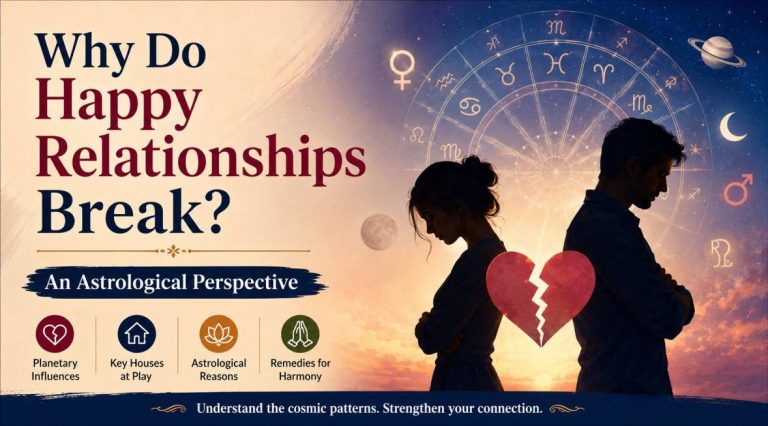
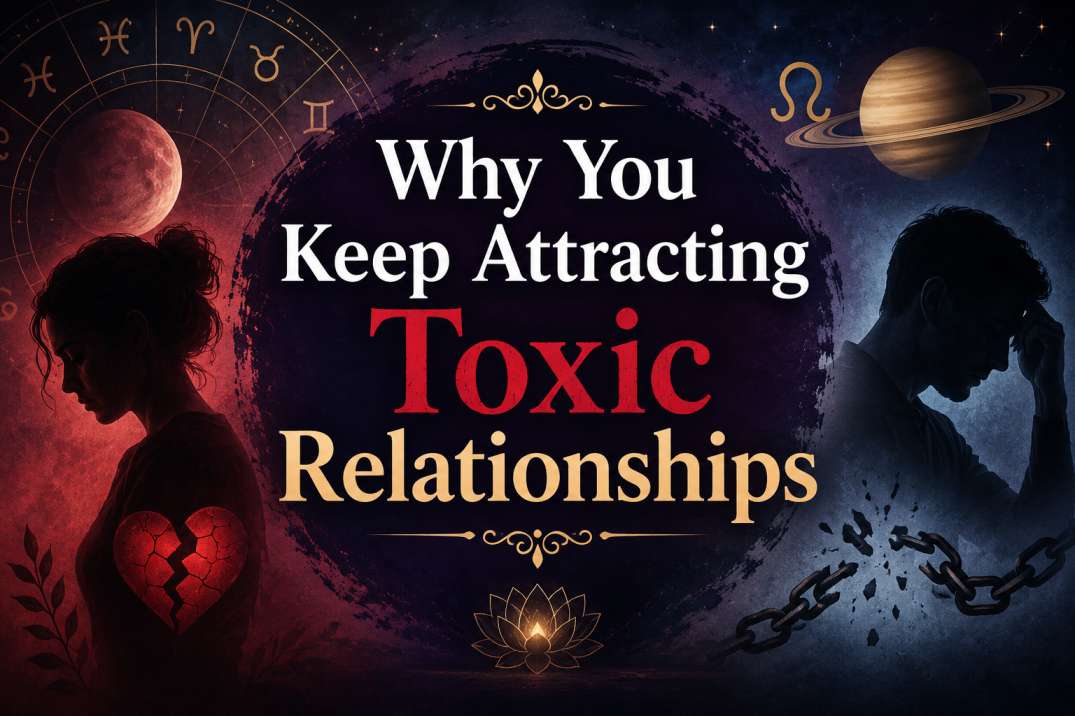
Many people repeatedly experience emotionally draining or toxic relationships without fully understanding the deeper reason behind these patterns. In Vedic astrology, relationship challenges are often linked to planetary combinations, emotional conditioning, karmic lessons, and the influence of certain houses in the birth chart. While astrology does not force negative experiences, it can reveal behavioral tendencies, emotional vulnerabilities, and recurring patterns that influence personal relationships.
In Indian astrology, the 5th house, 7th house, Venus, Moon, Rahu, Ketu, and Saturn play major roles in romantic experiences. When these planets are afflicted or poorly placed, a person may unknowingly attract emotionally unavailable, manipulative, or unstable partners. Understanding these astrological signals can help individuals make healthier choices and improve emotional awareness in daily life.
The Astrological Meaning of Toxic Relationships
In Vedic astrology, toxic relationships are often connected to unresolved karmic patterns. These patterns may create repeated emotional lessons until a person develops stronger self-worth, boundaries, and emotional clarity.
Some common signs of toxic relationship patterns include:
- Constant emotional confusion
- Repeated betrayal or dishonesty
- One-sided emotional investment
- Fear of abandonment
- Attraction toward unavailable partners
- Emotional dependency
Astrology studies these tendencies through planetary placements rather than predicting unavoidable outcomes.
Key Planets Responsible for Toxic Relationship Patterns
Venus Afflictions and Unhealthy Love Patterns
Venus represents love, romance, attraction, pleasure, and relationship values. When Venus is afflicted by Rahu, Saturn, Mars, or Ketu, relationship experiences may become emotionally complicated.
Common Venus Challenges
- Attraction toward emotionally unavailable people
- Confusion between love and obsession
- Dependency on validation
- Difficulty recognizing red flags
For example:
- Venus with Rahu may create illusion-based attraction.
- Venus with Saturn can bring fear of rejection or delayed emotional fulfillment.
- Venus with Mars may increase impulsive or conflict-driven relationships.
Moon and Emotional Vulnerability
The Moon governs emotional stability and mental peace. A weak or afflicted Moon may cause emotional insecurity and attachment issues.
People with Moon-Rahu or Moon-Ketu combinations may:
- Ignore emotional boundaries
- Become overly attached quickly
- Struggle with emotional clarity
- Feel emotionally dependent on partners
In traditional astrology, emotional imbalance is often linked with the Moon’s condition in the chart.
A meaningful Sanskrit reminder from the Bhagavad Gita is:
“उद्धरेदात्मनात्मानं”
One should uplift oneself by one’s own mind.
This highlights the importance of emotional self-awareness and inner balance.
Rahu and Obsessive Attraction
Rahu is associated with illusion, obsession, desire, and unconventional experiences. Strong Rahu influence in relationship houses may create attraction toward dramatic or unstable partners.
Signs of Rahu-related relationship patterns:
- Instant emotional attachment
- Attraction toward “forbidden” or risky relationships
- Difficulty leaving toxic situations
- Emotional highs and lows
Rahu often creates temporary excitement but emotional instability over time.
Saturn and Karmic Relationship Lessons
Saturn represents karma, responsibility, patience, and emotional maturity. Difficult Saturn placements may attract emotionally distant or controlling partners.
However, Saturn’s purpose is usually growth and maturity rather than punishment.
People influenced by Saturn lessons may experience:
- Delayed relationships
- Fear of intimacy
- Long-term emotional burdens
- Relationships based on duty rather than emotional connection
Important Houses Linked to Relationship Problems
5th House – Romance and Emotional Expression
The 5th house governs dating, attraction, and emotional bonding. Malefic influences here may create unstable romantic experiences.
7th House – Marriage and Partnerships
The 7th house directly rules long-term relationships and marriage. Afflictions here may indicate recurring conflicts, imbalance, or incompatible partners.
8th House – Emotional Intensity and Trauma
The 8th house represents deep emotional transformation, secrets, and psychological bonding. Strong 8th house activity may increase emotionally intense relationships.
12th House – Emotional Escapism
The 12th house relates to subconscious patterns and emotional isolation. Certain placements here may create unhealthy sacrifice or emotional escapism in relationships.
Zodiac Signs More Prone to Emotional Imbalance
While every chart is unique, some signs may experience emotional extremes differently.
Pisces
Highly emotional and compassionate, Pisces may ignore warning signs to maintain emotional attachment.
Scorpio
Scorpio energy seeks deep emotional intensity, which can sometimes attract controlling or emotionally complex dynamics.
Cancer
Cancer natives often prioritize emotional security and may stay in unhealthy relationships due to emotional attachment.
Libra
Libra values partnership strongly and may avoid confrontation, even in emotionally unhealthy situations.
Practical Astrological Remedies for Toxic Relationship Patterns
Astrology focuses on awareness and balance rather than fear. These practical remedies can support emotional healing.
Strengthen the Moon
A stable Moon improves emotional clarity.
Remedies:
- Practice meditation daily, especially before 9:00 PM IST
- Spend time near water or nature
- Chant “Om Som Somaya Namah” on Mondays
- Maintain healthy sleep routines
Improve Venus Energy
Healthy Venus energy supports self-worth and balanced love.
Remedies:
- Wear clean white or pastel clothes on Fridays
- Donate sweets or white rice to women in need
- Avoid emotionally impulsive decisions
- Focus on creative hobbies and self-care
Reduce Rahu Confusion
Remedies:
- Limit emotional overthinking
- Avoid secretive relationships
- Practice grounding exercises
- Chant “Om Rahave Namah” on Saturdays
Saturn Remedies for Emotional Maturity
Remedies:
- Maintain discipline in daily routines
- Set emotional boundaries
- Volunteer or help elderly people
- Practice patience before major relationship decisions
Real-Life Relevance of These Astrological Patterns
Modern relationship stress is often connected to emotional habits, childhood conditioning, and communication patterns. Astrology provides a symbolic framework to understand these tendencies more clearly.
For example:
- A person with Venus-Rahu may repeatedly confuse attraction with compatibility.
- Someone with Saturn influence may tolerate emotional neglect for long periods.
- Moon afflictions may create emotional dependency or fear of loneliness.
Recognizing these patterns early can help individuals make healthier emotional choices.
Conclusion
Attracting toxic relationships repeatedly is not always about bad luck. In Vedic astrology, these experiences are often linked to emotional patterns, karmic lessons, and planetary influences that encourage personal growth and emotional awareness.
Planets like Venus, Moon, Rahu, and Saturn can influence relationship behavior, attachment style, and emotional boundaries. However, astrology is meant to guide self-understanding, not create fear. With emotional awareness, practical remedies, and conscious choices, unhealthy relationship cycles can gradually improve.
Instead of asking, “Why does this always happen to me?” it may be more helpful to ask, “What is this experience teaching me about myself?”
FAQs
1. Which planet is mainly responsible for toxic relationships?
Venus, Rahu, Moon, and Saturn are most commonly linked to toxic relationship patterns in Vedic astrology.
Venus affects love and attraction, Rahu creates obsession or illusion, Moon governs emotional stability, and Saturn brings karmic lessons and emotional delays. Their combinations can influence relationship experiences differently.
Helpful Tips:
- Check Venus placement in your birth chart
- Observe recurring emotional patterns
- Avoid emotionally rushed decisions
- Strengthen emotional self-awareness
2. Can astrology predict a toxic partner?
Astrology can indicate emotional tendencies and compatibility issues, but it cannot guarantee specific outcomes.
A birth chart may show vulnerability toward unhealthy dynamics, emotional dependency, or karmic lessons. However, personal choices and awareness remain extremely important.
Helpful Tips:
- Study compatibility carefully
- Focus on communication and emotional maturity
- Avoid ignoring red flags
- Seek balanced relationships over intense attraction
3. How can I strengthen my Venus for better relationships?
You can strengthen Venus through emotional balance, self-respect, and traditional Venus remedies.
Venus improves when a person develops healthy self-worth, artistic expression, emotional harmony, and respectful relationship behavior.
Remedies:
- Chant “Om Shukraya Namah” on Fridays
- Wear clean white clothes
- Practice gratitude in relationships
- Avoid manipulative behavior
4. Why do Rahu-influenced relationships feel intense?
Rahu creates strong desire, illusion, and emotional excitement, which can make relationships feel addictive.
These relationships often begin with intense attraction but may later reveal confusion, instability, or emotional imbalance.
Helpful Tips:
- Avoid impulsive attachment
- Give relationships time to develop
- Maintain emotional boundaries
- Focus on clarity over excitement
5. Does Saturn always create relationship problems?
No, Saturn mainly teaches maturity, patience, and emotional responsibility in relationships.
While Saturn periods may feel emotionally heavy, they can also lead to stable and meaningful long-term partnerships when handled with patience.
Remedies:
- Build emotional discipline
- Avoid fear-based decisions
- Practice consistency in relationships
- Respect long-term commitment