
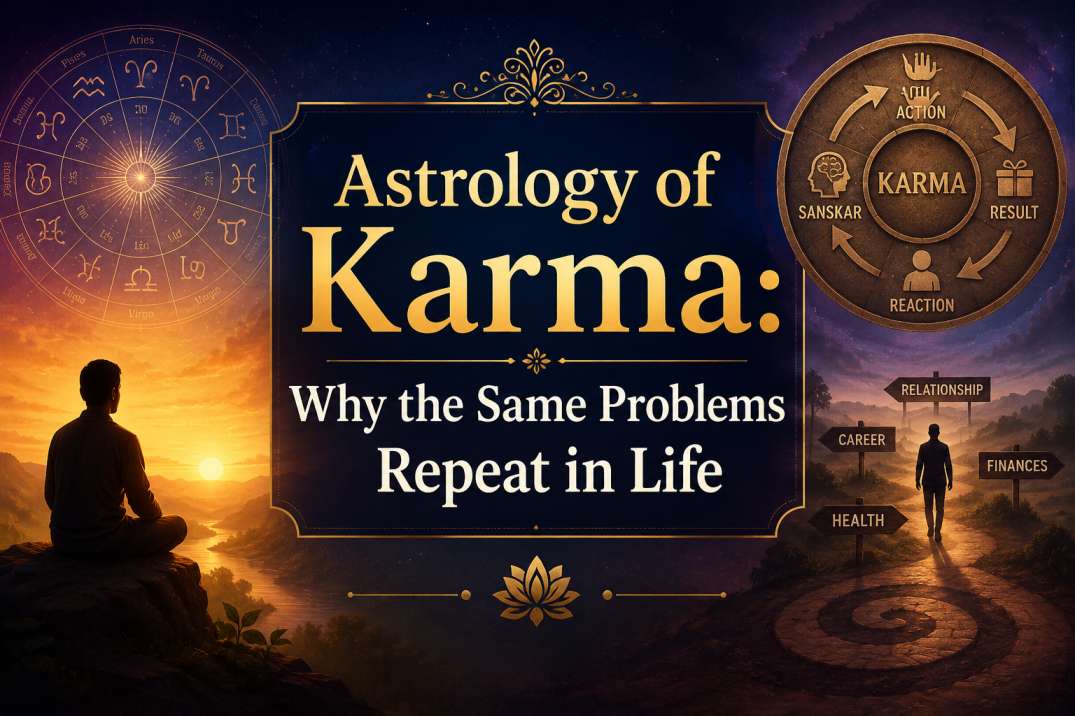
Have you ever wondered why certain challenges keep appearing in your life despite your best efforts to move forward? Some people repeatedly face relationship issues, financial setbacks, career obstacles, or emotional struggles. In Vedic astrology, these recurring patterns are often viewed through the lens of karma.
The astrology of karma explores how past actions, habits, and unresolved lessons may influence present-life experiences. Rather than predicting unavoidable destiny, Vedic astrology offers a symbolic framework for understanding recurring life themes and opportunities for growth.
By studying planetary placements, houses, and karmic indicators in a birth chart, astrologers attempt to identify patterns that may explain why certain situations seem to repeat. Understanding these patterns can help individuals make more conscious choices and break unhelpful cycles.
Understanding Karma in Vedic Astrology
In Sanskrit, the word karma means “action.” According to traditional Indian philosophy, every action creates an impression that may produce future consequences.
The Bhagavad Gita states:
“कर्मण्येवाधिकारस्ते मा फलेषु कदाचन”
This teaching emphasizes focusing on actions rather than becoming attached to outcomes.
From an astrological perspective, karma is not viewed as punishment. Instead, it represents lessons, tendencies, and unfinished experiences that may require awareness and growth.
Signs That a Karmic Pattern May Be Repeating
Some common examples include:
- Repeated relationship disappointments
- Frequent career instability
- Ongoing financial challenges
- Difficulty trusting others
- Recurring family conflicts
- Similar emotional triggers across different situations
When such patterns persist over many years, astrologers often examine karmic indicators within the horoscope.
Key Planetary Influences Related to Karma
Saturn (Shani): The Planet of Karmic Lessons
Saturn is widely considered the primary karmic planet in Vedic astrology.
It represents:
- Responsibility
- Discipline
- Delayed rewards
- Life lessons
- Long-term growth
When Saturn strongly influences important houses, individuals may encounter repeated challenges until patience, maturity, and accountability are developed.
For example:
- Saturn in the 7th House may delay relationship stability.
- Saturn in the 10th House may create career struggles before success arrives.
Rahu: The Karmic Desire
Rahu symbolizes desires, ambitions, and experiences that feel unfamiliar or incomplete.
Its influence can create:
- Obsessions
- Repeated temptations
- Sudden opportunities
- Unusual life circumstances
Many astrologers associate Rahu with lessons that require balance and self-awareness.
Ketu: The Past-Life Indicator
Ketu is often linked with past experiences and natural talents.
Its placement may indicate:
- Areas where a person feels detached
- Lessons already learned
- Spiritual growth opportunities
The Rahu-Ketu axis frequently reveals important karmic themes within a birth chart.
Houses Associated with Karmic Patterns
The 6th House
The 6th House governs:
- Debts
- Conflicts
- Health issues
- Daily responsibilities
Strong afflictions here may indicate recurring struggles that require practical solutions and discipline.
The 8th House
The 8th House is associated with:
- Transformation
- Hidden issues
- Sudden events
- Deep psychological change
Repeated crises often encourage personal growth and self-discovery.
The 12th House
The 12th House relates to:
- Spirituality
- Isolation
- Subconscious patterns
- Letting go
Significant activity in this house may point toward unresolved emotional or karmic lessons.
Zodiac Signs and Recurring Life Lessons
Every zodiac sign carries specific growth themes.
Aries
- Learning patience
- Managing impulsiveness
- Developing strategic thinking
Taurus
- Releasing attachment to security
- Adapting to change
Gemini
- Improving focus
- Avoiding scattered energy
Cancer
- Creating emotional boundaries
- Balancing care for self and others
Leo
- Managing ego and recognition needs
Virgo
- Overcoming perfectionism
- Accepting imperfection
Libra
- Finding balance in relationships
Scorpio
- Learning trust and emotional transformation
Sagittarius
- Combining freedom with responsibility
Capricorn
- Balancing ambition and personal life
Aquarius
- Integrating individuality with community
Pisces
- Setting healthy boundaries and maintaining clarity
Karmic Yogas That May Indicate Repetition
Shrapit Yoga
Traditionally associated with Saturn and Rahu conjunctions, this yoga is often linked to recurring obstacles and important life lessons.
Pitru Dosha
According to traditional astrology, Pitru Dosha may indicate ancestral karmic influences requiring attention through family responsibilities and spiritual practices.
Kala Sarpa Yoga
This yoga occurs when all planets fall between Rahu and Ketu. Interpretations vary among astrologers, but some associate it with intense life lessons and recurring challenges.
It is important to note that no yoga guarantees negative outcomes. The entire chart must always be analyzed before drawing conclusions.
Practical Remedies for Karmic Challenges
Astrology emphasizes awareness and corrective action rather than fear.
Strengthen Self-Awareness
- Maintain a daily journal.
- Observe recurring patterns.
- Identify emotional triggers.
Follow Consistent Discipline
Saturn-related remedies often include:
- Being punctual
- Honoring commitments
- Practicing patience
- Respecting elders
Charity and Service
Traditional Vedic practices recommend:
- Feeding the needy
- Supporting education
- Helping animals
- Volunteering regularly
Meditation and Mantra Practice
Regular meditation can improve emotional clarity.
Common practices include:
- Om Namah Shivaya
- Gayatri Mantra
- Mindfulness meditation
Consult a Qualified Astrologer
A professional analysis can help identify specific planetary influences and practical solutions tailored to an individual’s chart.
Real-Life Relevance of Karmic Astrology
Whether one interprets karma spiritually or psychologically, recurring life challenges often reveal important lessons.
For example:
- Repeated relationship failures may encourage healthier boundaries.
- Financial difficulties may teach planning and discipline.
- Career obstacles may develop resilience and adaptability.
Astrology can serve as a tool for reflection rather than a fixed prediction system.
Conclusion
The astrology of karma offers a meaningful framework for understanding why certain problems seem to repeat throughout life. Through the study of Saturn, Rahu, Ketu, karmic houses, and specific yogas, Vedic astrology seeks to uncover patterns that may influence personal experiences.
Rather than viewing karma as fate, it can be understood as an opportunity for awareness and growth. By recognizing recurring themes, adopting practical remedies, and making conscious choices, individuals may gradually transform challenging cycles into valuable life lessons.
The next time a familiar problem appears, consider asking not “Why is this happening to me?” but “What is this experience trying to teach me?” That simple shift in perspective may reveal the deeper wisdom behind the journey.
FAQs
1. Why do the same problems keep repeating in my life according to astrology?
Recurring problems are often associated with unresolved karmic lessons indicated by planetary placements and house influences.
Astrologers believe certain patterns continue until the underlying lesson is understood and addressed. Saturn, Rahu, and Ketu are commonly examined when identifying recurring themes.
Helpful approaches include:
- Self-reflection
- Consistent discipline
- Spiritual practices
- Professional horoscope analysis
2. Which planet is most connected with karma?
Saturn is generally considered the primary karmic planet in Vedic astrology.
It symbolizes responsibility, patience, consequences, and long-term learning. Challenges associated with Saturn often encourage maturity and personal development.
Ways to work with Saturn’s energy:
- Practice patience
- Maintain integrity
- Fulfill responsibilities
- Respect commitments
3. Can karmic patterns be changed?
Yes, many astrologers believe awareness and conscious action can help transform karmic patterns.
Astrology highlights tendencies rather than fixed outcomes. Personal choices remain an important factor in shaping future experiences.
Useful remedies include:
- Meditation
- Charity
- Skill development
- Emotional healing work
4. What role do Rahu and Ketu play in karma?
Rahu and Ketu represent important karmic themes and life lessons.
Rahu often points toward growth areas and desires, while Ketu may indicate past experiences, natural abilities, and areas of detachment.
To balance their influence:
- Avoid extremes
- Practice mindfulness
- Develop self-awareness
- Focus on long-term goals
5. Are karmic yogas always negative?
No, karmic yogas are not automatically negative.
They often indicate areas of life that require greater awareness, effort, and growth. Many successful individuals have challenging yogas in their charts.
Important reminders:
- Consider the entire horoscope.
- Avoid fear-based interpretations.
- Focus on constructive remedies.
- Seek guidance from experienced astrologers.