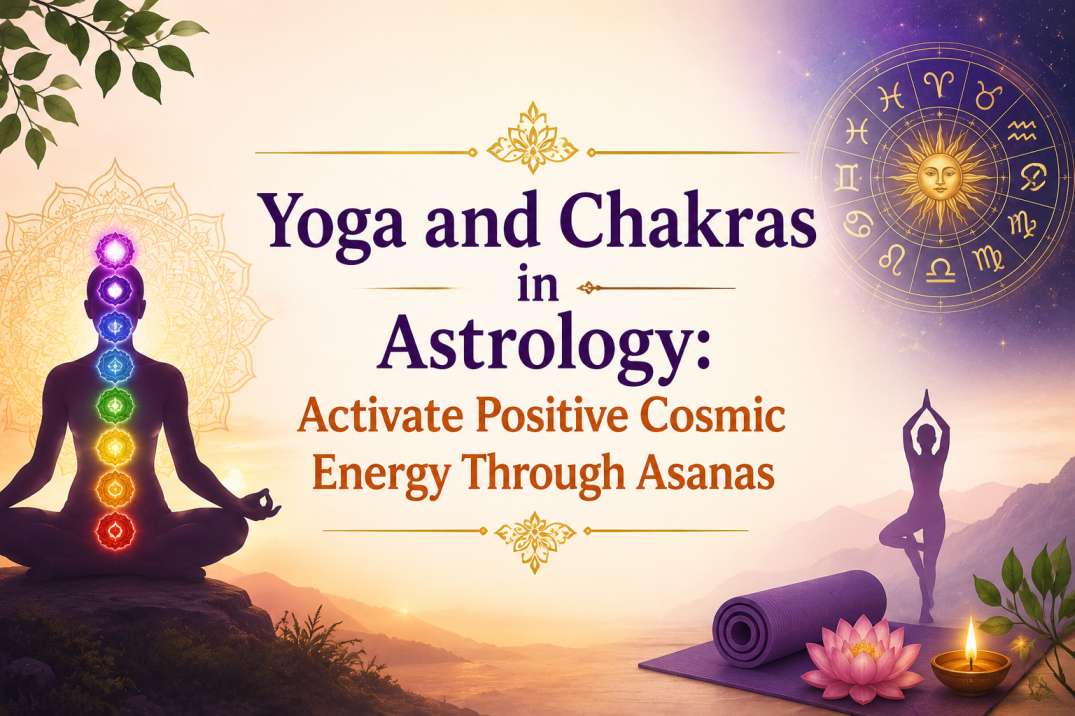
Yoga and astrology are two ancient sciences that have guided human well-being for thousands of years. While yoga focuses on harmonizing the body, mind, and spirit, Vedic astrology studies the influence of planetary energies on our lives. An interesting meeting point of these disciplines is the concept of chakras, the subtle energy centers believed to govern physical, emotional, and spiritual health.
According to traditional yogic and astrological principles, imbalances in planetary energies may manifest as emotional stress, lack of confidence, relationship challenges, or reduced vitality. Practicing specific yoga asanas can help stimulate corresponding chakras, promoting balance and self-awareness. Rather than viewing yoga as a magical remedy, it can be understood as a practical tool that supports overall wellness and complements astrological guidance. This article explores how yoga and chakras relate to astrology and how simple asanas may help activate positive cosmic energy in daily life.
Understanding Chakras and Their Astrological Connection
In yogic philosophy, the body contains seven primary chakras. These energy centers are associated with different aspects of life and are often linked symbolically with planetary energies.
The Seven Major Chakras
| Chakra | Location | Astrological Association |
| Muladhara (Root) | Base of spine | Saturn, Mars |
| Swadhisthana (Sacral) | Lower abdomen | Venus, Moon |
| Manipura (Solar Plexus) | Navel area | Sun, Mars |
| Anahata (Heart) | Chest | Venus, Moon |
| Vishuddha (Throat) | Throat | Mercury |
| Ajna (Third Eye) | Between eyebrows | Jupiter |
| Sahasrara (Crown) | Top of head | Ketu, Divine Consciousness |
These associations vary across traditions, but they provide a useful framework for understanding how yoga and astrology can complement one another.
Why Chakras Matter in Vedic Astrology
Energy and Planetary Influences
In Vedic astrology, planets symbolize psychological tendencies and life experiences. When certain planets are weak or afflicted in a birth chart, individuals may experience related challenges.
For example:
- Weak Sun may affect confidence and leadership.
- Challenging Moon influences may create emotional instability.
- Afflicted Mercury can impact communication.
- Weak Jupiter may reduce clarity and spiritual wisdom.
Yoga practices aimed at balancing corresponding chakras may support emotional and mental well-being alongside traditional astrological remedies.
Connection with Houses
Certain houses in astrology are naturally linked with self-development:
- 1st House: Identity and vitality
- 5th House: Creativity and intelligence
- 9th House: Spiritual wisdom
- 12th House: Meditation and liberation
Yoga practices can strengthen self-awareness and mindfulness associated with these houses.
Best Yoga Asanas for Each Chakra and Planetary Energy
Root Chakra (Muladhara) – Saturn and Mars
The Root Chakra governs stability, discipline, and security.
Recommended Asanas
- Tadasana (Mountain Pose)
- Malasana (Garland Pose)
- Vrikshasana (Tree Pose)
Benefits
- Enhances grounding
- Improves focus
- Supports emotional stability
These practices may be especially beneficial during periods involving Saturn-related lessons such as responsibility and patience.
Sacral Chakra (Swadhisthana) – Venus and Moon
This chakra influences emotions, creativity, and relationships.
Recommended Asanas
- Baddha Konasana (Butterfly Pose)
- Bhujangasana (Cobra Pose)
- Mandukasana (Frog Pose)
Benefits
- Encourages emotional balance
- Supports creativity
- Promotes healthy relationships
These poses can help individuals seeking greater emotional awareness and harmony.
Solar Plexus Chakra (Manipura) – Sun and Mars
The Solar Plexus Chakra represents confidence and personal power.
Recommended Asanas
- Navasana (Boat Pose)
- Surya Namaskar
- Dhanurasana (Bow Pose)
Benefits
- Strengthens self-confidence
- Improves motivation
- Enhances vitality
Regular practice may complement efforts to strengthen Sun-related qualities.
Heart Chakra (Anahata) – Venus and Moon
The Heart Chakra governs compassion, love, and emotional healing.
Recommended Asanas
- Ustrasana (Camel Pose)
- Setu Bandhasana (Bridge Pose)
- Matsyasana (Fish Pose)
Benefits
- Encourages emotional openness
- Supports forgiveness
- Improves inner peace
Throat Chakra (Vishuddha) – Mercury
The Throat Chakra is linked to communication and self-expression.
Recommended Asanas
- Sarvangasana (Shoulder Stand)
- Halasana (Plough Pose)
- Simhasana (Lion Pose)
Benefits
- Improves communication confidence
- Encourages truthful expression
- Supports clarity in speech
Third Eye Chakra (Ajna) – Jupiter
The Third Eye Chakra relates to wisdom, intuition, and higher learning.
Recommended Asanas
- Child’s Pose
- Balancing Meditation
- Forward Bending Poses
Benefits
- Improves concentration
- Encourages self-reflection
- Supports intuitive thinking
Crown Chakra (Sahasrara) – Spiritual Consciousness
This chakra symbolizes spiritual connection and awareness.
Recommended Practices
- Padmasana (Lotus Pose)
- Meditation
- Pranayama
Benefits
- Deepens mindfulness
- Encourages inner peace
- Supports spiritual growth
Practical Astrological Remedies Through Yoga
Practice During Sunrise
Traditional yoga texts recommend practicing yoga around sunrise when energy levels are naturally balanced.
For Indian practitioners, local sunrise timings in IST (Indian Standard Time) can be followed.
Include Breathwork
Simple pranayama practices can help calm the mind:
- Anulom Vilom
- Bhramari
- Deep diaphragmatic breathing
Combine Yoga with Mantra Chanting
A commonly recited mantra for inner harmony is:
ॐ शान्तिः शान्तिः शान्तिः।
This mantra symbolizes peace at physical, mental, and spiritual levels.
Maintain Consistency
Even 15–20 minutes of daily practice often produces more sustainable benefits than occasional intensive sessions.
Real-Life Benefits of Chakra-Based Yoga
Many practitioners report improvements in:
- Mental clarity
- Emotional resilience
- Stress management
- Physical flexibility
- Self-confidence
- Mindfulness
From an astrological perspective, these improvements may help individuals respond more positively to challenging planetary periods rather than attempting to “remove” planetary influences altogether.
Conclusion
The relationship between yoga, chakras, and astrology offers a holistic approach to self-development. While astrology provides insight into personal tendencies and life cycles, yoga offers practical techniques for cultivating balance, awareness, and resilience.
By understanding the symbolic connection between chakras and planetary energies, individuals can use targeted yoga practices to support emotional well-being and spiritual growth. Whether you are exploring Vedic astrology or simply looking for a mindful wellness routine, integrating chakra-focused yoga into your daily life can be a meaningful step toward greater harmony and positive cosmic energy.
Begin with simple asanas, stay consistent, and use your practice as a tool for self-awareness rather than perfection.
FAQs
1. Can yoga really balance planetary energies?
Yoga is traditionally believed to help harmonize the mind and body, which may improve how individuals respond to planetary influences.
In Vedic traditions, planets symbolize psychological and energetic tendencies rather than fixed outcomes. Yoga supports self-awareness, discipline, and emotional stability.
Consistent practice often leads to better stress management and greater resilience.
Helpful Tips:
- Practice daily.
- Focus on breath awareness.
- Combine yoga with meditation.
2. Which chakra is associated with Jupiter?
The Ajna or Third Eye Chakra is commonly associated with Jupiter’s qualities of wisdom and higher knowledge.
Jupiter represents learning, spirituality, ethics, and guidance in astrology. Practices that improve concentration and mindfulness may help cultivate these qualities.
Helpful Tips:
- Practice meditation regularly.
- Read spiritual literature.
- Perform forward-bending poses.
3. Which yoga pose is best for confidence?
Surya Namaskar and Navasana are commonly recommended for boosting confidence and personal strength.
These practices stimulate the Solar Plexus Chakra, which is linked with self-esteem, determination, and leadership qualities.
Helpful Tips:
- Practice in the morning.
- Maintain correct posture.
- Focus on steady breathing.
4. Can chakra balancing improve mental well-being?
Many people find chakra-focused yoga helpful for emotional balance and stress management.
While scientific views on chakras differ, yoga itself is widely recognized for supporting relaxation, mindfulness, and physical health.
Helpful Tips:
- Include pranayama.
- Stay physically active.
- Practice mindfulness consistently.
5. What is the best time for chakra meditation?
Sunrise is traditionally considered one of the most beneficial times for chakra meditation.
Morning practice often provides a calm environment and helps establish a positive mindset for the day.
Follow local sunrise timings in IST (Indian Standard Time) for consistency.
Helpful Tips:
- Sit in a quiet place.
- Maintain a regular schedule.
- Begin with 10–15 minutes daily.