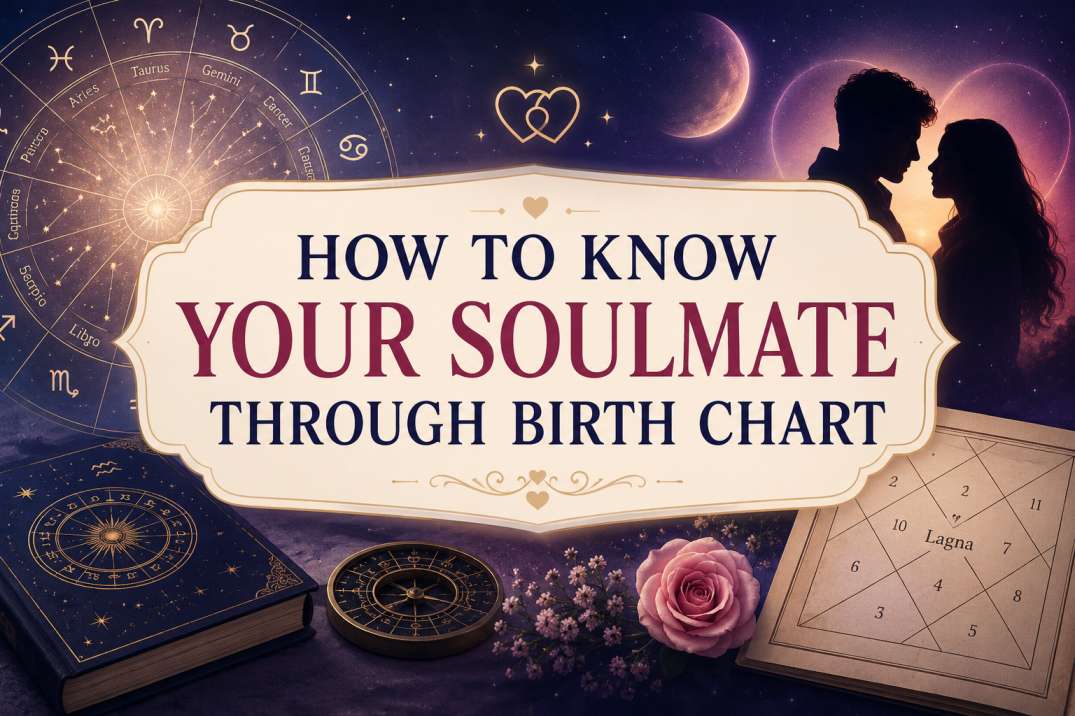
Many people wonder whether Vedic astrology can reveal clues about their soulmate. While no birth chart can predict the exact identity of a future partner, it can provide meaningful insights into relationship patterns, compatibility, marriage timing, and the qualities you may seek in a life partner. Understanding these astrological combinations helps you make more informed relationship decisions rather than relying solely on chance.
In Vedic astrology, several planetary placements, houses, yogas, and divisional charts are studied together to understand marriage and long-term partnerships. By carefully analyzing these factors, an experienced astrologer can identify the type of partner most compatible with your karmic journey. This guide explains how to know your soulmate through your birth chart using traditional Vedic astrology principles in a practical and balanced way.
What Does Vedic Astrology Say About Soulmates?
The idea of a soulmate in Vedic astrology is closely connected with karmic relationships. According to ancient texts, people often meet certain individuals due to past-life karmic connections. A soulmate may not always mean a perfect relationship, but rather someone who contributes significantly to your personal and spiritual growth.
Rather than searching for one “destined” person, Vedic astrology focuses on:
- Marriage compatibility
- Emotional harmony
- Shared life purpose
- Long-term commitment
- Karmic lessons
- Spiritual evolution
The 7th House: The House of Marriage and Partnership
The 7th house is the most important indicator when studying soulmate potential.
This house represents:
- Marriage
- Long-term relationships
- Life partner
- Business partnerships
- Public interactions
What Astrologers Examine
- Sign occupying the 7th house
- Strength of the 7th house lord
- Planets placed in the 7th house
- Benefic or malefic aspects
- Dasha periods involving the 7th lord
A strong and well-supported 7th house generally indicates stable relationships and better compatibility with a future spouse.
Venus: The Planet of Love and Attraction
Venus (Shukra) is one of the strongest indicators of romance, attraction, and marital happiness.
Venus Represents
- Romantic nature
- Emotional bonding
- Beauty and attraction
- Relationship satisfaction
- Harmony in marriage
A strong Venus often indicates:
- Healthy emotional expression
- Balanced romantic life
- Greater relationship happiness
- Appreciation for love and commitment
If Venus is afflicted by Saturn, Rahu, Ketu, or Mars, relationships may involve delays, misunderstandings, or emotional challenges that require maturity and patience.
Jupiter’s Role in Marriage
In Vedic astrology, Jupiter (Guru) is especially significant for women when assessing marriage prospects, although it influences everyone’s wisdom and commitment.
Jupiter represents:
- Ethics
- Stability
- Family values
- Spiritual understanding
- Long-term commitment
A well-placed Jupiter supports trust, respect, and emotional security in relationships.
The Navamsa (D9) Chart: The Hidden Story of Marriage
The Navamsa Chart (D9) is considered essential for marriage analysis.
Astrologers compare the birth chart (D1) with the Navamsa chart to understand:
- Married life
- Soul-level compatibility
- Partner’s qualities
- Relationship maturity
- Long-term stability
Many experienced Vedic astrologers consider the D9 chart equally important as the birth chart when analyzing marriage.
Moon and Emotional Compatibility
The Moon governs emotions and mental peace.
When studying soulmate compatibility, astrologers evaluate:
- Moon sign compatibility
- Nakshatra matching
- Emotional communication
- Psychological understanding
A strong emotional connection often supports long-term relationship success more than physical attraction alone.
Important Yogas That May Influence Soulmate Connections
Certain yogas can strengthen marriage prospects.
Beneficial combinations include:
- Strong 7th lord placed in a Kendra or Trikona
- Venus and Jupiter receiving benefic aspects
- Well-placed Moon
- Good Navamsa strength
- Positive relationship between Lagna lord and 7th lord
These combinations should always be interpreted together rather than individually.
Can Birth Charts Reveal Your Soulmate’s Personality?
While astrology cannot identify a person’s name or exact appearance, it can indicate likely personality traits.
Possible indicators include:
- Calm or adventurous nature
- Career orientation
- Spiritual inclination
- Family values
- Communication style
- Emotional maturity
- Leadership qualities
- Creative interests
These insights can help you understand the type of person with whom you may naturally build a harmonious relationship.
Practical Remedies for Better Relationship Harmony
Traditional Vedic astrology recommends remedies that promote inner balance rather than attempting to “force” destiny.
Some commonly suggested practices include:
- Chant “ॐ शुक्राय नमः” 108 times on Fridays for Venus-related harmony.
- Respect parents, teachers, and elders.
- Practice honest communication in relationships.
- Donate white sweets or rice on Fridays.
- Meditate regularly to improve emotional clarity.
- Perform relationship compatibility (Kundli Milan) before marriage.
- Strengthen self-awareness alongside astrological guidance.
These remedies are intended to cultivate positive qualities that support healthier relationships.
Common Misconceptions About Soulmates in Astrology
Many myths surround soulmate predictions.
Important facts to remember:
- No astrologer can guarantee the exact identity of your soulmate.
- A birth chart shows tendencies, not fixed outcomes.
- Free will, communication, and mutual respect remain essential.
- Compatibility improves relationships but does not replace effort.
- Personal growth often matters more than planetary combinations alone.
Astrology should be viewed as a guidance tool rather than absolute certainty.
Conclusion
Learning how to know your soulmate through your birth chart can provide valuable insights into your relationship patterns, emotional needs, and compatibility. Vedic astrology studies the 7th house, Venus, Jupiter, Moon, Navamsa chart, and planetary periods to understand marriage and long-term partnerships. However, astrology works best when combined with emotional maturity, mutual understanding, and conscious decision-making.
If you are considering marriage or wish to understand your relationship journey more deeply, consulting an experienced Vedic astrologer with accurate birth details can provide a personalized analysis. Use astrology as a map for self-awareness and compatibility, while remembering that meaningful relationships are built through trust, communication, and shared values.
FAQs
1. Can Vedic astrology accurately identify my soulmate?
No, Vedic astrology cannot identify the exact person, but it can reveal the qualities and compatibility patterns of a potential life partner.
Birth chart analysis focuses on relationship tendencies, karmic influences, and marriage prospects rather than predicting a specific individual’s identity. Experienced astrologers examine multiple factors, including the 7th house, Venus, Jupiter, and Navamsa chart, to provide meaningful guidance.
Helpful tips:
- Use accurate birth details.
- Consider a complete horoscope analysis.
- Avoid relying on astrology alone for relationship decisions.
2. Which house is most important for marriage in astrology?
The 7th house is the primary house associated with marriage and long-term partnerships.
Its ruling planet, occupying sign, planetary aspects, and overall strength help astrologers understand relationship potential. However, other houses and divisional charts are also important for a complete picture.
Related indicators include:
- 7th house lord
- Venus
- Navamsa (D9)
- Jupiter
- Moon
3. Does the Navamsa chart really matter?
Yes, the Navamsa (D9) chart is considered one of the most important charts for marriage analysis.
It provides deeper insight into marital harmony, relationship maturity, and the long-term strength of partnerships. Many Vedic astrologers use it alongside the birth chart for more reliable interpretations.
For better analysis:
- Compare D1 and D9 charts together.
- Study planetary dignity in both charts.
- Seek expert guidance for interpretation.
4. Can astrology predict the timing of marriage?
Astrology can estimate favourable marriage periods but cannot guarantee exact dates.
Planetary dashas, transits, and the condition of marriage-related houses help identify supportive time frames. These periods indicate opportunities rather than fixed events.
Timing factors include:
- Mahadasha and Antardasha
- Jupiter transit
- Saturn transit
- Strength of the 7th house
5. What is the best remedy for attracting a compatible life partner?
The best remedy is to strengthen positive qualities while following appropriate Vedic remedies based on your birth chart.
Traditional practices such as Venus-related prayers, charity, meditation, and respectful relationships can support emotional balance. Personalized remedies should always be based on an individual horoscope rather than general advice.
Simple remedies:
- Chant “ॐ शुक्राय नमः” on Fridays.
- Practice honesty and patience.
- Maintain emotional balance.
- Perform Kundli matching before marriage.
- Consult a qualified Vedic astrologer for personalized guidance.