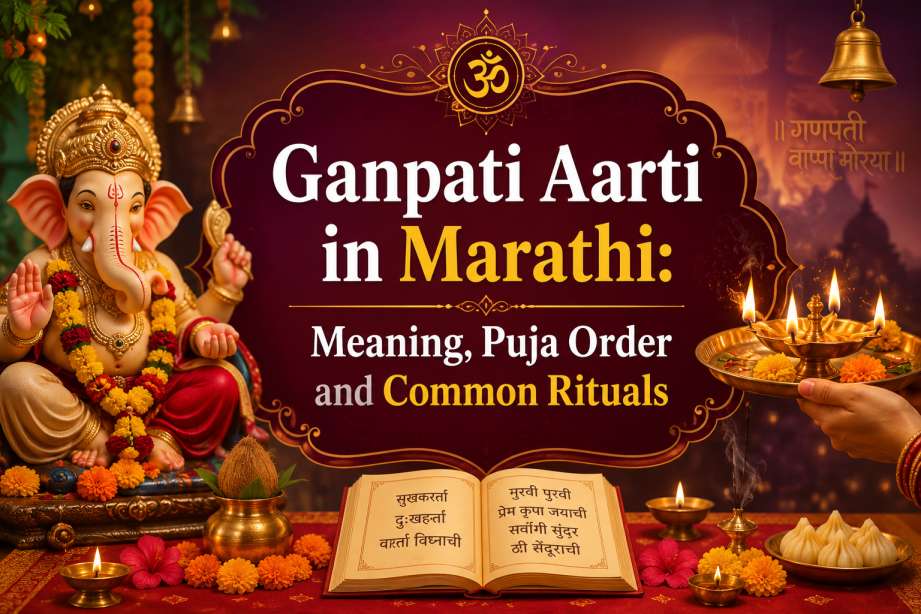
Ganpati Aarti in Marathi is an important part of Lord Ganesha worship, especially in Maharashtra. The familiar Marathi aarti “Sukhkarta Dukhharta” is traditionally sung during Ganesh Puja, Ganeshotsav and household worship. For devotees, the aarti is not merely a devotional song; it marks a meaningful transition in the puja from offering worship to expressing gratitude and seeking blessings.
In Vedic tradition, Lord Ganesha is associated with Budha (Mercury), intelligence, communication, learning and analytical ability. He is also traditionally worshipped before beginning auspicious activities because Ganesha represents the removal of obstacles and the wisdom needed to overcome them.
The correct puja order, devotional focus and simple rituals can make the worship more disciplined and meaningful without relying on exaggerated claims or superstition.
Ganpati Aarti in Marathi: Meaning and Significance
The most widely recognised Marathi Ganpati aarti begins with “Sukhkarta Dukhharta Varta Vighnachi”. Its central theme is Lord Ganesha as the giver of happiness and the remover of obstacles.
The aarti expresses devotion through qualities such as:
- Sukhkarta – the one who brings happiness.
- Dukhaharta – the one who removes sorrow.
- Vighnaharta – the remover of obstacles.
- Mangalmurti – an auspicious divine form.
- Krupa – seeking divine grace and guidance.
Rather than interpreting these words as guarantees of material results, devotees can understand them as a spiritual reminder to approach difficulties with wisdom, patience and positive action.
During Ganeshotsav, the collective singing of the aarti also creates a strong sense of community. At home, it can become a simple daily practice that brings family members together.
Correct Ganpati Puja Order
The exact procedure can vary according to family tradition, regional Panchang and sampradaya. A simple household sequence can be followed as below.
1. Preparation
Clean the puja area and place the Ganpati idol respectfully on a clean platform. Keep flowers, durva grass, diya, incense, naivedya and other required puja items ready.
2. Sankalp
Begin with a simple sankalp, mentally stating the purpose of the worship. It can be as simple as praying for wisdom, peace, family harmony and strength to perform one’s duties.
3. Avahan and Puja
Offer water, flowers, durva and other traditional offerings according to your family practice. Chanting “Om Gan Ganapataye Namah” can be used as a simple mantra during worship.
4. Naivedya
Offer traditional food such as modak, fruits or other sattvic preparations. Food offerings should ideally be prepared and served with cleanliness and devotion.
5. Ganpati Aarti
The Marathi Ganpati Aarti is generally performed toward the end of the main puja. Light the aarti lamp and sing “Sukhkarta Dukhharta” with the family or other devotees.
6. Prarthana and Prasad
Conclude with a personal prayer, bow before Ganesha and distribute the prasad respectfully.
Common Ganpati Rituals at Home
Different families follow different customs, but several rituals are widely practised.
- Durva offering: Durva grass is traditionally associated with Ganesha worship.
- Modak offering: Modak is considered a favourite offering of Lord Ganesha in popular devotional tradition.
- Deep Prajwalan: Lighting a diya symbolises illumination and spiritual awareness.
- Aarti: The lamp is moved in a circular motion while devotional verses are sung.
- Pradakshina: Circumambulation may be performed according to family tradition.
- Prasad distribution: Sharing the offered food brings the ritual to a communal close.
The important principle is bhakti with cleanliness and sincerity, rather than the quantity or expense of offerings.
Astrological Significance of Ganpati Worship
From a Vedic astrology perspective, Ganesha worship is often connected with Budha, the planet associated with intellect, speech, education, calculation and logical thinking.
Mercury governs themes represented by learning, communication and analytical abilities. Therefore, people traditionally turn toward Ganesha worship when seeking clarity before studies, examinations, important communication or new beginnings.
However, astrology should not be used to promise guaranteed outcomes. A person’s horoscope contains multiple factors, including the Lagna, houses, planetary dignity, aspects, yogas and dasha periods.
For example, if someone is experiencing difficulties connected with education or communication, a qualified astrologer may examine the 5th house, 2nd house, Mercury and relevant dasha periods rather than attributing everything to a single planetary influence.
Simple Ganpati Remedies
Traditional remedies can be kept simple and practical.
For Students
Chant “Om Gan Ganapataye Namah” before beginning studies and maintain a consistent study routine.
For New Beginnings
Before starting an important project, take a moment for prayer and then create a clear action plan. Spiritual practice works best alongside practical preparation.
For Communication
Ganesha worship can be combined with conscious speech—avoiding unnecessary arguments, listening carefully and communicating respectfully.
For Mental Clarity
A few minutes of quiet prayer or meditation during Ganpati worship can help create a calmer environment for decision-making.
When Should Ganpati Aarti Be Performed?
There is no single universal clock time applicable to every household. During festivals such as Ganeshotsav, families commonly perform morning and evening aarti, following their local Panchang and family tradition.
If a specific Ganpati puja muhurat is being followed, the relevant timings should be checked for the particular city and date, and all such timings should be considered in IST (Indian Standard Time) for India.
The consistency of worship is generally more meaningful than treating one arbitrary minute as universally superior.
Conclusion
Ganpati Aarti in Marathi combines devotion, cultural tradition and the symbolism of Lord Ganesha as a source of wisdom and obstacle-removing guidance. “Sukhkarta Dukhharta” remains especially significant in Maharashtra because it connects household worship with the wider tradition of Ganeshotsav.
A simple puja order—preparation, sankalp, offerings, naivedya, aarti and prayer—can make daily worship easier to follow. From an astrological perspective, Ganesha is traditionally associated with Mercury and themes of intellect, communication and learning, but horoscope-based conclusions should always consider the complete birth chart.
Ultimately, the most meaningful Ganpati worship is one that encourages clarity, humility, disciplined action and gratitude.
FAQs
1. What is the most popular Ganpati Aarti in Marathi?
“Sukhkarta Dukhharta” is one of the most popular Marathi aartis dedicated to Lord Ganesha.
It is widely sung during Ganesh Puja and Ganeshotsav, particularly in Maharashtra. Its verses praise Ganesha as a source of happiness, auspiciousness and relief from obstacles.
Related tips:
- Sing the aarti with concentration.
- Keep the puja area clean.
- Follow your family’s traditional sequence.
2. When should Ganpati Aarti be performed at home?
Ganpati Aarti can traditionally be performed after the main puja, commonly during morning or evening worship.
During Ganeshotsav, many households perform aarti at scheduled morning and evening times. For festival-specific muhurat, consult the Panchang applicable to your city and date rather than following a generic timing.
Related tips:
- Follow the local Panchang.
- Keep festival timings in IST.
- Maintain consistency in household worship.
3. What is the meaning of Sukhkarta Dukhharta?
The aarti describes Lord Ganesha as a giver of happiness and a remover of sorrow and obstacles.
Its devotional message encourages devotees to seek wisdom and divine guidance while facing life’s challenges. The words can be understood spiritually rather than as a promise of automatic material results.
Related tips:
- Understand the words while singing.
- Focus on gratitude and wisdom.
- Combine prayer with practical action.
4. Which planet is associated with Lord Ganesha in astrology?
Lord Ganesha is traditionally associated with Budha, or Mercury, in many astrological traditions.
Mercury represents intellect, communication, learning, reasoning and analytical ability. However, a horoscope should be assessed holistically through Mercury’s sign, house, dignity, aspects and dasha along with other planetary influences.
Related tips:
- Examine the complete birth chart.
- Consider Mercury’s condition.
- Avoid judging an entire horoscope from one planet.
5. What should be offered to Lord Ganesha during puja?
Durva grass, flowers, fruits and modak are among the commonly offered items in Ganesha worship.
Offerings differ between households and regional traditions. Devotion, cleanliness and respectful preparation are more important than making elaborate or expensive arrangements.
Related tips:
- Offer fresh and clean items.
- Follow your family tradition.
- Avoid unnecessary extravagance.
6. Can Ganpati Aarti be performed every day?
Yes, Ganpati Aarti can be included in a daily household prayer routine.
A short daily practice can help create a regular devotional habit. You can combine the aarti with a simple Ganesha mantra and a brief personal prayer according to your convenience.
Related tips:
- Maintain a regular routine.
- Keep the ritual simple.
- Focus on devotion rather than duration.