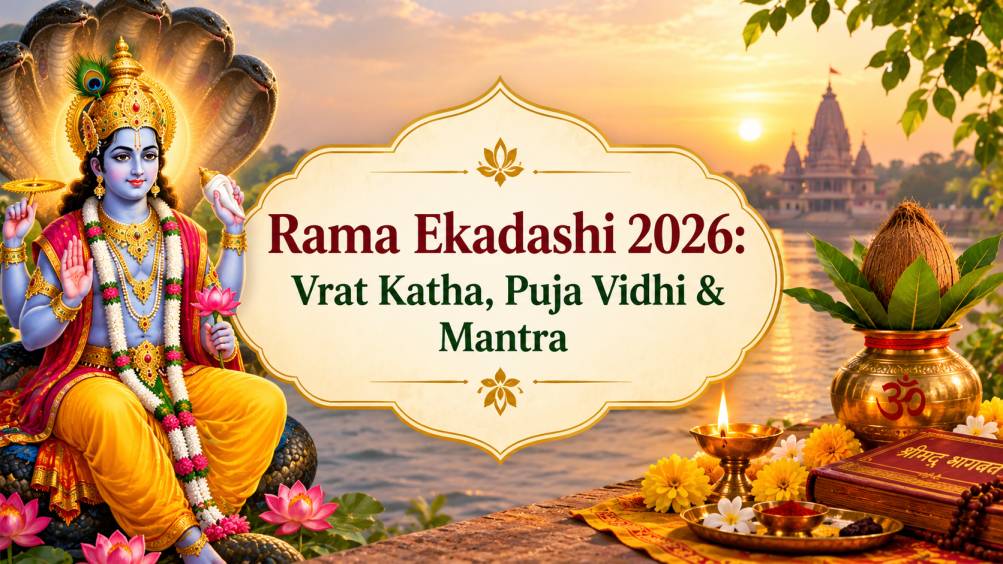
Rama Ekadashi is an important Hindu fasting day dedicated to Lord Vishnu and observed during Krishna Paksha Ekadashi in the Hindu month of Kartik. It falls shortly before Diwali and is considered a spiritually meaningful occasion for prayer, self-discipline, charity, and devotion. Devotees observe the Rama Ekadashi vrat to seek Lord Vishnu’s blessings, cultivate inner peace, and reflect on their actions.
In Vedic tradition, Ekadashi is associated with restraint, purification, and devotion. The observance includes fasting according to one’s capacity, chanting Vishnu mantras, listening to the Rama Ekadashi vrat katha, and performing puja. Although the festival has a religious foundation rather than a scientifically established planetary effect, its emphasis on discipline and compassion can offer practical value in everyday life. Knowing the date, puja procedure, and traditional significance helps devotees observe the vrat with understanding and care.
Rama Ekadashi 2026 Date and Tithi
Rama Ekadashi is observed on the eleventh lunar day, or Ekadashi Tithi, of Krishna Paksha in Kartik month.
- Festival: Rama Ekadashi 2026
- Expected date: Sunday, 1 November 2026
- Deity: Lord Vishnu
- Observance: Fasting, Vishnu puja, mantra chanting, and charity
- Parana: Breaking the fast on Dwadashi, according to the prescribed local timing
- Time zone: Indian Standard Time (IST)
Important date clarification: Festival dates and fasting schedules should be confirmed using a reliable local Panchang. Ekadashi observance depends on the lunar tithi and traditional rules, and the date or parana window may vary according to location and calendar calculations.
Rama Ekadashi Vrat Katha
The Rama Ekadashi vrat katha is traditionally associated with King Muchukunda, his daughter Chandrabhaga, and her husband Shobhana. Versions of the story are found in the Brahma Vaivarta Purana tradition associated with Ekadashi observances.
According to the commonly narrated account, King Muchukunda was devoted to religious observances and ensured that Ekadashi fasting was respected in his kingdom. His daughter Chandrabhaga followed the practice sincerely. Shobhana, who was married to Chandrabhaga, visited the kingdom during an Ekadashi observance.
Although Shobhana was physically weak and found the strict fast difficult, he attempted to observe it. In the traditional narrative, his observance is followed by an extraordinary spiritual reward. Through the merit associated with Ekadashi and the blessings of Lord Vishnu, Shobhana receives a beautiful celestial dwelling.
The story further explains that the spiritual merit of the observance and the devotion of Chandrabhaga help sustain this blessing.
Moral and spiritual meaning
The story highlights several themes:
- Devotion: Sincere prayer is valued in Hindu tradition.
- Self-discipline: Fasting encourages restraint and awareness of habits.
- Compassion: Religious observances should be approached with sensitivity toward others.
- Faith and responsibility: Spiritual practices can encourage people to act with greater care and integrity.
The katha is a traditional religious narrative, not a guarantee that fasting will produce a particular material or supernatural result.
Lord Vishnu Puja Vidhi on Rama Ekadashi
Rama Ekadashi puja can be performed at home with simple arrangements. Family customs may differ, so devotees can adapt the procedure to their tradition.
1. Morning preparation and sankalp
Wake up early, bathe, and prepare a clean place for worship. Take a sankalp to observe the vrat according to your capacity and pray to Lord Vishnu for wisdom, peace, and spiritual progress.
2. Arrange the puja samagri
Common items include:
- An image or idol of Lord Vishnu
- Flowers, tulsi leaves, and sandalwood paste
- A diya and incense
- Water in a clean vessel
- Fruits and sattvic offerings
- A copy of the Rama Ekadashi vrat katha
Tulsi is especially associated with Vishnu worship. Use fresh leaves when available and appropriate to your family’s practice.
3. Worship Lord Vishnu
Light the diya, offer flowers and tulsi leaves, and chant a Vishnu mantra. Read or listen to the Rama Ekadashi vrat katha and spend a few minutes in quiet prayer.
4. Observe the fast
Fasting practices vary. Some devotees observe a nirjala fast, while others consume water, fruits, milk, or suitable fasting foods. Choose a method compatible with your health and religious customs.
5. Perform Dwadashi parana
The fast is traditionally concluded on Dwadashi, the lunar day following Ekadashi, within the prescribed parana window. Check the local Panchang for the correct IST timing before breaking the fast.
Rama Ekadashi Mantra
Devotees may chant simple Vishnu mantras during puja or meditation.
- Vishnu mantra
Om Namo Bhagavate Vasudevaya.
Meaning: I offer my salutations to Lord Vasudeva, a name of Lord Vishnu.
- Simple Vishnu naam mantra
Om Namo Narayanaya.
Meaning: Salutations to Lord Narayana, the supreme refuge in Vaishnava tradition.
Chanting can be done quietly and at a comfortable pace. There is no need to force a particular number of repetitions; consistency and sincere attention are more important than treating the count as a guarantee of results.
Spiritual and Astrological Significance of Rama Ekadashi
In Hindu tradition, Ekadashi is a time for restraint, prayer, and reflection. Rama Ekadashi falls during Kartik Krishna Paksha, a period associated with devotional observances leading up to Diwali.
From a traditional Vedic astrology perspective, Jupiter is associated with wisdom, dharma, learning, and spiritual guidance. Vishnu worship is also linked in some devotional traditions with maintaining harmony and righteous conduct. These associations provide a cultural framework for the festival, but they do not establish that a particular fast will change a person’s planetary placements or guarantee favourable events.
Practical observances and remedies
Devotees can use Rama Ekadashi as an opportunity to develop constructive habits:
- Chant a Vishnu mantra daily for a few minutes.
- Donate food or essential supplies to people in need.
- Avoid harsh speech and unnecessary arguments.
- Spend time reading spiritual texts or reflecting on personal decisions.
- Practise gratitude and make a realistic commitment to one positive change.
These practices can support reflection and emotional discipline without relying on exaggerated promises about wealth, marriage, health, or destiny.
Fasting Rules and Precautions
Traditional fasting rules differ by family, region, and personal capacity. The purpose is devotion and restraint, not physical harm.
- Avoid food items prohibited by your family’s Ekadashi tradition.
- Keep hydrated if your chosen fasting practice permits water.
- People with diabetes, pregnancy-related nutritional needs, or other medical conditions should consult a healthcare professional before fasting.
- Do not stop prescribed medicines or delay necessary meals to complete a ritual.
- Complete parana within the locally prescribed Dwadashi window when following the traditional fast.
Conclusion
Rama Ekadashi 2026 offers devotees an opportunity to worship Lord Vishnu, listen to the vrat katha, chant sacred mantras, and practise self-discipline before Diwali. The traditional story of King Muchukunda, Chandrabhaga, and Shobhana emphasises devotion, spiritual merit, and the value of sincere observance.
For a meaningful celebration, confirm the Ekadashi date and Dwadashi parana timing using a trusted local Panchang, and follow a fasting method that respects your health. Beyond the ritual, the day can inspire charity, patience, thoughtful decisions, and greater compassion toward others. Approach the observance with faith and understanding, remembering that spiritual practices can guide personal reflection without guaranteeing specific worldly outcomes.
Rama Ekadashi 2026: Vrat Katha, Puja Vidhi & Mantra
Meta Description: Learn Rama Ekadashi 2026 date, vrat katha, Lord Vishnu puja vidhi, mantras, fasting rules and spiritual significance for devotees.
Introduction
Rama Ekadashi is an important Hindu fasting day dedicated to Lord Vishnu and observed during Krishna Paksha Ekadashi in the Hindu month of Kartik. It falls shortly before Diwali and is considered a spiritually meaningful occasion for prayer, self-discipline, charity, and devotion. Devotees observe the Rama Ekadashi vrat to seek Lord Vishnu’s blessings, cultivate inner peace, and reflect on their actions.
In Vedic tradition, Ekadashi is associated with restraint, purification, and devotion. The observance includes fasting according to one’s capacity, chanting Vishnu mantras, listening to the Rama Ekadashi vrat katha, and performing puja. Although the festival has a religious foundation rather than a scientifically established planetary effect, its emphasis on discipline and compassion can offer practical value in everyday life. Knowing the date, puja procedure, and traditional significance helps devotees observe the vrat with understanding and care.
Rama Ekadashi 2026 Date and Tithi
Rama Ekadashi is observed on the eleventh lunar day, or Ekadashi Tithi, of Krishna Paksha in Kartik month.
- Festival: Rama Ekadashi 2026
- Expected date: Sunday, 1 November 2026
- Deity: Lord Vishnu
- Observance: Fasting, Vishnu puja, mantra chanting, and charity
- Parana: Breaking the fast on Dwadashi, according to the prescribed local timing
- Time zone: Indian Standard Time (IST)
Important date clarification: Festival dates and fasting schedules should be confirmed using a reliable local Panchang. Ekadashi observance depends on the lunar tithi and traditional rules, and the date or parana window may vary according to location and calendar calculations.
Rama Ekadashi Vrat Katha
The Rama Ekadashi vrat katha is traditionally associated with King Muchukunda, his daughter Chandrabhaga, and her husband Shobhana. Versions of the story are found in the Brahma Vaivarta Purana tradition associated with Ekadashi observances.
According to the commonly narrated account, King Muchukunda was devoted to religious observances and ensured that Ekadashi fasting was respected in his kingdom. His daughter Chandrabhaga followed the practice sincerely. Shobhana, who was married to Chandrabhaga, visited the kingdom during an Ekadashi observance.
Although Shobhana was physically weak and found the strict fast difficult, he attempted to observe it. In the traditional narrative, his observance is followed by an extraordinary spiritual reward. Through the merit associated with Ekadashi and the blessings of Lord Vishnu, Shobhana receives a beautiful celestial dwelling.
The story further explains that the spiritual merit of the observance and the devotion of Chandrabhaga help sustain this blessing.
Moral and spiritual meaning
The story highlights several themes:
- Devotion: Sincere prayer is valued in Hindu tradition.
- Self-discipline: Fasting encourages restraint and awareness of habits.
- Compassion: Religious observances should be approached with sensitivity toward others.
- Faith and responsibility: Spiritual practices can encourage people to act with greater care and integrity.
The katha is a traditional religious narrative, not a guarantee that fasting will produce a particular material or supernatural result.
Lord Vishnu Puja Vidhi on Rama Ekadashi
Rama Ekadashi puja can be performed at home with simple arrangements. Family customs may differ, so devotees can adapt the procedure to their tradition.
1. Morning preparation and sankalp
Wake up early, bathe, and prepare a clean place for worship. Take a sankalp to observe the vrat according to your capacity and pray to Lord Vishnu for wisdom, peace, and spiritual progress.
2. Arrange the puja samagri
Common items include:
- An image or idol of Lord Vishnu
- Flowers, tulsi leaves, and sandalwood paste
- A diya and incense
- Water in a clean vessel
- Fruits and sattvic offerings
- A copy of the Rama Ekadashi vrat katha
Tulsi is especially associated with Vishnu worship. Use fresh leaves when available and appropriate to your family’s practice.
3. Worship Lord Vishnu
Light the diya, offer flowers and tulsi leaves, and chant a Vishnu mantra. Read or listen to the Rama Ekadashi vrat katha and spend a few minutes in quiet prayer.
4. Observe the fast
Fasting practices vary. Some devotees observe a nirjala fast, while others consume water, fruits, milk, or suitable fasting foods. Choose a method compatible with your health and religious customs.
5. Perform Dwadashi parana
The fast is traditionally concluded on Dwadashi, the lunar day following Ekadashi, within the prescribed parana window. Check the local Panchang for the correct IST timing before breaking the fast.
Rama Ekadashi Mantra
Devotees may chant simple Vishnu mantras during puja or meditation.
- Vishnu mantra
Om Namo Bhagavate Vasudevaya.
Meaning: I offer my salutations to Lord Vasudeva, a name of Lord Vishnu.
- Simple Vishnu naam mantra
Om Namo Narayanaya.
Meaning: Salutations to Lord Narayana, the supreme refuge in Vaishnava tradition.
Chanting can be done quietly and at a comfortable pace. There is no need to force a particular number of repetitions; consistency and sincere attention are more important than treating the count as a guarantee of results.
Spiritual and Astrological Significance of Rama Ekadashi
In Hindu tradition, Ekadashi is a time for restraint, prayer, and reflection. Rama Ekadashi falls during Kartik Krishna Paksha, a period associated with devotional observances leading up to Diwali.
From a traditional Vedic astrology perspective, Jupiter is associated with wisdom, dharma, learning, and spiritual guidance. Vishnu worship is also linked in some devotional traditions with maintaining harmony and righteous conduct. These associations provide a cultural framework for the festival, but they do not establish that a particular fast will change a person’s planetary placements or guarantee favourable events.
Practical observances and remedies
Devotees can use Rama Ekadashi as an opportunity to develop constructive habits:
- Chant a Vishnu mantra daily for a few minutes.
- Donate food or essential supplies to people in need.
- Avoid harsh speech and unnecessary arguments.
- Spend time reading spiritual texts or reflecting on personal decisions.
- Practise gratitude and make a realistic commitment to one positive change.
These practices can support reflection and emotional discipline without relying on exaggerated promises about wealth, marriage, health, or destiny.
Fasting Rules and Precautions
Traditional fasting rules differ by family, region, and personal capacity. The purpose is devotion and restraint, not physical harm.
- Avoid food items prohibited by your family’s Ekadashi tradition.
- Keep hydrated if your chosen fasting practice permits water.
- People with diabetes, pregnancy-related nutritional needs, or other medical conditions should consult a healthcare professional before fasting.
- Do not stop prescribed medicines or delay necessary meals to complete a ritual.
- Complete parana within the locally prescribed Dwadashi window when following the traditional fast.
Conclusion
Rama Ekadashi 2026 offers devotees an opportunity to worship Lord Vishnu, listen to the vrat katha, chant sacred mantras, and practise self-discipline before Diwali. The traditional story of King Muchukunda, Chandrabhaga, and Shobhana emphasises devotion, spiritual merit, and the value of sincere observance.
For a meaningful celebration, confirm the Ekadashi date and Dwadashi parana timing using a trusted local Panchang, and follow a fasting method that respects your health. Beyond the ritual, the day can inspire charity, patience, thoughtful decisions, and greater compassion toward others. Approach the observance with faith and understanding, remembering that spiritual practices can guide personal reflection without guaranteeing specific worldly outcomes.
Date correction for accuracy: Rama Ekadashi 2026 falls on Thursday, 5 November 2026, not 1 November. The Ekadashi Tithi in New Delhi is expected to begin at approximately 11:03 AM IST on 4 November and end at approximately 10:35 AM IST on 5 November. The Dwadashi parana window varies by location and tradition.
FAQs About Rama Ekadashi 2026
1. When is Rama Ekadashi in 2026?
Rama Ekadashi will be observed on Thursday, 5 November 2026, according to commonly followed Indian Panchang calendars.
The vrat falls during Krishna Paksha in the Kartik month under the Purnimanta calendar. Some regional calendars call the same observance Ashwin Krishna Ekadashi.
- Confirm the date using your local Panchang.
- Follow the fasting rules of your family tradition.
2. What is the significance of Rama Ekadashi vrat katha?
The Rama Ekadashi vrat katha teaches the traditional values of devotion, self-discipline, and spiritual merit through the story of Shobhana, Chandrabhaga, and King Muchukunda.
Listening to the katha during puja helps devotees reflect on their actions and strengthen their spiritual practice. Its lessons can also inspire compassion and responsibility in everyday life.
- Read or listen to the katha during puja.
- Reflect on its moral teachings.
- Avoid treating the story as a guarantee of material rewards.
3. Which mantra should be chanted on Rama Ekadashi?
Devotees can chant “Om Namo Bhagavate Vasudevaya” or “Om Namo Narayanaya” while worshipping Lord Vishnu.
These traditional mantras are used in Vaishnava devotional practice. Chanting may be incorporated into morning worship, meditation, or evening prayers.
- Chant at a comfortable pace.
- Focus on the meaning and intention.
- Choose a quiet place for prayer.
4. What foods are allowed during Rama Ekadashi fasting?
Food restrictions depend on the fasting tradition; many devotees avoid grains and beans, while others observe stricter fasts.
People who follow a partial fast may consume suitable fruits, milk, or fasting foods according to their customs. Health needs should always be considered before choosing a fasting method.
- Follow your family’s established rules.
- Stay hydrated if your fast permits water.
- Consult a healthcare professional if you have a medical condition.
5. When should Rama Ekadashi fast be broken in 2026?
The Rama Ekadashi fast is traditionally broken on Friday, 6 November 2026, during the prescribed Dwadashi parana period.
The exact window depends on location and the tradition followed. Breaking the fast within the recommended period is part of the customary observance.
- Check the local Panchang for IST timings.
- Avoid assuming that all cities have identical parana times.
- Resume eating according to your health needs.
6. Can Rama Ekadashi be observed without a strict fast?
Yes, devotees can follow a modified observance when a strict fast is unsuitable for their health or circumstances.
Prayer, mantra chanting, reading the vrat katha, and charitable acts can preserve the devotional focus of the day. The method of observance should be practical and safe.
- Choose a suitable fasting option.
- Do not discontinue prescribed medication.
- Prioritise health over strictness.
7. What are the spiritual benefits of Rama Ekadashi?
In Hindu tradition, Rama Ekadashi is associated with devotion to Lord Vishnu, self-discipline, and spiritual reflection.
Its practices may help devotees create time for prayer and thoughtful decisions. However, claims that the vrat guarantees wealth, removes every difficulty, or changes planetary outcomes should not be treated as established facts.
- Practise charity and kindness.
- Use the day for personal reflection.
- Maintain constructive habits beyond the festival.