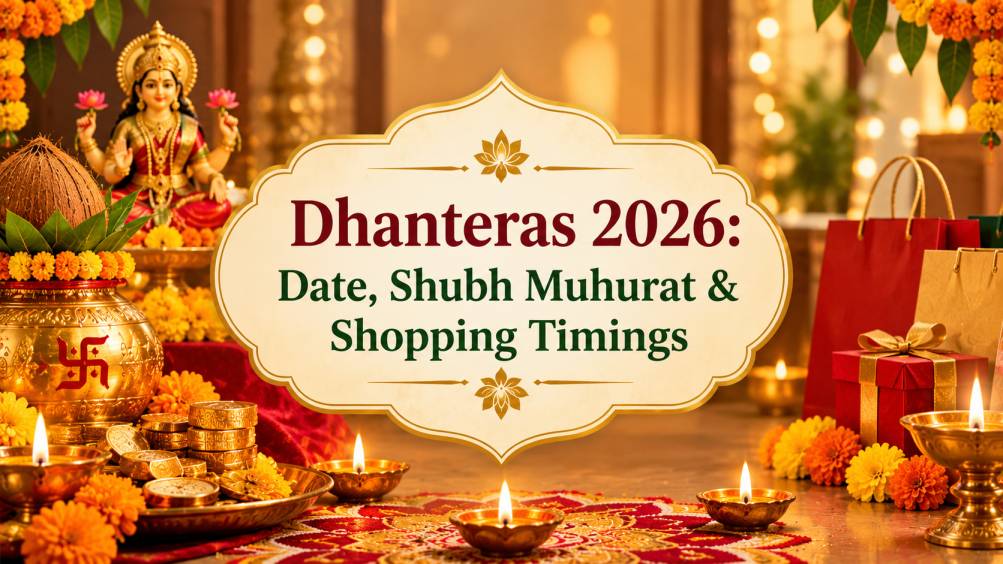
Dhanteras, also known as Dhantrayodashi, marks the beginning of the five-day Diwali festival in many parts of India. Dedicated to Goddess Lakshmi, Lord Dhanvantari, and traditionally Lord Kubera, this festival is associated with prosperity, health, wealth, and responsible financial planning. Families clean and decorate their homes, light diyas, perform evening puja, and purchase gold, silver, utensils, or other useful household items as symbols of good fortune.
In 2026, Dhanteras will be observed in late October according to the Hindu lunar calendar. The festival’s shubh muhurat is determined using the Trayodashi Tithi, local sunset, and regional Panchang calculations. For devotees interested in Vedic astrology, Dhanteras is also an opportunity to reflect on the relationship between material prosperity, generosity, discipline, and well-being. Understanding the date, puja timings, and shopping traditions can help families plan their celebrations thoughtfully.
Dhanteras 2026 Date and Day
Dhanteras falls on Krishna Paksha Trayodashi in the Hindu month of Kartik under the commonly followed Purnimanta calendar.
- Festival: Dhanteras 2026
- Date: Friday, 6 November 2026
- Alternative name: Dhantrayodashi
- Main observances: Lakshmi Puja, Dhanvantari Puja, lighting diyas, and shopping
- Time zone: Indian Standard Time (IST)
Important: Confirm the final date and timings with a reliable local Panchang before publishing or planning the puja. Hindu festival dates can vary with the Trayodashi Tithi, local sunset, and regional calendar conventions.
Dhanteras 2026 Shubh Muhurat
The Dhanteras puja muhurat is traditionally associated with the evening Pradosh period, around sunset. Many households worship Goddess Lakshmi and Lord Kubera during this period to express gratitude and pray for prosperity.
The exact shubh muhurat depends on the city because sunset and the relevant tithi calculations differ geographically.
What determines the puja muhurat?
- Trayodashi Tithi: The lunar date associated with Dhanteras.
- Pradosh Kaal: The evening period following sunset, traditionally preferred for certain forms of worship.
- Local sunset: A key factor in calculating the regional puja window.
- Panchang guidance: Regional traditions may use additional rules when determining the appropriate time.
Do not assume that one nationwide puja timing applies equally to Delhi, Mumbai, Jaipur, Bhopal, Bengaluru, and other cities. Check a city-specific Panchang for the exact start and end times.
Dhanteras 2026 Shopping Timings
Buying gold, silver, utensils, or other household goods on Dhanteras is a popular Indian tradition. These purchases symbolise prosperity and the hope of a secure future.
Rather than following an unverified universal shopping window, check the local Panchang for the relevant Trayodashi period and any recommended shopping muhurat.
What can you buy on Dhanteras?
- Gold and silver
Many families purchase coins, jewellery, or small silver items. Choose purchases according to your budget and actual needs rather than feeling pressured to spend.
- Utensils
Brass, copper, steel, and other useful utensils are traditional choices in many households. They can be practical purchases that remain useful long after the festival.
- Household essentials
Some families buy lamps, kitchen equipment, or other items needed at home. The custom can be adapted to individual circumstances.
- Financial assets
Some people choose to invest around Diwali, but investment decisions should be based on risk tolerance, costs, and financial goals—not on an auspicious date alone.
Practical shopping tips
- Compare prices and making charges before purchasing jewellery.
- Request a proper invoice and verify hallmarking for gold jewellery where applicable.
- Check the seller’s return policy and the product’s purity details.
- Set a spending limit before shopping.
- Avoid borrowing beyond your means simply to follow a festival custom.
An auspicious occasion can be a useful reminder to build healthier financial habits, but it cannot guarantee investment returns or future wealth.
Dhanteras Puja Vidhi: Step-by-Step Guide
Dhanteras puja can be performed at home using simple arrangements. Practices vary by region and family tradition.
1. Clean and decorate the home
Clean the entrance and puja area. Decorate with rangoli, flowers, and diyas as desired. Some families place small footprints or other auspicious designs near the entrance to symbolise welcoming Goddess Lakshmi.
2. Prepare the puja samagri
Common items include:
- Images or idols of Goddess Lakshmi and Lord Ganesha
- An image of Lord Dhanvantari, if included in the household tradition
- Flowers, roli, kumkum, and rice
- A diya, incense, and a clean water vessel
- Fruits, sweets, and other offerings
- Gold, silver, or a newly purchased household item, if desired
3. Perform Lakshmi and Ganesha Puja
Light the diya, offer flowers and traditional offerings, and pray for wisdom, peace, and responsible prosperity. Many households worship Lord Ganesha before Goddess Lakshmi.
4. Worship Lord Dhanvantari
Lord Dhanvantari is revered in Hindu tradition as the divine physician and is associated with Ayurveda and healing. Devotees may offer prayers for health, well-being, and the wisdom to care for themselves and their families.
5. Light diyas in the evening
Light lamps safely around the home, especially near the entrance and puja area. Keep lamps away from curtains and other flammable materials.
6. Practise charity
Donating food, medicines through appropriate charitable organisations, or essential supplies to people in need can reflect the festival’s values of compassion and shared prosperity.
Astrological Significance of Dhanteras
In Vedic astrology, Venus is traditionally associated with comforts, luxury, beauty, and material enjoyment, while Jupiter is associated with wisdom, prosperity, and ethical judgment. Mercury is connected with trade, communication, and analytical thinking.
These traditional planetary associations provide a cultural lens through which some devotees interpret Dhanteras. However, they do not establish that shopping during a particular muhurat will guarantee wealth or that a planetary position determines financial success.
Practical spiritual remedies
Devotees may use Dhanteras as an opportunity to:
- Offer prayers to Goddess Lakshmi with gratitude.
- Keep the home clean and organised.
- Review household expenses and prepare a realistic budget.
- Donate to people experiencing financial hardship.
- Make a thoughtful plan for savings and long-term financial goals.
These practices combine religious meaning with useful everyday habits. No gemstone, mantra, or ritual should be treated as a guaranteed solution to debt or financial difficulties.
Conclusion
Dhanteras 2026 is an important occasion for welcoming Diwali with prayers, traditional shopping, and a renewed focus on prosperity and health. Devotees commonly worship Goddess Lakshmi, Lord Ganesha, and Lord Dhanvantari, light diyas, and purchase gold, silver, utensils, or other useful items according to their means.
Before planning the celebration, verify the Dhanteras date, evening puja muhurat, and shopping timings using a trusted local Panchang. Remember that regional timings may differ. The deeper message of Dhanteras is not simply about acquiring wealth; it is also about using resources wisely, caring for health, practising generosity, and creating a stable home. Celebrate according to your family tradition and budget, keeping safety and thoughtful financial decisions at the centre of the occasion.
Dhanteras 2026 Shubh Muhurat: City-Wise Timings
For a more useful festival guide, include the local puja muhurat alongside the date. The following timings are based on published Panchang calculations for 6 November 2026.
| City | Dhanteras Puja Muhurat (IST) |
| New Delhi | 6:02 PM – 7:57 PM |
| Mumbai | 6:35 PM – 8:35 PM |
| Pune | 6:32 PM – 8:31 PM |
| Kolkata | 5:28 PM – 7:26 PM |
| Chennai | 6:14 PM – 8:10 PM |
| Bengaluru | 6:25 PM – 8:20 PM |
| Jaipur | 6:11 PM – 8:07 PM |
| Ahmedabad | 6:30 PM – 8:28 PM |
| Gwalior | 6:03 PM – 8:00 PM |
These timings may differ slightly between Panchang providers because of calculation methods and rounding. For locations not listed, check a trusted city-specific Panchang rather than using another city’s time.
When should you shop on Dhanteras?
There is no single shopping time that applies to every city or every purchase. Many families prefer to buy gold, silver, or utensils while Trayodashi is prevailing, using an auspicious period from their local Panchang. The puja muhurat listed above is specifically for worship and should not automatically be treated as the only suitable shopping window.
For gold and silver purchases, compare prices, making charges, purity, hallmark details, and the seller’s return policy. The cultural significance of the day can be honoured without making an unplanned or financially difficult purchase.
FAQs About Dhanteras 2026
1. When is Dhanteras in 2026?
Dhanteras will be celebrated on Friday, 6 November 2026, across India.
It marks the beginning of the Diwali festivities and is associated with Goddess Lakshmi, Lord Dhanvantari, and traditional prayers for prosperity and health.
- Confirm the date with your local Panchang.
- Plan your puja and shopping in advance.
2. What is the Dhanteras puja muhurat in 2026?
In New Delhi, the Dhanteras puja muhurat is approximately 6:02 PM to 7:57 PM IST on 6 November 2026.
This period is based on the evening Pradosh Kaal and Vrishabha Kaal calculations. The timing varies by city.
- Use your city’s local muhurat.
- Arrange the puja materials before the evening.
- Follow your family’s customary rituals.
3. What is the best time to buy gold on Dhanteras 2026?
The preferred gold-buying time depends on the local Panchang and the auspicious shopping periods it identifies for Dhanteras.
Buying gold or silver is a traditional symbol of prosperity, but there is no guarantee that purchasing precious metals on an auspicious day will produce financial gains. Consider your budget and the costs involved.
- Compare jewellery prices and making charges.
- Verify purity and hallmarking.
- Buy only what you can comfortably afford.
4. What should we buy on Dhanteras?
Gold, silver coins, utensils, and useful household items are among the most common traditional Dhanteras purchases.
The custom symbolises welcoming prosperity into the home. Families can follow the tradition according to their financial circumstances rather than feeling obligated to purchase expensive items.
- Choose useful, affordable purchases.
- Keep the invoice and warranty documents.
- Consider donating to someone in need as another expression of prosperity.
5. Why is Lord Dhanvantari worshipped on Dhanteras?
Lord Dhanvantari is revered in Hindu tradition as the divine physician and is associated with Ayurveda and healing.
Prayers to Lord Dhanvantari express gratitude for health and well-being. The occasion can also encourage practical health habits, although religious observances do not replace medical care.
- Pray for the well-being of your family.
- Maintain healthy daily routines.
- Seek qualified medical advice when needed.
6. What is Yama Deepdaan on Dhanteras?
Yama Deepdaan is a traditional ritual in which a diya is lit in honour of Yama, the deity associated with death, as a prayer for protection and well-being.
In many households, the lamp is placed outside the home during the evening according to family custom. Practices differ across regions, so devotees may follow their local tradition.
- Place lamps securely away from flammable materials.
- Supervise children around open flames.
- Follow the timing recommended by your local Panchang.
7. Is Dhanteras considered auspicious in Vedic astrology?
Yes, Dhanteras is traditionally regarded as an auspicious occasion for worship, household purchases, and reflection on prosperity.
However, the belief that a particular muhurat guarantees wealth or success is not scientifically established. Astrology and religious traditions can offer cultural guidance, while financial outcomes depend on practical factors such as planning, saving, spending, and investment risk.
- Use the occasion to review your finances.
- Practise generosity and gratitude.
- Make financial decisions based on reliable information.