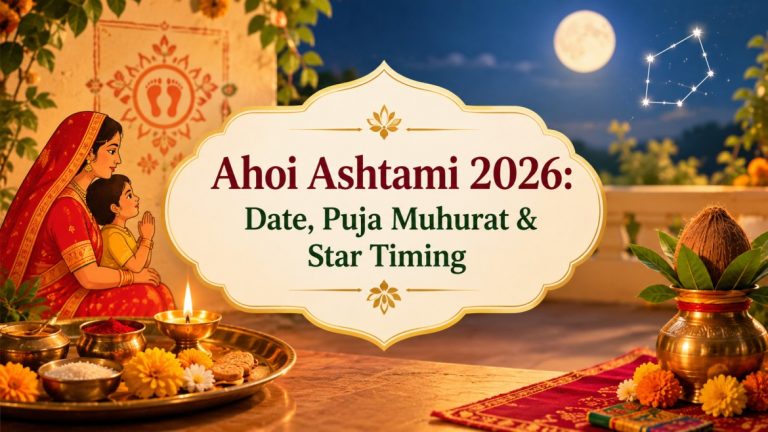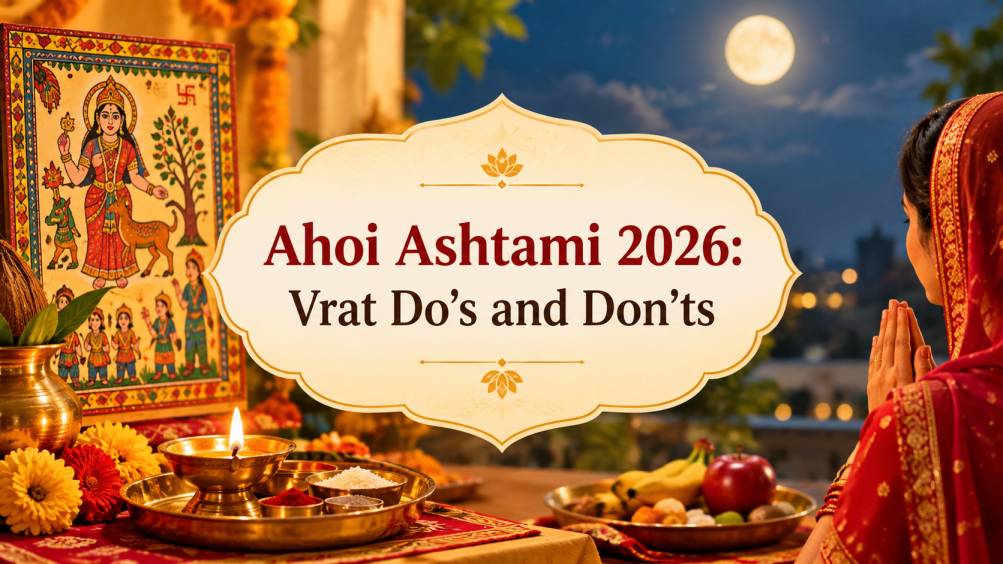
Ahoi Ashtami is an important Hindu fasting festival observed mainly by mothers for the well-being, happiness, and prosperity of their children. It falls during Krishna Paksha Ashtami in the Hindu month of Kartik, approximately eight days before Diwali. In 2026, Ahoi Ashtami will be observed on Saturday, 31 October, according to commonly followed Hindu calendar calculations; devotees should confirm the date and local puja timings with a reliable regional Panchang.
The Ahoi Ashtami vrat involves fasting, worshipping Ahoi Mata, listening to the vrat katha, and offering prayers in the evening. Traditionally, some devotees break their fast after sighting the stars, while others follow local customs. Understanding what to do and what not to do during Ahoi Ashtami helps families observe the festival respectfully and safely. From a Vedic astrology perspective, the observance is also associated with family welfare, devotion, and the symbolic importance of the Moon and evening worship.
What Is the Significance of Ahoi Ashtami Vrat?
Ahoi Ashtami is dedicated to Ahoi Mata, who is worshipped as a protective mother figure. Traditionally, women observe the fast to pray for their children’s health, happiness, and long life.
The festival is associated with Krishna Paksha Ashtami, the eighth lunar day of the waning Moon. In Hindu tradition, lunar days, or tithis, help determine the timing of religious observances.
The vrat also has a strong connection with family values, gratitude, and mindful prayer. Although customs differ across regions and communities, the central purpose remains devotion and concern for children’s well-being.
Ahoi Ashtami 2026: Important Rituals and Timings
Ahoi Ashtami rituals are generally performed in the evening. Exact timings depend on the location, the Ashtami tithi, and the local Panchang.
- Date: Saturday, 31 October 2026, subject to local Panchang confirmation.
- Puja time: The evening period traditionally prescribed for Ahoi Mata worship.
- Fast-breaking time: According to the family’s tradition, often after star sighting.
- Main rituals: Ahoi Mata puja, vrat katha, offerings, and prayers for children.
Do not assume that the same puja or star-sighting time applies to every Indian city. Check the local Panchang for your location before planning the observance.
What to Do During Ahoi Ashtami Vrat
1. Begin the Day with Cleanliness and Sankalp
Start the day by bathing, wearing clean clothes, and preparing a peaceful place for worship. Many devotees take a sankalp, or a personal resolve, to observe the fast with sincerity.
The sankalp may include praying for the well-being of children and the happiness of the family. The intention behind the ritual is more important than elaborate arrangements.
2. Prepare the Ahoi Mata Puja
Set up a clean puja area and arrange the items required by your family’s tradition. These may include an image or drawing of Ahoi Mata, a diya, flowers, roli, rice, and suitable offerings.
During the puja:
- Offer prayers to Ahoi Mata with devotion.
- Light a diya safely in the designated worship area.
- Read or listen to the Ahoi Ashtami vrat katha.
- Offer traditional food or prasad according to family customs.
- Pray for children’s health, happiness, wisdom, and positive development.
3. Follow Your Family’s Fasting Tradition
Some women observe a nirjala vrat, avoiding both food and water, while others follow a fast that permits water or selected foods.
Choose a fasting method that is appropriate for your health and circumstances. Religious observance should not require putting your well-being at risk. Pregnant women, people with diabetes, those taking regular medication, and anyone with a medical condition should seek appropriate medical advice before attempting a strict fast.
4. Worship Ahoi Mata and Listen to the Vrat Katha
The Ahoi Ashtami vrat katha explains the traditional significance of the observance and the importance of devotion, responsibility, and faith.
Listen to the story attentively and explain its meaning to children, where appropriate. This can help preserve family traditions while encouraging compassion and gratitude.
5. Offer Prayers After Star Sighting
In many North Indian traditions, devotees offer arghya or prayers after sighting the stars and then break their fast. Some families follow other regional customs, so follow the practice traditionally observed in your household.
Use the correct local star-sighting time rather than assuming that sunset automatically marks the end of the fast.
What Not to Do During Ahoi Ashtami Vrat
1. Do Not Ignore Your Health
A strict fast is not suitable for everyone. Do not continue fasting if you experience severe weakness, dizziness, faintness, confusion, or other concerning symptoms. Seek medical help when necessary.
2. Avoid Arguments and Harsh Speech
Traditional observances encourage patience, kindness, and a peaceful atmosphere. Avoid unnecessary arguments, hurtful words, and behaviour that creates tension within the family.
3. Do Not Rush or Skip Essential Rituals
If your family follows the vrat katha, evening puja, or star worship, plan ahead so that these rituals can be completed calmly. However, do not treat minor differences in ritual practice as a reason to criticize others.
4. Avoid Unsafe Puja Practices
Keep diyas away from curtains, paper, and flammable decorations. Never leave an open flame unattended, particularly around children.
5. Do Not Treat Astrology as a Guarantee
Ahoi Ashtami is a religious observance rooted in faith and tradition. Neither the fast nor a particular planetary position can guarantee a specific outcome for a child’s health, education, or future. Practical care, medical support, education, and a nurturing home environment remain essential.
Ahoi Ashtami: Astrological Significance and Simple Remedies
In Vedic astrology, the Moon is associated symbolically with the mind, emotions, and nurturing qualities. The fourth house in a birth chart is traditionally linked with home, motherly care, and emotional security. The fifth house is associated with children, learning, creativity, and intelligence.
These associations offer a traditional framework for reflection, but they do not establish scientific predictions about a child’s future.
Simple Traditional Practices
- Pray for family well-being: Offer sincere prayers to Ahoi Mata during the evening puja.
- Practise gratitude: Spend time appreciating the care and support within the family.
- Donate food: If possible, offer food or useful supplies to people in need.
- Encourage children’s learning: Support education, healthy routines, and emotional confidence.
- Maintain peace at home: Use the occasion to strengthen communication and family relationships.
There is no need to purchase gemstones, perform expensive rituals, or follow fear-based astrological remedies to observe Ahoi Ashtami meaningfully.
Conclusion
Ahoi Ashtami 2026 is an opportunity for families to honour a cherished Hindu tradition and pray for the happiness and well-being of their children. Observing the vrat with sincerity, performing Ahoi Mata puja, listening to the vrat katha, and following the family’s star-sighting custom are central parts of the festival.
Equally important are the things devotees should avoid: neglecting health, creating family conflict, practising unsafe rituals, or believing that religious observances guarantee particular outcomes. Vedic astrology provides traditional symbolism for understanding family, nurturing, and emotional well-being, but it should complement rather than replace practical care.
Plan your puja using a reliable local Panchang, choose a fasting method appropriate for your health, and make the occasion meaningful through kindness, gratitude, and family togetherness.
FAQs: Ahoi Ashtami 2026 Vrat Rules
1. What should we do during Ahoi Ashtami vrat?
Devotees traditionally observe a fast, worship Ahoi Mata, listen to the vrat katha, and pray for their children’s well-being.
Prepare the puja area in advance and follow the customs practised by your family or community.
Tips:
- Keep puja materials ready.
- Confirm local timings.
- Observe the fast according to your health.
2. What should we avoid during Ahoi Ashtami?
Avoid harsh speech, unnecessary arguments, unsafe diya placement, and fasting practices that could harm your health.
Traditional observance encourages self-discipline and devotion rather than fear or rigid judgement of other people’s customs.
Remember: Prioritize safety, kindness, and sincere prayer.
3. Can we drink water during Ahoi Ashtami vrat?
Yes, some devotees follow a fast that permits water, although others observe a strict nirjala fast according to family tradition.
There is no single fasting practice followed by every community. People with medical conditions or medication requirements should seek medical advice before fasting.
Practical tip: Do not compromise your health to follow a stricter version of the vrat.
4. When should the Ahoi Ashtami fast be broken in 2026?
In many traditions, the fast is broken after sighting the stars, but the exact time depends on the location and local customs.
Check a reliable Panchang for your city to confirm the relevant tithi and star-sighting time. Do not assume that a timing published for another city will apply to you.
Tip: Plan your evening puja around the local timings.
5. Why is Ahoi Mata worshipped on Ahoi Ashtami?
Ahoi Mata is worshipped as a protective mother figure, and devotees traditionally pray to her for the health, happiness, and prosperity of their children.
The observance also reinforces values such as devotion, responsibility, gratitude, and family care.
Related practice: Listen to the vrat katha and offer prayers with sincerity.
6. Which planets are associated with children in Vedic astrology?
The fifth house is traditionally associated with children, while Jupiter is commonly regarded as a significator of children, wisdom, and growth in Vedic astrology.
Astrologers may also consider the fifth-house lord, relevant divisional charts, and planetary periods when interpreting a birth chart. These are traditional interpretive methods, not scientifically established ways to predict fertility or a child’s future.
Practical tip: Treat astrological interpretations as cultural or spiritual perspectives, not substitutes for professional medical advice.
7. Is it necessary to perform expensive remedies on Ahoi Ashtami?
No, expensive remedies or gemstone purchases are not necessary to observe Ahoi Ashtami meaningfully.
Simple prayers, traditional puja, charity according to one’s means, and thoughtful family interaction are sufficient for many devotees.
Simple approach: Focus on sincerity, safety, gratitude, and the well-being of children.