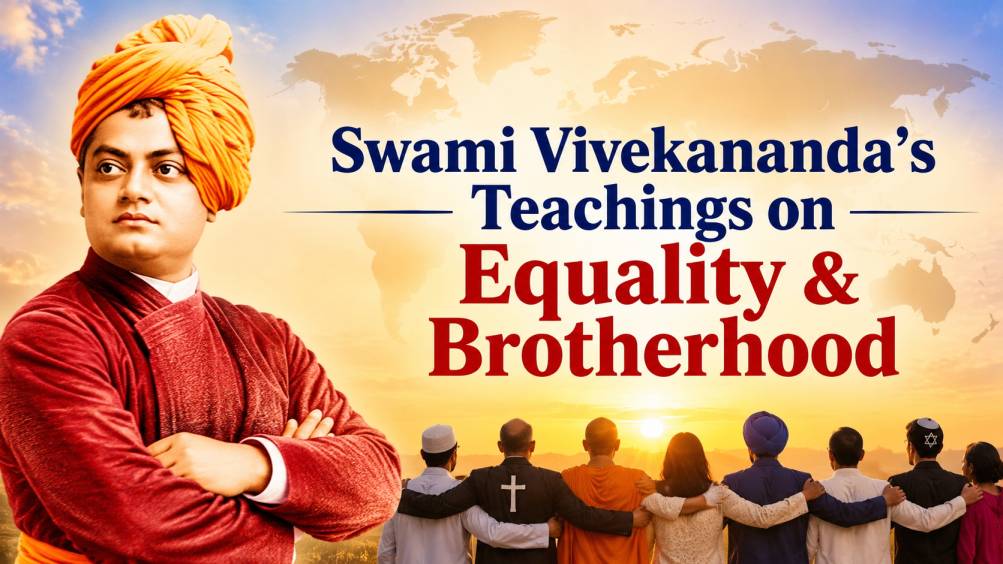
Swami Vivekananda was one of India’s most influential spiritual thinkers, philosophers, and social reformers. His teachings on equality, universal brotherhood, and human dignity continue to inspire people across cultures and generations. He believed that every human being possesses an inherent spiritual potential and deserves respect, regardless of caste, religion, gender, wealth, or social position. His philosophy was deeply influenced by Vedanta, particularly the idea that the same divine reality exists in all beings. His famous address at the Parliament of the World’s Religions in Chicago in 1893 introduced many international audiences to India’s message of religious harmony. Although his teachings are primarily philosophical rather than astrological, they also offer an ethical perspective on traditional Indian ideas of Dharma, compassion, and responsible living.
Who Was Swami Vivekananda?
Swami Vivekananda (1863–1902), born Narendranath Datta, was a prominent disciple of Sri Ramakrishna Paramahamsa.
He dedicated his life to spiritual education, social upliftment, religious harmony, and the development of human character.
Some important milestones in his life include:
- 1863: Born in Kolkata, India.
- 1886: His spiritual teacher Sri Ramakrishna passed away.
- 1893: Delivered his historic address at the Parliament of the World’s Religions in Chicago.
- 1897: Founded the Ramakrishna Mission.
- 1897–1899: Travelled and delivered lectures across India, promoting education, social service, and spiritual development.
- 1902: Passed away at Belur Math.
His philosophy combined spiritual wisdom with practical action, encouraging individuals to recognise their inner strength and work for the welfare of society.
1. Swami Vivekananda’s Teachings on Equality
Equality was an important part of Vivekananda’s understanding of Vedanta.
He believed that the divine presence exists in every human being. Therefore, no person should be considered inferior because of their caste, religion, economic condition, or social background.
Spiritual Equality of All Human Beings
The philosophy of Advaita Vedanta teaches the fundamental unity of existence. According to this understanding, the same ultimate reality, Brahman, is present in all beings.
Vivekananda used this spiritual principle to challenge narrow social divisions and encourage respect for humanity.
His teachings highlighted three important ideas:
- Every individual possesses spiritual potential.
- Social status does not determine human worth.
- Respect and dignity should be extended to everyone.
Equality Through Education
Vivekananda strongly believed that education was essential for social progress.
He considered education a means of developing confidence, character, intelligence, and independent thinking.
He particularly emphasised the importance of educating disadvantaged communities and empowering women.
His approach remains relevant in modern India, where equal access to education and opportunities continues to be important for social development.
2. Universal Brotherhood and Religious Harmony
Universal brotherhood was another central theme of Vivekananda’s philosophy.
His Chicago address in 1893 began with the memorable words, “Sisters and Brothers of America.”
This greeting reflected his belief that humanity should be understood as one family rather than divided by religious and cultural differences.
Respect for Different Religions
Vivekananda believed that different religions could offer different paths towards spiritual understanding.
He opposed religious intolerance and encouraged people to respect other traditions without abandoning their own beliefs.
His approach promoted:
- Interfaith understanding.
- Religious tolerance.
- Peaceful coexistence.
- Mutual respect between communities.
- Cooperation beyond cultural differences.
His message is particularly meaningful in a diverse country like India, where people from different religious and cultural backgrounds live together.
Unity Without Uniformity
Universal brotherhood does not require everyone to follow the same religion, culture, or philosophy.
Instead, Vivekananda’s teachings encourage people to recognise common human values while respecting individual differences.
This principle can strengthen social harmony, reduce prejudice, and promote peaceful relationships.
3. Human Dignity and Service to Humanity
Vivekananda believed that serving human beings was an important expression of spiritual life.
His philosophy of practical Vedanta encouraged people to recognise divinity in others through compassionate action.
The idea is often expressed through the principle of Daridra Narayana Seva, which encourages seeing and serving the divine in people experiencing poverty.
Service as a Form of Worship
Vivekananda encouraged spiritual seekers to move beyond religious discussions and participate in activities that improve human welfare.
Practical examples include:
- Providing education to underprivileged children.
- Supporting people facing poverty.
- Helping individuals during natural disasters.
- Promoting healthcare and social welfare.
- Treating workers and disadvantaged communities with dignity.
This philosophy became an important inspiration for the social-service activities of the Ramakrishna Mission.
Human dignity, according to this approach, is not dependent on wealth, occupation, or social recognition.
4. The Role of Women in Society
Swami Vivekananda strongly supported women’s education and empowerment.
He believed that no society could progress meaningfully without the development and participation of women.
He emphasised that women should receive opportunities to develop their intellectual, spiritual, and practical abilities.
His broader message included:
- Equal access to education.
- Respect for women’s individuality.
- Opportunities for independent development.
- Participation in social and national progress.
These ideas remain relevant to discussions about gender equality, education, employment, and leadership.
5. Swami Vivekananda’s Teachings and Hindu Philosophy
Vivekananda’s philosophy was deeply connected with Vedanta, particularly the Upanishadic idea of spiritual unity.
One important Sanskrit teaching is:
सर्वं खल्विदं ब्रह्म।
Chandogya Upanishad 3.14.1
Meaning: All this is indeed Brahman.
This philosophical idea provides a foundation for understanding the spiritual unity of existence.
Another important expression is:
आत्मवत् सर्वभूतेषु।
Meaning: Regard all beings with the consideration and empathy with which you regard yourself.
This expression reflects a broader ethical principle found in Indian philosophical traditions.
Vivekananda’s interpretation of Vedanta connected spiritual knowledge with practical responsibilities, including compassion, service, self-discipline, and respect for others.
6. Relevance of Vivekananda’s Teachings in Modern Society
His teachings are not limited to spiritual discussions. They offer practical guidance for contemporary social and professional life.
In Education
Schools and universities can encourage character development, critical thinking, confidence, and respect for diversity.
In Business and Leadership
Leaders can apply his philosophy by treating employees fairly, providing equal opportunities, and maintaining ethical professional relationships.
In Social Relationships
Individuals can practise universal brotherhood by avoiding discrimination, respecting different opinions, and helping people in need.
In Personal Development
His emphasis on self-confidence, discipline, and inner strength can encourage individuals to face challenges with courage.
7. Practical Ways to Follow Swami Vivekananda’s Teachings
His philosophy becomes meaningful when translated into everyday actions.
Consider adopting these practices:
- Treat every person with dignity, regardless of social background.
- Support education for disadvantaged children.
- Respect different religions and cultural traditions.
- Help people without expecting personal rewards.
- Develop confidence through learning and self-discipline.
- Oppose discrimination and unfair treatment.
- Participate in community welfare activities.
Reading Vivekananda’s works, practising meditation, and engaging in voluntary service can also help individuals understand his philosophy more deeply.
Conclusion
Swami Vivekananda’s teachings on equality, universal brotherhood, and human dignity provide an enduring foundation for ethical and compassionate living. Inspired by Vedanta, he encouraged people to recognise the spiritual potential present in every human being and reject discrimination based on caste, religion, gender, or economic status. His message of religious harmony, education, self-confidence, and service to humanity remains relevant to modern society. His philosophy reminds us that spiritual development should not remain limited to personal beliefs but should be reflected in our treatment of others. By practising equality, respecting diversity, and serving humanity, individuals can contribute to a more peaceful and inclusive society. His central message encourages everyone to discover their inner strength and use it for the welfare of humanity.
FAQs: Swami Vivekananda’s Teachings
1. What did Swami Vivekananda teach about equality?
Swami Vivekananda taught that every human being possesses inherent spiritual dignity and deserves equal respect.
Influenced by Advaita Vedanta, he believed that the same divine reality exists in all beings. Therefore, discrimination based on caste, religion, wealth, or social position contradicts the spirit of human unity.
Key teachings:
- Respect every individual.
- Support equal educational opportunities.
- Reject social discrimination.
- Recognise the dignity of all human beings.
2. What is universal brotherhood according to Swami Vivekananda?
Universal brotherhood means recognising all human beings as members of one global family, regardless of religion, nationality, or culture.
His historic Chicago address in 1893 reflected this philosophy through his welcoming greeting, “Sisters and Brothers of America.” He encouraged mutual respect and peaceful coexistence among different religious communities.
Ways to practise universal brotherhood:
- Respect different faiths.
- Avoid religious intolerance.
- Promote peaceful dialogue.
- Help people beyond social and cultural boundaries.
3. What was Swami Vivekananda’s message about human dignity?
Vivekananda believed that human dignity comes from the inherent spiritual worth of every individual rather than wealth, status, or social identity.
He encouraged people to serve others, especially those facing poverty and social disadvantage. His philosophy connected spirituality with practical compassion and social responsibility.
Practical lessons:
- Treat workers fairly.
- Help disadvantaged communities.
- Respect individual differences.
- Support human welfare.
4. How did Swami Vivekananda contribute to religious harmony?
Swami Vivekananda promoted religious harmony by teaching that different religions could provide different paths towards spiritual understanding.
At the 1893 Parliament of the World’s Religions, he presented India’s spiritual traditions and encouraged mutual respect between faiths. His approach emphasised understanding rather than conflict.
Important principles:
- Respect different religious traditions.
- Encourage interfaith dialogue.
- Avoid intolerance.
- Focus on shared human values.
5. What did Swami Vivekananda believe about women’s empowerment?
Swami Vivekananda believed that women’s education and development were essential for the progress of society.
He supported opportunities for women to develop their intellectual, spiritual, and practical abilities. His philosophy emphasised education, dignity, and independent growth.
Key ideas:
- Promote women’s education.
- Encourage equal opportunities.
- Respect women’s individuality.
- Support their participation in society.
6. How are Swami Vivekananda’s teachings connected with Vedanta?
Vivekananda’s teachings were deeply influenced by Vedanta, especially Advaita Vedanta, which emphasises the fundamental unity of existence.
He applied this spiritual understanding to everyday life by encouraging equality, compassion, self-confidence, and service to humanity.
Important concepts:
- Brahman: Ultimate reality.
- Atman: The inner Self.
- Advaita: Non-duality.
- Seva: Selfless service.
7. What is the relevance of Swami Vivekananda’s teachings today?
His teachings remain relevant because modern societies continue to face challenges involving discrimination, inequality, religious intolerance, and social divisions.
His emphasis on education, ethical leadership, human dignity, and universal brotherhood offers practical guidance for addressing these issues.
Ways to apply his philosophy:
- Promote inclusive education.
- Practise ethical leadership.
- Respect cultural diversity.
- Participate in social service.
8. What is the main message of Swami Vivekananda’s philosophy?
The central message of Vivekananda’s philosophy is to recognise one’s inner strength, respect every human being, and work for the welfare of humanity.
He believed that spirituality should be expressed through courage, character, compassion, and meaningful action rather than remaining limited to theoretical knowledge.
Remember:
- Build strength and self-confidence.
- Practise compassion.
- Serve humanity.
- Respect the dignity of every individual.