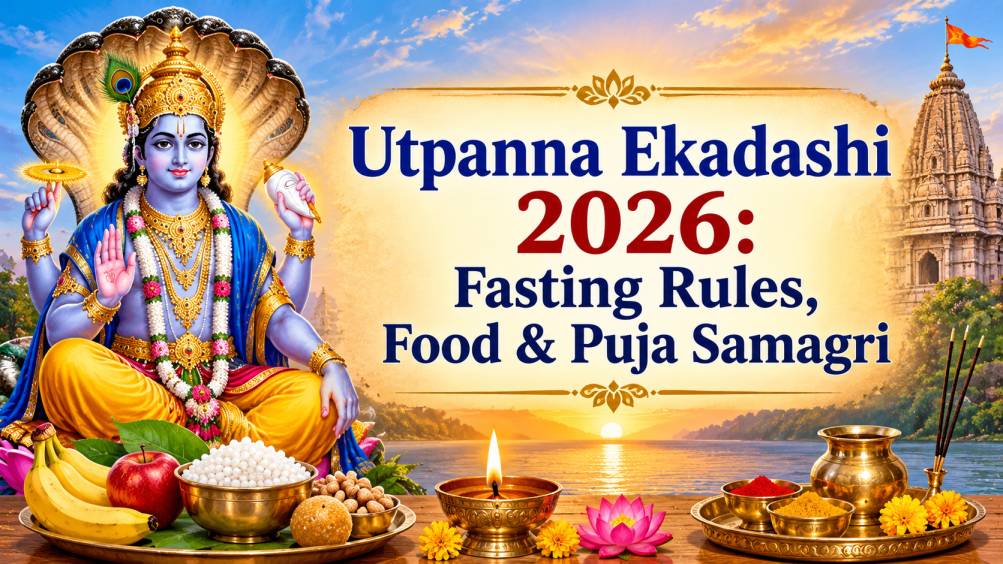
Utpanna Ekadashi is an important Hindu fasting day dedicated to Lord Vishnu. Observed during the Krishna Paksha of Margashirsha month, this sacred Ekadashi is traditionally associated with the origin of Goddess Ekadashi and the spiritual significance of fasting, devotion, and self-discipline. According to Hindu religious traditions, observing the Utpanna Ekadashi Vrat with sincerity is believed to support spiritual purification and encourage devotees to overcome negative habits. The festival is particularly significant for devotees of Lord Vishnu who follow the Ekadashi fasting tradition. Along with prayers and Vishnu Puja, devotees observe specific dietary rules, avoid grains and certain foods, and perform rituals using traditional puja samagri. Understanding the correct fasting procedure, permitted foods, and Parana rules helps devotees observe this occasion meaningfully.
Festival date and calendar details below are based on 2026 Indian Panchang and Vaishnava calendar references. Local timings may vary.
Utpanna Ekadashi 2026: Date and Significance
Date: Friday, 4 December 2026
Tithi: Margashirsha Krishna Ekadashi (Purnimanta calendar)
Tithi begins: 3 December, 11:03 PM IST
Tithi ends: 4 December, 11:44 PM IST
Parana: Saturday, 5 December 2026. Follow the local Dwadashi Parana window.
Utpanna Ekadashi falls on the Krishna Paksha Ekadashi of Margashirsha month. In the Amanta calendar, it is associated with Kartika Krishna Ekadashi.
In 2026, the fasting date is 4 December. The Vaishnava calendar also lists this date for Utpanna Ekadashi. Parana timings differ by location and calendar tradition, so devotees should consult their local Panchang.
Why Is Utpanna Ekadashi Celebrated?
According to the traditional Utpanna Ekadashi Vrat Katha, a powerful demon named Mura troubled the gods. Lord Vishnu fought Mura and eventually rested in a cave. When the demon attempted to attack the sleeping Lord, a divine feminine energy emerged from Vishnu and defeated him.
Pleased with her courage, Lord Vishnu named her Goddess Ekadashi and granted her a boon. The day is therefore celebrated as the appearance of Goddess Ekadashi.
Devotees believe that observing this fast with devotion helps purify the mind, strengthen spiritual discipline, and develop devotion towards Lord Vishnu.
Utpanna Ekadashi 2026: Fasting Rules and Vrat Vidhi
Observing the Utpanna Ekadashi Vrat involves certain dietary and spiritual practices.
1. Follow the Dashami Rules
The day before Ekadashi is called Dashami.
- Eat a simple, preferably sattvic meal.
- Avoid overeating and heavy foods.
- Maintain cleanliness and a peaceful mindset.
- Avoid intoxicants and non-vegetarian food.
- Prepare for the next day’s fast.
2. Observe the Ekadashi Fast
On 4 December, devotees wake up early, take a bath, and make a Sankalp (vow) to observe the fast.
Different fasting methods are followed according to personal health, family tradition, and religious practice:
- Nirjala Vrat: Fasting without food or water.
- Jalahar Vrat: Consuming water during the fast.
- Phalahar Vrat: Eating fruits and permitted dry fruits.
- Partial Fast: Consuming permitted fasting foods such as milk, potatoes, and sabudana.
A strict fast is not compulsory for everyone. People with medical conditions, older adults, pregnant women, and those taking regular medication should choose a safe approach and consult a healthcare professional before fasting.
3. Worship Lord Vishnu
- Offer flowers and Tulsi leaves to Lord Vishnu.
- Light a ghee diya.
- Chant Vishnu mantras.
- Read or listen to the Utpanna Ekadashi Vrat Katha.
- Perform Vishnu Aarti.
- Spend time in prayer, meditation, and devotional activities.
4. Observe Dwadashi Parana
The fast is traditionally completed on Dwadashi, the twelfth lunar day.
On 5 December 2026, devotees should break their fast after sunrise within the prescribed local Parana Muhurat, while observing the relevant Dwadashi and Hari Vasara rules.
Do not rely on a generic national timing because sunrise and Parana windows vary by city.
What to Eat on Utpanna Ekadashi 2026?
Devotees following a Phalahar or partial fast can choose from several traditional fasting foods.
Permitted food options commonly include:
- Fresh fruits such as bananas, apples, papaya, and pomegranate.
- Milk, curd, and paneer.
- Almonds, cashews, raisins, and walnuts.
- Sabudana (tapioca pearls).
- Makhana (fox nuts).
- Kuttu (buckwheat) flour.
- Singhara (water chestnut) flour.
- Potatoes and sweet potatoes.
- Sendha namak (rock salt).
Popular Ekadashi recipes include sabudana khichdi, fruit chaat, makhana kheer, and kuttu puri.
Food customs differ between Vaishnava traditions and families. Some stricter traditions avoid additional ingredients, so devotees should follow their customary fasting rules.
Foods to Avoid During Utpanna Ekadashi
The main dietary restriction followed by many Ekadashi devotees is avoiding grains and pulses.
| Food category | Foods to avoid |
| Grains | Rice, wheat, barley, oats, maize |
| Pulses | Dal, chickpeas, kidney beans, peas |
| Non-vegetarian food | Meat, fish, eggs |
| Tamasic ingredients | Onion and garlic |
| Regular salt | Common table salt |
| Other ingredients | Mustard seeds and grain-containing spices |
Rice is particularly avoided in many Ekadashi traditions.
Also check packaged fasting products for hidden grain ingredients, starches, and regular salt.
Utpanna Ekadashi 2026: Puja Samagri List
Arrange the following items before beginning the puja:
- Picture or idol of Lord Vishnu or Lord Krishna.
- Tulsi leaves.
- Yellow flowers and garland.
- Roli and Chandan.
- Ghee diya and cotton wicks.
- Incense sticks and camphor.
- Panchamrit (milk, curd, ghee, honey, and sugar), if used according to family tradition.
- Seasonal fruits.
- Clean water and a small vessel.
- Aarti thali and bell.
- Fasting-friendly Naivedya.
Tulsi leaves are particularly important in traditional Vishnu worship. Prepare offerings without prohibited grains when following Ekadashi dietary restrictions.
Mantras and Remedies for Utpanna Ekadashi
Utpanna Ekadashi is traditionally considered an opportunity to strengthen devotion and practise self-discipline.
Devotees can follow these simple practices:
- Chant ॐ नमो भगवते वासुदेवाय। to worship Lord Vishnu.
- Recite Vishnu Sahasranama according to personal capacity.
- Read the Utpanna Ekadashi Vrat Katha.
- Offer food or essential items to people in need.
- Practise meditation and avoid unnecessary arguments.
- Spend time listening to Vishnu Bhajans and devotional songs.
From a broader Vedic perspective, Ekadashi is determined by the lunar calendar rather than by a particular planetary yoga in an individual’s birth chart. Its religious importance comes from the traditional observance of the lunar Tithi.
Conclusion
Utpanna Ekadashi 2026 will be observed on 4 December, Friday, in honour of Lord Vishnu and Goddess Ekadashi. The occasion highlights the importance of devotion, self-control, spiritual awareness, and righteous living. Following the traditional fasting rules, choosing permitted foods, arranging the appropriate puja samagri, and performing Vishnu Puja are meaningful ways to observe this sacred day. Devotees should also remember that fasting is a personal religious practice and should be adapted to individual health requirements. By observing Utpanna Ekadashi with sincerity, prayer, and compassion, devotees can make the occasion an opportunity for spiritual reflection and a renewed commitment to positive living.
FAQs: Utpanna Ekadashi 2026
1. When is Utpanna Ekadashi in 2026?
Utpanna Ekadashi will be observed on Friday, 4 December 2026.
It falls during Krishna Paksha of Margashirsha month according to the Purnimanta calendar. The Ekadashi Tithi begins on 3 December at 11:03 PM and ends on 4 December at 11:44 PM IST.
Important details:
- Vrat date: 4 December 2026.
- Parana date: 5 December 2026.
- Worship: Lord Vishnu and Goddess Ekadashi.
2. Can we eat rice on Utpanna Ekadashi?
No, rice is traditionally avoided during Utpanna Ekadashi fasting.
The dietary rules generally prohibit grains and pulses, including rice, wheat, barley, and lentils. Devotees following a partial fast can choose sabudana, fruits, milk, and permitted fasting flours instead.
Alternatives:
- Sabudana khichdi.
- Makhana kheer.
- Fruit salad.
- Kuttu or singhara preparations.
3. Which foods are allowed during Utpanna Ekadashi fasting?
Fruits, milk, dry fruits, sabudana, makhana, potatoes, and certain fasting flours are commonly permitted.
However, food restrictions differ across Hindu traditions. Some devotees observe a strict fruit-only fast, while others consume one or more permitted meals.
Suggested foods:
- Banana and apple.
- Almonds and cashews.
- Milk and curd.
- Sabudana and makhana.
- Sendha namak.
4. Can we drink tea and coffee during Utpanna Ekadashi?
Tea and coffee are not universally prohibited, but strict devotees may avoid them during the fast.
Those following a flexible fasting tradition may consume them according to their family practices. However, excessive caffeine and sugary beverages are best avoided, particularly when food intake is restricted.
Tips:
- Prefer water and milk.
- Avoid excessive caffeine.
- Follow your family’s vrat tradition.
5. What should be included in Utpanna Ekadashi Puja Samagri?
Utpanna Ekadashi Puja Samagri generally includes a Vishnu idol or picture, Tulsi leaves, yellow flowers, diya, incense, Chandan, fruits, and Panchamrit.
These items are used for traditional Vishnu worship and devotional offerings.
Essential items:
- Tulsi leaves.
- Yellow flowers.
- Ghee diya.
- Incense sticks.
- Fruits and fasting-friendly Naivedya.
6. When should we break the Utpanna Ekadashi fast in 2026?
The Utpanna Ekadashi fast should traditionally be broken on Saturday, 5 December 2026, during the prescribed Dwadashi Parana Muhurat.
Parana should be performed after sunrise and according to the local Panchang, taking Hari Vasara into account.
Remember:
- Check the local Parana timing.
- Avoid breaking the fast during Hari Vasara.
- Have a simple meal after completing the fast.
7. Which mantra should be chanted on Utpanna Ekadashi?
Devotees can chant the Vishnu mantra ॐ नमो भगवते वासुदेवाय। on Utpanna Ekadashi.
The mantra is a traditional invocation of Lord Vishnu and can be repeated during morning or evening prayers. Devotees may also recite Vishnu Sahasranama or listen to devotional bhajans.
Suggested practices:
- Chant the mantra 108 times if convenient.
- Read the Ekadashi Vrat Katha.
- Perform Vishnu Aarti.
- Meditate and maintain a peaceful mindset.
8. Can beginners start observing Ekadashi fast on Utpanna Ekadashi?
Yes, Utpanna Ekadashi is traditionally regarded as an auspicious occasion to begin observing regular Ekadashi fasts.
Devotees can start with a manageable fasting method and gradually follow the practices prescribed by their family or spiritual tradition.
For beginners:
- Begin with a partial or fruit-based fast.
- Avoid grains and pulses according to your tradition.
- Perform simple Vishnu Puja.
- Prioritise health and devotion over strictness.