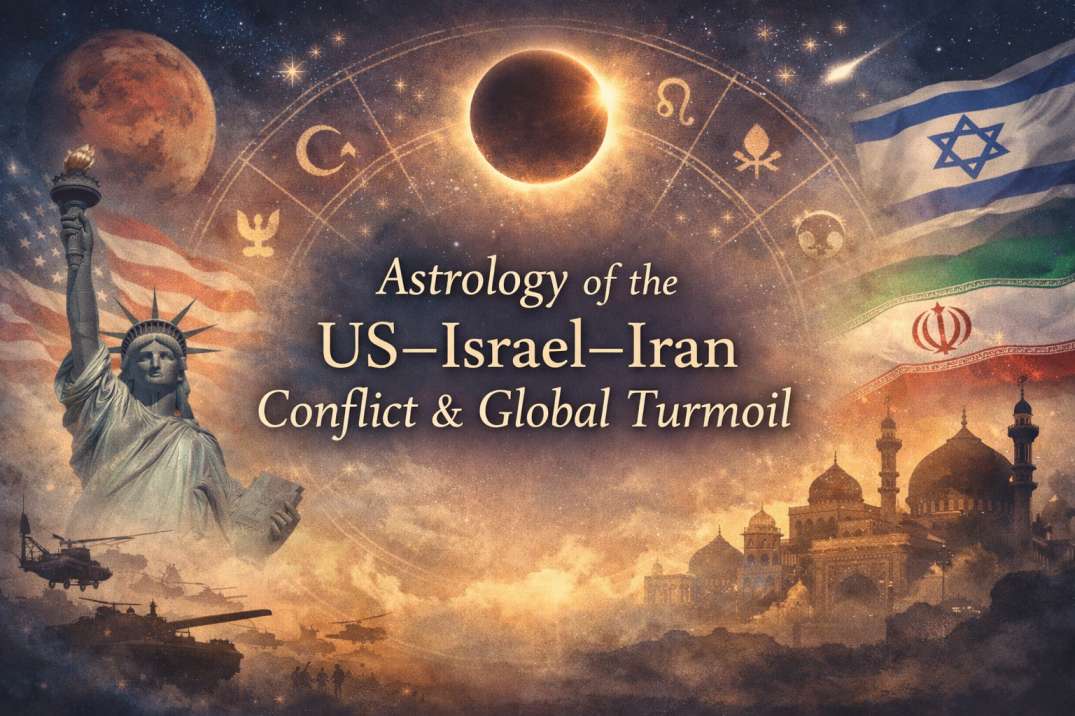
Global conflicts often appear political or economic on the surface, but many astrologers believe planetary cycles can symbolically reflect periods of tension and transformation. The current tensions involving the United States, Israel, and Iran have drawn attention not only from geopolitical experts but also from astrologers studying planetary movements linked to war, disruption, and power struggles.
In Vedic astrology, certain planets; especially Mars (Mangal), Saturn (Shani), and Rahu– are closely associated with conflict, aggression, and sudden upheavals. When these planets form challenging alignments, astrologers often observe increased global unrest, diplomatic strain, or military activity.
This article explores the astrological patterns potentially linked to global turmoil, the symbolism behind key planetary transits, and practical spiritual remedies rooted in traditional wisdom.
Planetary Influences Behind Global Conflict
Mars: The Planet of War and Military Action
In astrology, Mars represents energy, courage, warfare, and aggression. Whenever Mars becomes strongly activated through transits, retrograde phases, or difficult aspects, global tensions can rise.
During such cycles, Mars may influence:
- Military strategies and defense actions
- Nationalistic responses
- Rapid escalation of conflicts
- Diplomatic confrontations
In Vedic astrology, Mars is considered a “Kroor Graha” (fierce planet), meaning its energy can manifest strongly when triggered.
When Mars interacts with unpredictable planets like Uranus or shadow planets like Rahu, events may become sudden and explosive.
Rahu and Ketu: Catalysts of Unpredictable Events
The lunar nodes Rahu and Ketu are often associated with karmic turning points, illusions, and sudden shifts in global dynamics.
Astrologically, Rahu represents:
- Sudden geopolitical changes
- Technological warfare
- Propaganda and misinformation
- Unconventional strategies
Rahu’s influence can magnify tensions between nations by amplifying fear, uncertainty, and ideological conflicts.
When Rahu forms difficult alignments with Mars or Saturn, astrologers often interpret it as a period of heightened instability.
Saturn’s Role in Long-Term Global Restructuring
While Mars triggers immediate action, Saturn represents long-term consequences, karmic balance, and restructuring of power systems.
Saturn’s influence in global astrology often reflects:
- Political power shifts
- Economic pressure between nations
- Strategic alliances or sanctions
- Slow but significant geopolitical changes
Saturn teaches lessons through discipline, patience, and accountability, meaning conflicts during its strong periods may push nations toward deeper structural changes.
Eclipse Cycles and Global Turning Points
Eclipses have historically been associated with significant world events.
In Vedic astrology, eclipses occur due to the alignment of Rahu and Ketu with the Sun and Moon, symbolizing karmic resets.
Astrologers observe that eclipses may coincide with:
- Sudden political announcements
- Diplomatic breakthroughs or breakdowns
- Military escalations
- Leadership challenges
Because eclipse effects can unfold gradually, their influence may be felt for several months after the exact event.
Astrological Yogas Linked to Global Tension
Certain planetary combinations are traditionally associated with conflict or upheaval.
1. Angarak Yoga
Formed when Mars and Rahu combine.
Possible symbolic outcomes:
- Aggressive geopolitical decisions
- Sudden conflicts or military activity
- Increased global anxiety
2. Shani–Mars Opposition
When Saturn and Mars oppose each other astrologically, it can represent pressure between action and restraint.
This combination may manifest as:
- Long-standing conflicts resurfacing
- Strategic stalemates
- Tense negotiations
3. Rahu Influence on Fire Signs
When Rahu activates Aries, Leo, or Sagittarius, astrologers sometimes associate it with bold and dramatic global actions.
Practical Spiritual Remedies for Peace and Stability
Astrology does not predict events with certainty but offers symbolic guidance. Many Vedic traditions suggest spiritual practices that cultivate peace and balance during turbulent times.
1. Chanting the Hanuman Mantra
Hanuman is associated with courage and protection.
Mantra:
ॐ हनुमते नमः
Om Hanumate Namah
Chanting this mantra on Tuesdays at sunrise (around 6:00–7:00 IST) is believed to strengthen positive Mars energy.
2. Lighting a Mustard Oil Lamp for Shani
Saturn-related stress can be balanced through simple rituals.
- Light a mustard oil lamp on Saturday evening (after 6:00 IST)
- Offer black sesame seeds
- Pray for peace and stability
3. Practicing Meditation During Eclipse Periods
During eclipse phases, spiritual traditions recommend:
- Silence or meditation
- Avoiding negative speech
- Practicing compassion and patience
These practices help align personal energy with calmness instead of fear.
4. Reciting the Peace Mantra
A traditional Vedic peace mantra encourages harmony.
Shloka:
ॐ द्यौः शान्तिरन्तरिक्षं शान्तिः
पृथ्वी शान्तिरापः शान्तिः
Meaning: May there be peace in the heavens, atmosphere, earth, and all beings.
Real-Life Relevance of Global Astrology
While astrology cannot determine political decisions, it provides a symbolic framework to understand cycles of tension and transformation.
Astrologers studying global charts often analyze:
- Planetary cycles of major nations
- Eclipse paths
- Retrograde phases of Mars or Mercury
- Long-term Saturn and Jupiter transits
These patterns sometimes coincide with periods of major historical change, reminding us that humanity evolves through cycles.
Conclusion
The astrology of global conflicts such as tensions involving the United States, Israel, and Iran highlights how planetary cycles may symbolically reflect collective challenges. Planets like Mars, Saturn, and Rahu are often associated with power struggles, transformation, and geopolitical shifts.
However, astrology should be viewed as a tool for reflection rather than prediction. Understanding planetary influences can encourage patience, wisdom, and awareness during uncertain times.
Ultimately, the deeper message of Vedic astrology is balance. While global events may feel chaotic, spiritual practices, compassion, and collective wisdom can help humanity move toward stability and peace.
FAQs
1. Can astrology really predict wars or global conflicts?
Astrology does not directly predict wars but identifies planetary patterns historically associated with conflict.
Astrologers study cycles involving Mars, Saturn, Rahu, and eclipses because these planets symbolize aggression, power struggles, and transformation.
When these influences appear strongly in global charts, they may coincide with periods of tension or strategic shifts.
Helpful insights:
- Track Mars retrograde cycles
- Observe eclipse periods
- Study Saturn’s long-term transits
2. Why is Mars considered the planet of war?
Mars represents energy, courage, and combativeness in astrology.
In ancient texts, Mars is associated with warriors, soldiers, and decisive action. Because of this symbolism, astrologers often link Mars transits with conflicts, military activity, or intense competition.
However, Mars also represents positive qualities like bravery and leadership.
Ways to balance Mars energy:
- Practice physical exercise
- Chant Hanuman mantras
- Offer red flowers to Hanuman on Tuesdays
3. What role does Rahu play in global instability?
Rahu symbolizes sudden changes, illusions, and unconventional power strategies.
In geopolitical astrology, Rahu is often linked to technology-driven conflicts, propaganda, and unexpected shifts in alliances.
Its influence can amplify tensions by creating uncertainty and rapid developments.
Remedies for Rahu balance:
- Donate black sesame seeds
- Meditate regularly
- Practice calm decision-making
4. Do eclipses influence world events?
Eclipses are considered symbolic turning points in astrology.
Because eclipses involve the Sun, Moon, and Rahu–Ketu axis, they represent karmic resets and major shifts.
Many astrologers observe that significant announcements or political events may occur near eclipse periods.
Traditional guidance during eclipses:
- Chant spiritual mantras
- Avoid arguments or negativity
- Focus on introspection
5. How can individuals stay balanced during global uncertainty?
Maintaining emotional stability during turbulent times is important.
Astrology recommends focusing on personal discipline, spiritual practices, and mindful living rather than worrying about global events beyond our control.
Simple practices can bring calm and clarity.
Recommended practices:
- Daily meditation
- Chanting peace mantras
- Limiting negative news consumption
- Practicing gratitude and compassion