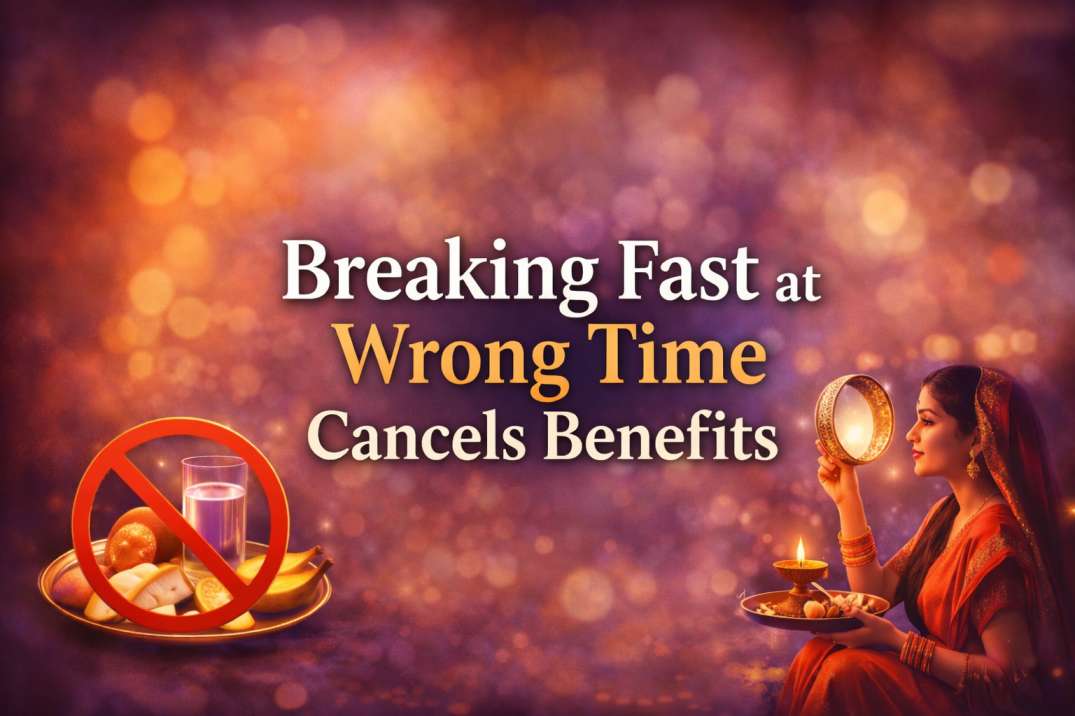
In Indian tradition, fasting is not only a dietary or spiritual practice but also a time-sensitive astrological discipline. According to Vedic astrology, the timing of breaking a fast (parana) is as important as observing the fast itself. This is why many scriptures and Panchang guidelines clearly mention specific time windows in IST (Indian Standard Time) for ending a fast.
The belief that breaking fast at the wrong time cancels benefits is not based on fear or superstition. Instead, it comes from an understanding of planetary cycles, lunar tithis, and digestive rhythms governed by grahas like the Moon and Sun. When the fast is broken outside the recommended window, the intended physical, mental, and karmic benefits may reduce or become ineffective.
Astrological Logic Behind Fasting and Parana
Role of Time (Kala) in Vedic Astrology
Kala (time) is considered a living force in Jyotisha. Every action gains strength or weakness depending on when it is performed.
- Fasting is linked to self-control and lunar discipline
- Breaking the fast represents energy absorption and grounding
- Incorrect timing disrupts this balance
This principle is discussed in classical texts like Dharma Shastras, which emphasize vidhi (method) and kala (timing).
Planetary Influences on Breaking a Fast
Moon (Chandra) – Mind and Digestion
The Moon governs emotions, water balance, and digestion. Most fasts are aligned with lunar tithis such as:
- Ekadashi
- Purnima
- Amavasya
Breaking the fast before the tithi ends or too late after sunrise (IST) can disturb lunar rhythm, affecting mental calmness.
Sun (Surya) – Vitality and Metabolism
Surya rules the digestive fire (Agni). Parana done when the Sun is weak, such as too early before sunrise or too late after midday, may reduce physical benefits.
Common Fasts and Correct Breaking Time
Ekadashi Fast
Ekadashi is one of the most time-sensitive fasts.
Astrological rule:
- Fast should be broken during Dwadashi tithi, not Ekadashi
- Parana is ideally done after sunrise, within the Dwadashi window (IST-based Panchang)
Breaking Ekadashi fast early or delaying excessively is traditionally believed to reduce its spiritual merit.
Purnima and Amavasya Fast
These fasts are lunar in nature.
Correct approach:
- Break fast after Moon-related rituals
- Preferably after sunrise on the next day, as per local IST timings
The logic is to allow the Moon’s influence to complete its cycle.
Navratri and Long Fasts
During Navratri or extended fasts:
- Parana should be light
- Timing should align with Dashami tithi end
Heavy meals or late-night breaking can strain both digestion and mental balance.
Why Wrong Timing Cancels Benefits
Energetic Imbalance
Breaking a fast at the wrong time may cause:
- Sudden drop in mental clarity
- Digestive discomfort
- Emotional restlessness
Astrologically, this happens when Agni and Chandra tattva are not aligned.
Karmic Perspective
Fasting is a conscious restraint. When timing rules are ignored:
- The discipline aspect weakens
- The karmic intention becomes incomplete
This is why elders emphasize correct parana rather than extreme fasting.
Practical Remedies for Correct Parana
Simple Guidelines to Follow
- Always check a reliable Panchang for IST timings
- Avoid breaking fast during Rahu Kalam if possible
- Start with water or fruit before a full meal
Mantra and Mindfulness
A short reflective line often quoted is:
“कालेन सिद्धिः कर्मणाम्”
(Actions bear fruit when done at the right time)
This reminds practitioners that timing supports effort.
Real-Life Relevance of Timing Discipline
From a practical perspective, correct timing:
- Supports better digestion
- Maintains mental calm
- Prevents post-fast fatigue
Even modern health science agrees that gradual refeeding at the right time reduces stress on the body. Astrology simply adds a timing framework rooted in lunar and solar cycles.
Conclusion
The idea that breaking fast at wrong time cancels benefits is not about punishment or fear. It is about respecting time as an active factor in spiritual and physical practices. Vedic astrology views fasting as a cycle, beginning with restraint and ending with mindful nourishment.
When the fast is broken within the correct IST-based window, the body, mind, and intention stay aligned. Rather than focusing on extreme rules, one should focus on awareness, timing, and moderation. Small discipline in parana often delivers greater balance than strict fasting without timing awareness.
FAQs
1. Does breaking fast at the wrong time really cancel benefits?
It reduces the effectiveness rather than fully canceling the benefits.
Astrologically, the issue is imbalance between digestion and lunar rhythm. Correct timing ensures smoother transition from restraint to nourishment.
Tip:
- Always prioritize correct parana over longer fasting hours
2. Why is Ekadashi parana timing so strict?
Ekadashi is governed by lunar discipline and mental purification.
Breaking the fast before Dwadashi tithi or delaying excessively disrupts this cycle.
Best practice:
- Break fast after sunrise during Dwadashi (IST)
3. Can health issues occur due to wrong parana timing?
Yes, especially digestive discomfort or fatigue.
Astrology links this to weak Agni caused by mistimed food intake after restraint.
Helpful step:
- Begin with light food and water
4. Is Rahu Kalam important while breaking a fast?
Traditionally, Rahu Kalam is avoided for initiating actions.
While not mandatory, avoiding it during parana maintains mental calm.
Suggestion:
- If unavoidable, keep the meal simple
5. What if I don’t know the exact Panchang timing?
Follow sunrise-based timing as a general rule.
Breaking the fast after local sunrise in IST works for most lunar fasts when exact data is unavailable.
Practical tip:
- Use trusted Panchang apps or temple calendars