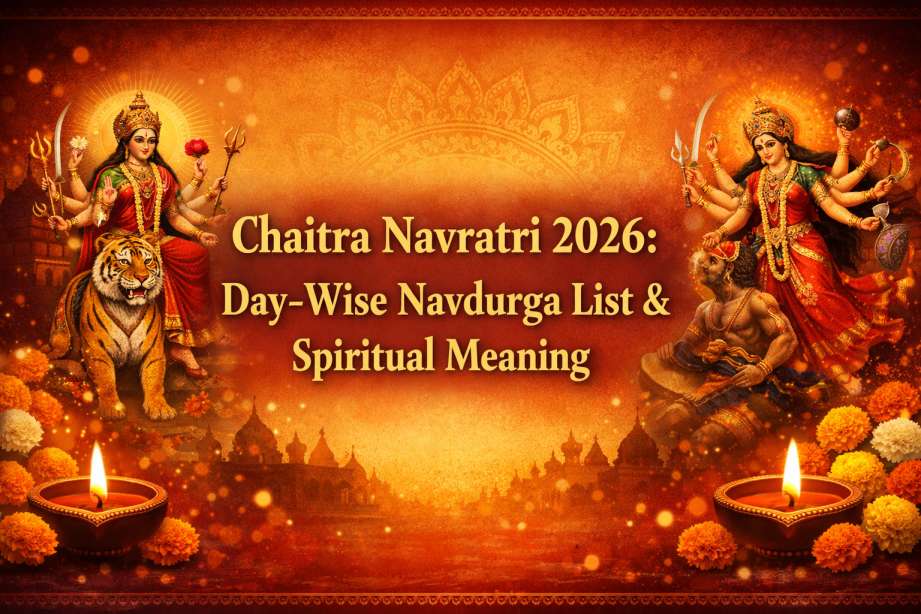
Chaitra Navratri marks the beginning of the Hindu lunar year in many traditions and is one of the most spiritually significant festivals dedicated to Goddess Durga. In 2026, Chaitra Navratri begins on 19 March 2026 and concludes on 27 March 2026 (IST) with Ram Navami celebrations.
During these nine sacred days, devotees worship the Navdurga- nine divine manifestations of Goddess Durga. Each form represents a specific spiritual energy and symbolizes a stage of inner transformation.
From an astrological perspective, Navratri occurs near the Chaitra Shukla Paksha, when cosmic energy supports renewal, purification, and spiritual growth. The transition from winter to spring aligns with planetary movements that promote mental clarity, new beginnings, and karmic cleansing.
Understanding the day-wise Navdurga worship helps devotees align rituals with spiritual symbolism, making Navratri not just a religious festival but also a period for inner balance and positive planetary influence.
Day-Wise Navdurga List for Chaitra Navratri 2026
Below is the traditional sequence of the nine forms of Goddess Durga worshipped during Chaitra Navratri.
Day 1 – Maa Shailputri
Date: 19 March 2026 (Thursday) – IST
Maa Shailputri is the daughter of the Himalayas and represents stability, purity, and grounding energy. She is considered the first manifestation of Goddess Durga.
Spiritual Significance
In Vedic astrology, Maa Shailputri is associated with the Moon, which governs emotions and mental peace. Worshipping her helps stabilize emotional fluctuations.
Symbolism
- Rides a bull (Nandi)
- Holds a trident and lotus
- Represents the root chakra (Muladhara)
Simple Remedy
- Offer pure cow ghee in prayers to bring harmony and health.
Day 2 – Maa Brahmacharini
Date: 20 March 2026 (Friday) – IST
Maa Brahmacharini symbolizes penance, devotion, and spiritual discipline. Her story reflects the intense tapasya performed to attain Lord Shiva as her consort.
Spiritual Significance
She represents the power of determination and spiritual focus, qualities that strengthen Jupiter’s positive influence in astrology.
Symbolism
- Holds a rosary (Jap Mala) and water pot
- Embodies self-control and wisdom
Simple Remedy
- Offer sugar or mishri to enhance mental clarity and patience.
Day 3 – Maa Chandraghanta
Date: 21 March 2026 (Saturday) – IST
Maa Chandraghanta symbolizes courage and divine protection. The crescent moon on her forehead resembles a bell (ghanta), giving her this name.
Spiritual Significance
Her worship is believed to reduce fear, anxiety, and negative planetary influences, especially those related to Mars.
Symbolism
- Ten arms holding weapons
- Lion as her vehicle
- Represents strength and alertness
Simple Remedy
- Offer milk or kheer for peace and emotional stability.
Day 4 – Maa Kushmanda
Date: 22 March 2026 (Sunday) – IST
Maa Kushmanda is believed to have created the universe with her divine smile. She represents the cosmic creative force.
Spiritual Significance
She governs solar energy and vitality. Worshipping her enhances confidence, creativity, and life force energy.
Symbolism
- Eight arms holding divine weapons and rosary
- Associated with the Sun’s radiance
Simple Remedy
- Offer malpua or sweet fruits for prosperity and health.
Day 5 – Maa Skandamata
Date: 23 March 2026 (Monday) – IST
Maa Skandamata is the mother of Lord Kartikeya (Skanda) and symbolizes nurturing and protective energy.
Spiritual Significance
Her worship supports family harmony and child-related blessings. Astrologically, it helps strengthen the Mercury–Moon balance related to emotional intelligence.
Symbolism
- Carries infant Kartikeya
- Rides a lion
- Represents compassion and motherhood
Simple Remedy
- Offer bananas to seek blessings for family well-being.
Day 6 – Maa Katyayani
Date: 24 March 2026 (Tuesday) – IST
Maa Katyayani is known as the fierce warrior form of Durga who defeated the demon Mahishasura.
Spiritual Significance
She symbolizes courage, justice, and righteous action. In astrology, her worship helps reduce Mars-related challenges such as conflicts or delays in marriage.
Symbolism
- Four arms holding sword and lotus
- Lion as her vehicle
Simple Remedy
- Offer honey for success and confidence.
Day 7 – Maa Kalaratri
Date: 25 March 2026 (Wednesday) – IST
Maa Kalaratri represents the destructive power that removes darkness and ignorance.
Spiritual Significance
Her worship is believed to reduce Saturn and Rahu related negativity, helping overcome fear and obstacles.
Symbolism
- Dark complexion
- Three blazing eyes
- Vehicle: donkey
Simple Remedy
- Offer jaggery (gur) to bring protection and courage.
A commonly recited mantra is:
“ॐ देवी कालरात्र्यै नमः”
Day 8 – Maa Mahagauri
Date: 26 March 2026 (Thursday) – IST
Maa Mahagauri symbolizes purity, forgiveness, and inner peace. She is believed to grant relief from past karmic burdens.
Spiritual Significance
Her worship aligns with the purification of the mind and soul, helping restore balance influenced by Venus and Moon energies.
Symbolism
- Dressed in white
- Rides a bull
- Represents serenity and grace
Simple Remedy
- Offer coconut or white sweets for peace and prosperity.
Day 9 – Maa Siddhidatri
Date: 27 March 2026 (Friday) – IST
Maa Siddhidatri is the giver of spiritual powers (siddhis) and divine wisdom.
Spiritual Significance
She represents the culmination of Navratri’s spiritual journey, symbolizing self-realization and cosmic balance.
Symbolism
- Seated on a lotus
- Bestows divine blessings and knowledge
Simple Remedy
- Offer sesame seeds or halwa to attract prosperity and success.
Astrological Importance of Navdurga Worship
Navratri is not only a religious celebration but also a period of energetic purification in Vedic astrology.
Planetary and Spiritual Influence
During these nine days:
- Moon energy promotes emotional cleansing.
- Sun’s transition into Aries season encourages renewal and vitality.
- Spiritual practices help balance planetary doshas.
Practical Practices During Navratri
- Daily meditation or mantra chanting
- Fasting or light sattvic diet
- Charity and acts of kindness
- Lighting a ghee lamp during evening prayers
These practices help align the mind with positive cosmic vibrations.
Conclusion
Chaitra Navratri 2026 offers a meaningful opportunity to reconnect with the divine feminine energy represented by Navdurga. Each day of the festival symbolizes a different stage of spiritual evolution from grounding energy to divine realization.
By understanding the day-wise significance of the nine goddesses, devotees can deepen their rituals and align them with traditional astrological wisdom.
Whether through simple prayers, fasting, or meditation, Navratri encourages individuals to cultivate inner strength, clarity, and spiritual awareness. As the festival approaches, reflecting on these divine energies can inspire personal growth and harmony in daily life.
FAQs
1. What are the nine forms of Goddess Durga worshipped during Navratri?
The nine forms are Shailputri, Brahmacharini, Chandraghanta, Kushmanda, Skandamata, Katyayani, Kalaratri, Mahagauri, and Siddhidatri.
These forms represent different spiritual qualities and stages of divine power. Each day of Navratri is dedicated to one manifestation, reflecting themes like discipline, courage, wisdom, and liberation.
Key Tips:
- Follow the day-wise worship sequence
- Chant the specific goddess mantra
- Offer traditional prasad associated with each form
2. Why is Navdurga worship important in Chaitra Navratri?
Navdurga worship symbolizes the progressive awakening of spiritual energy within the devotee.
According to traditional beliefs, each goddess represents a stage of inner transformation—from grounding energy to spiritual enlightenment. This sequence mirrors the journey of spiritual growth.
Helpful Practices:
- Begin prayers with a sankalp (intention)
- Maintain a sattvic lifestyle during Navratri
- Perform evening aarti daily
3. What is the spiritual meaning of the nine days of Navratri?
The nine days represent nine stages of spiritual purification and self-realization.
Each goddess reflects a psychological or spiritual quality such as courage, wisdom, purity, and divine power. Devotees symbolically progress through these stages during the festival.
Ways to deepen the practice:
- Daily meditation
- Chanting Durga mantras
- Reading sacred texts like Durga Saptashati
4. Which day of Navratri is considered the most powerful?
Ashtami (Day 8) and Navami (Day 9) are generally considered the most spiritually significant days.
On Ashtami, devotees perform Kanya Puja, honoring young girls as manifestations of the goddess. Navami symbolizes the completion of the spiritual cycle and divine blessings.
Suggested Rituals:
- Offer food to young girls
- Recite Durga Chalisa
- Donate food or clothing
5. How can devotees gain maximum benefits during Navratri?
Devotees can gain spiritual benefits through discipline, devotion, and mindful practices.
Navratri emphasizes purification of thoughts, diet, and actions. The combination of fasting, prayer, and charity helps cultivate positive energy.
Practical Remedies:
- Light a ghee lamp daily
- Chant “Om Dum Durgaye Namah”
- Avoid negative habits and maintain positive thoughts