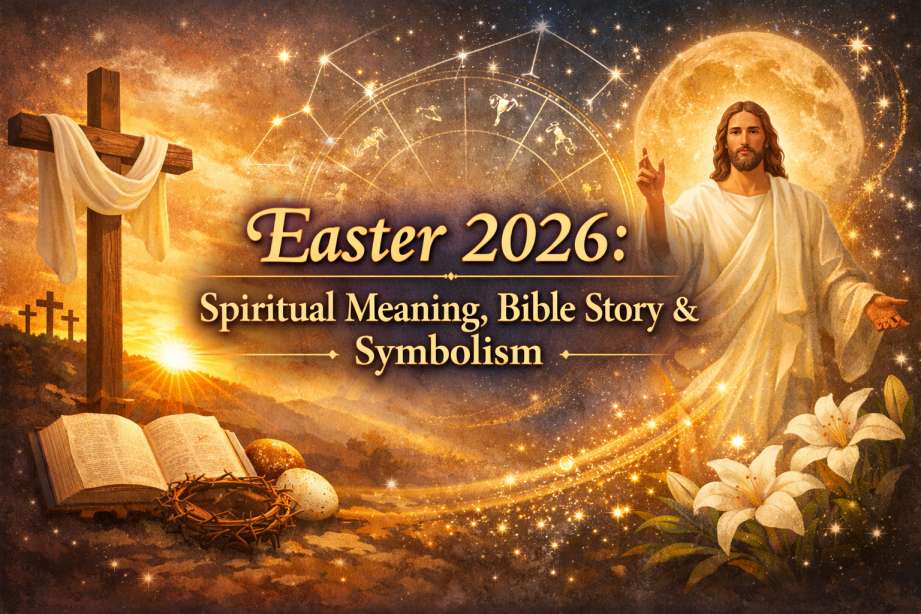
Easter is one of the most spiritually significant festivals in Christianity, celebrating the resurrection of Jesus Christ. In 2026, Easter will be observed on Sunday, April 5, 2026, with sunrise prayers and services typically held around 6:00 AM–7:30 AM IST in India.
From an astrological lens, Easter aligns with powerful seasonal transitions; especially the Sun’s movement in Aries (Mesha Rashi), symbolizing rebirth, courage, and new beginnings. This makes Easter not just a religious event but also a universal moment of renewal, reflection, and transformation that resonates deeply with Vedic principles of karma and rebirth.
The Bible Story Behind Easter
The story of Easter is rooted in the New Testament of the Bible.
Key Events Leading to Easter
- Good Friday (April 3, 2026): Marks the crucifixion of Jesus Christ around 12:00 PM–3:00 PM IST, symbolizing sacrifice and forgiveness.
- Holy Saturday (April 4, 2026): A day of silence and waiting, representing introspection.
- Easter Sunday (April 5, 2026): Celebrates the resurrection, believed to have occurred early morning before sunrise (~6:00 AM IST).
Spiritual Lessons from the Bible Story
- Sacrifice leads to transformation
- Faith overcomes fear and uncertainty
- Death is not the end, but a transition
These teachings align with Vedic philosophy, where the soul (Atman) is eternal and undergoes cycles of rebirth.
Astrological Significance of Easter 2026
Easter 2026 falls during a dynamic planetary period:
1. Sun in Aries (Mesha Rashi)
- The Sun represents soul energy (Atma) in Vedic astrology.
- Aries signifies beginnings, action, and courage.
- This placement enhances:
- Personal growth
- Leadership energy
- Spiritual awakening
2. Moon’s Influence
The Moon during Easter will likely be in a waxing phase (Shukla Paksha), symbolizing:
- Growth and positivity
- Emotional healing
- New intentions
3. Jupiter’s Role (Guru Tattva)
- Jupiter governs wisdom, dharma, and spirituality.
- Its placement during this time supports:
- Ethical decisions
- Faith-based growth
- Guidance from mentors or scriptures
4. Key Astrological Themes
- Rebirth & Renewal (Sun in Aries)
- Karmic Cleansing (Good Friday symbolism)
- Spiritual Awakening (Jupiter influence)
Hidden Symbolism of Easter
Easter is filled with symbols that carry deeper spiritual and even astrological meanings.
1. The Cross
- Represents suffering and transformation
- In astrology, similar to Saturn’s lessons—discipline and karma
2. The Egg
- Symbol of birth and new life
- Comparable to the cosmic “Hiranyagarbha” (golden womb) in Vedic texts
3. The Rabbit (Easter Bunny)
- Symbolizes fertility and abundance
- Linked to Venus (Shukra), the planet of growth and creation
4. Sunrise
- Easter sunrise prayers are significant
- Represents the rising Sun—Atma awakening
Practical Spiritual Insights & Remedies (Indian Context)
You don’t need to follow a specific religion to benefit from Easter’s energy. Here are simple, practical steps:
1. Sunrise Meditation (6:00–7:00 AM IST)
- Sit facing East
- Focus on breath or chant “Om”
- Helps align with solar energy
2. Charity & Forgiveness Ritual
- Donate food or clothes
- Practice forgiveness consciously
- Reduces karmic burden
3. Light a Diya or Candle
- Symbolizes inner light
- Best done during sunrise or sunset
4. Journaling for Renewal
Write down:
- What you want to release
- What new intentions you want to set
5. Simple Mantra for Renewal
You may reflect on this universal Sanskrit idea:
“तमसो मा ज्योतिर्गमय”
(Lead me from darkness to light)
This aligns beautifully with Easter’s core message.
Real-Life Relevance in Modern India
In today’s fast-paced lifestyle, Easter offers a pause for:
- Mental detox: Let go of emotional baggage
- Spiritual reset: Reconnect with purpose
- Relationship healing: Practice empathy and forgiveness
Even for non-Christians in India, Easter is increasingly seen as a time for reflection and self-growth—much like festivals such as Navratri or Diwali.
Conclusion
Easter 2026 is more than a religious celebration, it is a universal reminder of hope, renewal, and inner transformation. With the Sun in Aries and supportive planetary energies, this period is ideal for starting fresh, healing emotional wounds, and aligning with higher values.
Whether through prayer, meditation, or simple acts of kindness, the essence of Easter lies in awakening your inner light. Take this opportunity to reflect: What needs to end within you so something new can begin?
FAQs Section
1. What is the spiritual meaning of Easter?
Easter symbolizes resurrection, renewal, and victory of life over death.
It represents a deeper spiritual truth, that transformation often follows struggle, much like cycles in nature and astrology.
Tips:
- Practice forgiveness
- Start something new
- Meditate at sunrise
2. How is Easter connected to astrology?
Easter aligns with seasonal and solar transitions, especially the Sun in Aries.
This phase represents new beginnings, making it astrologically powerful for setting intentions and growth.
Remedies:
- Perform Surya Namaskar
- Chant Gayatri Mantra
- Spend time in sunlight
3. Why is Easter celebrated on different dates each year?
Easter is based on the lunar calendar, the first Sunday after the full moon following the spring equinox.
This makes it a movable feast, linking it to both solar and lunar cycles.
Key Insight:
- Combines solar (Sun) and lunar (Moon) energies
- Reflects balance in nature
4. What are simple Easter rituals for spiritual growth?
Basic rituals include prayer, meditation, and acts of kindness.
These practices help cleanse emotional and karmic patterns.
Easy Practices:
- Light a diya
- Donate to the needy
- Write gratitude notes
5. Is Easter relevant for non-Christians in India?
Yes, its themes of renewal and hope are universal.
Many people use this time for self-reflection and personal growth, regardless of religion.
Practical Use:
- Start a new habit
- Let go of negativity
- Focus on inner healing