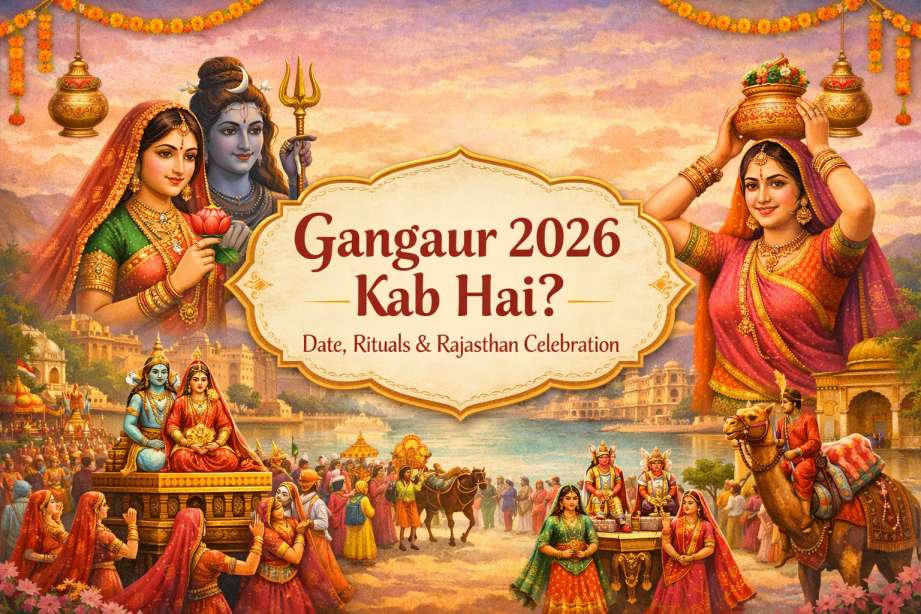
Gangaur is one of the most vibrant and culturally rich festivals celebrated mainly in Rajasthan. Dedicated to Goddess Gauri (Parvati) and Lord Shiva, the festival symbolizes marital devotion, prosperity, and the arrival of spring. The word “Gangaur” comes from two Sanskrit roots; Gan (Lord Shiva) and Gaur (Goddess Parvati).
In 2026, the main Gangaur festival will be celebrated on 21 March 2026 (Saturday) according to the Hindu Panchang. The auspicious Tritiya Tithi begins at 02:30 PM on 21 March 2026 and ends at 11:56 PM (IST).
This festival holds deep cultural and spiritual importance in northern India, particularly Rajasthan. Married women pray for the long life of their husbands, while unmarried girls seek blessings for a loving and suitable partner. Beyond rituals, Gangaur is also an expression of regional culture through colorful processions, folk songs, and traditional attire.
Gangaur 2026 Date & Festival Timeline
Gangaur is not just a one-day celebration. It is traditionally observed for about 18 days after Holi, reflecting devotion to Goddess Gauri and the beginning of the spring season.
Important Dates for Gangaur 2026
- Festival period: 4 March – 21 March 2026
- Main Gangaur Day: 21 March 2026 (Saturday)
- Tritiya Tithi Begins: 02:30 PM, 21 March 2026 (IST)
- Tritiya Tithi Ends: 11:56 PM, 21 March 2026 (IST)
During these days, women worship clay idols of Isar (Shiva) and Gauri and participate in daily rituals that symbolize devotion, fertility, and harmony in married life.
Spiritual & Astrological Significance of Gangaur
From an astrological perspective, Gangaur occurs in the Chaitra month, a period associated with renewal, fertility, and positive planetary transitions. The festival aligns with the Shukla Paksha (waxing phase of the Moon), which symbolizes growth, harmony, and spiritual upliftment.
Key Astrological Themes
- Moon in Waxing Phase: Encourages emotional balance and nurturing relationships.
- Spring Seasonal Shift: Associated with rejuvenation in nature and human life.
- Divine Union Symbolism: The union of Shiva and Parvati represents balance between masculine and feminine energies.
In Vedic symbolism:
- Shiva represents cosmic consciousness.
- Parvati (Gauri) represents nature, fertility, and devotion.
Their union reflects harmony between spiritual awareness and worldly life.
Traditional Rituals of Gangaur
Gangaur rituals are simple yet deeply symbolic. The practices focus on devotion, purity, and gratitude toward Goddess Gauri.
1. Installation of Isar-Gauri Idols
Women place clay idols of Lord Shiva (Isar) and Goddess Gauri on a decorated platform.
Offerings include:
- Haldi and kumkum
- Mehendi
- Bangles and sindoor
- Flowers and sweets
These items represent marital prosperity and feminine energy.
2. Daily Puja and Fasting
Many women observe a vrat (fast) during the festival period.
Typical puja steps:
- Wake up early and clean the house or courtyard.
- Draw rangoli and decorate the altar.
- Offer water, sweets, and flowers to the goddess.
- Sing traditional Gangaur songs.
These practices create a spiritual routine that strengthens devotion and discipline.
3. Sinjara Ritual
A special custom called Sinjara takes place before the main Gangaur day.
During this ritual:
- Married women receive gifts from their parental homes.
- Gifts include clothes, sweets, mehendi, and jewellery.
Symbolically, it reflects the affection between a daughter and her parents.
4. Grand Processions in Rajasthan
The final day of Gangaur features spectacular processions across Rajasthan.
Popular celebration cities include:
- Jaipur
- Udaipur
- Jodhpur
- Bikaner
Highlights of the procession:
- Decorated idols of Gauri carried through the city
- Folk music and dance such as Ghoomar
- Women wearing colorful Rajasthani attire
- Cultural performances and fairs
These celebrations showcase Rajasthan’s heritage and attract many tourists.
Practical Spiritual Insights & Remedies
Gangaur rituals also carry symbolic spiritual lessons.
Simple Spiritual Practices
You can incorporate these easy practices during Gangaur:
- Strengthen Relationships
Offer white flowers to Goddess Parvati and pray for harmony in family life.
- Cultivate Patience
Meditate for a few minutes daily during the festival period.
- Express Gratitude
Write down three things you appreciate about your partner or family members.
- Charity and Kindness
Donate food or clothes to women in need.
Such mindful actions align with the festival’s deeper message—respect, devotion, and harmony in relationships.
Cultural Meaning of Gangaur in Rajasthan
In Rajasthan, Gangaur is more than a religious ritual. It represents the region’s identity and traditions.
Important cultural elements include:
- Women wearing traditional ghagra-choli
- Application of intricate mehendi designs
- Singing of Gangaur folk songs
- Public fairs and festive markets
The festival also symbolizes the return of Goddess Parvati to her parental home and her reunion with Lord Shiva, reflecting themes of love, devotion, and reunion.
Conclusion
Gangaur 2026 will be celebrated on 21 March 2026 (Saturday), with the Tritiya Tithi lasting from 02:30 PM to 11:56 PM (IST). The festival marks devotion to Goddess Gauri and symbolizes marital harmony, prosperity, and the arrival of spring.
While deeply rooted in Rajasthan’s culture, Gangaur carries universal spiritual lessons about love, commitment, and gratitude. The rituals remind devotees that harmony in relationships requires patience, respect, and devotion—values embodied by the divine union of Shiva and Parvati.
Whether observed through traditional rituals or simple prayers, Gangaur invites us to reflect on the importance of balanced relationships and spiritual connection in everyday life.
FAQs
1. When is Gangaur in 2026?
Gangaur in 2026 will be celebrated on 21 March 2026 (Saturday).
The festival falls on Chaitra Shukla Tritiya, a lunar date dedicated to Goddess Gauri. It comes shortly after Holi and marks the beginning of spring festivities in Rajasthan.
Many regions celebrate the festival for about 18 days before the final day of worship.
Tips for observance:
- Perform morning puja to Goddess Gauri.
- Wear clean or traditional attire.
- Offer flowers, sweets, and water during worship.
2. Why is Gangaur celebrated?
Gangaur is celebrated to honor Goddess Parvati and Lord Shiva, symbolizing marital harmony and devotion.
According to tradition, Goddess Parvati performed intense penance to obtain Lord Shiva as her husband. Women celebrate this devotion and pray for happy married life or a suitable life partner.
Key spiritual lessons:
- Commitment in relationships
- Balance between devotion and duty
- Respect for family traditions
3. Which states celebrate Gangaur the most?
Gangaur is most prominently celebrated in Rajasthan.
However, the festival is also observed in parts of:
- Gujarat
- Madhya Pradesh
- Haryana
- Uttar Pradesh
In Rajasthan, cities like Jaipur and Udaipur organize grand cultural processions.
4. What rituals are performed during Gangaur?
Gangaur rituals mainly focus on worshipping Goddess Gauri for marital prosperity.
The typical rituals include daily puja, fasting, singing traditional songs, and carrying decorated clay idols of Shiva and Parvati.
Common ritual items:
- Mehendi and bangles
- Haldi and kumkum
- Flowers and sweets
- Earthen pots or clay idols
5. Can unmarried girls observe Gangaur?
Yes, unmarried girls commonly observe Gangaur rituals.
They worship Goddess Gauri seeking blessings for a loving and supportive husband. The festival symbolizes hope for a harmonious future relationship.
Simple practices for unmarried girls:
- Offer yellow flowers to Goddess Parvati
- Recite a short prayer daily
- Maintain a positive and disciplined routine during the festival.