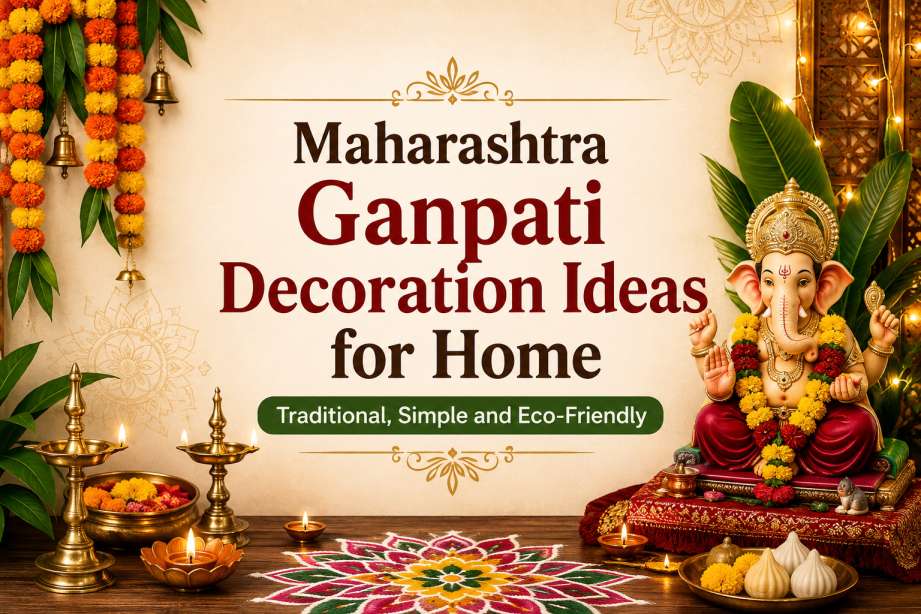
Ganpati decoration is an important part of Maharashtra Ganeshotsav, where devotion, creativity and family participation come together. A beautifully decorated home temple does not necessarily require expensive materials. Traditional flowers, torans, diyas, rangoli and natural elements can create an auspicious atmosphere while keeping the decoration simple and sustainable.
From a Vedic astrology perspective, the decoration of a puja space can be viewed through principles associated with Jupiter, Mercury, Venus, the Moon and the Sun. Jupiter represents wisdom and spirituality, Mercury supports clarity and learning, Venus relates to beauty, the Moon to emotional peace, and the Sun to light and vitality.
For devotees bringing Ganpati Bappa home, the ideal approach is to combine cultural traditions with practical choices, cleanliness and environmental responsibility.
Traditional Maharashtra Ganpati Decoration Ideas
Traditional decoration works particularly well when you want your home Ganpati setup to reflect Maharashtrian culture.
1. Use Marigold and Mango Leaves
A marigold flower garland and mango-leaf toran are classic choices for a Ganpati mandap. Their bright appearance creates a festive atmosphere without requiring artificial decoration.
You can decorate the entrance and puja area with:
- Marigold garlands
- Mango leaves
- Fresh flowers
- Coconut leaves
- Banana leaves
- Traditional torans
Fresh natural materials also make the decoration feel connected to the festival’s cultural roots.
2. Create a Maharashtrian Theme
A traditional Maharashtrian setup can include elements inspired by village homes and temple architecture.
Consider using:
- Paithani-inspired fabric as a backdrop
- Wooden or bamboo panels
- Brass diyas
- Copper or brass kalash
- Traditional rangoli
- Earthen lamps
- Red, yellow or saffron fabric
The objective should be devotional simplicity rather than excessive ornamentation.
Simple Ganpati Decoration Ideas for Small Homes
A small apartment does not need a large mandap. In fact, a compact setup can make daily puja easier and safer.
Minimal Flower Backdrop
Choose one plain cloth or curtain as the background and decorate its border with flowers. Add two brass or clay diyas on either side of the idol.
Rangoli Corner
A small rangoli can define the puja area without occupying much space. Use rice flour, flower petals or natural colours instead of synthetic powders when possible.
Diya and Fairy-Light Setup
Warm decorative lights can enhance the atmosphere, but keep electrical wires away from water and incense. Diyas should always be placed on stable, heat-resistant surfaces.
Budget-Friendly Materials
You can create attractive decoration using:
- Cardboard
- Newspaper
- Jute
- Bamboo
- Recycled paper
- Cotton fabric
- Clay diyas
- Reusable decorative items
This approach reduces unnecessary spending while encouraging creativity.
Eco-Friendly Ganpati Decoration Ideas
Eco-friendly Ganpati decoration has become increasingly relevant because festival celebrations can generate considerable amounts of waste.
Choose Natural Materials
Prefer biodegradable or reusable materials such as:
- Flowers and leaves
- Bamboo
- Jute
- Cotton
- Paper
- Clay
- Wooden elements
- Reusable fabric
Avoid thermocol, excessive plastic and decorations that are difficult to dispose of responsibly.
Reuse After Ganeshotsav
A practical eco-friendly decoration should have a second use. Fabric backdrops can be stored for future festivals, while bamboo baskets, brass diyas and wooden frames can become part of regular home décor.
Flower waste can also be composted where facilities permit.
Astrological and Vastu-Inspired Decoration Tips
Astrology does not establish that a particular decoration guarantees prosperity or removes a planetary dosha. However, traditional Hindu practices associate different elements with symbolic qualities that can help create a disciplined and peaceful puja environment.
Keep the Puja Space Clean
Cleanliness is central to Hindu worship. From a practical perspective, a clean space reduces clutter and makes daily worship easier.
Use Light Thoughtfully
The Sun is traditionally associated with illumination, vitality and consciousness. Keeping the Ganpati area well-lit during puja can symbolically represent the removal of darkness and ignorance.
Add Yellow or Saffron Elements
Jupiter (Guru) is traditionally associated with knowledge, spirituality and auspiciousness. Yellow is commonly connected with Jupiter in Jyotish traditions.
A yellow cloth, flowers or subtle decorative accents can therefore fit naturally into a devotional theme.
Incorporate Greenery
Green plants and natural leaves can make a small puja area feel calmer and more connected to nature. Avoid placing plants so close to the idol that they obstruct the deity or interfere with daily worship.
Ganpati Decoration According to Zodiac Energy
If you enjoy incorporating astrology into your festival planning, you can use zodiac symbolism as a decorative preference rather than a compulsory ritual.
- Aries, Leo, Sagittarius: Warm shades such as saffron, yellow and gold can complement a vibrant setup.
- Taurus, Virgo, Capricorn: Earthy materials, flowers, wood and natural textures suit a grounded aesthetic.
- Gemini, Libra, Aquarius: Light, creative and contemporary decorations can work well.
- Cancer, Scorpio, Pisces: Soft floral arrangements, water-inspired motifs and calming colours may create a peaceful environment.
These associations are symbolic and should not be treated as fixed astrological rules.
Practical Ganpati Puja Essentials
Decoration should never overshadow the actual worship. Keep the essentials organized before Ganpati Sthapana.
A basic setup can include:
- Ganpati idol
- Puja thali
- Flowers and durva
- Kumkum and turmeric
- Akshat
- Incense
- Diya and oil/ghee
- Kalash
- Modak or other traditional prasad
- Clean cloth
- Bell
- Aarti diya
The commonly recited “Vakratunda Mahakaya” prayer is traditionally used before worship and invokes Lord Ganesha’s blessings for removal of obstacles and clarity.
Common Decoration Mistakes to Avoid
A beautiful setup should also be safe and manageable.
Avoid:
- Blocking ventilation with heavy backdrops
- Keeping diyas near curtains
- Using too many electrical connections
- Allowing decorations to become dusty
- Excessive plastic decoration
- Blocking the idol with flowers or ornaments
- Creating a mandap that is difficult to clean
For homes with children or pets, keep flames, electrical connections and small decorative objects safely out of reach.
Conclusion
The best Maharashtra Ganpati decoration ideas for home balance devotion, tradition, aesthetics and practicality. A simple mandap with flowers, mango leaves, diyas, rangoli and reusable materials can be just as meaningful as an elaborate setup.
From an astrological perspective, cleanliness, light, natural elements and a peaceful environment complement the symbolic qualities traditionally associated with auspicious planetary energies. However, the spiritual value of Ganeshotsav comes primarily from shraddha, discipline and sincere worship, not the cost of decoration.
This Ganeshotsav, consider creating a setup that reflects your family’s Maharashtrian traditions while generating less waste and encouraging mindful celebration.
FAQs
1. What is the best traditional Ganpati decoration for home?
A flower backdrop with mango-leaf toran, rangoli, diyas and traditional fabric is one of the simplest traditional choices.
This combination reflects familiar Maharashtrian festive aesthetics without requiring a large budget. Brass or clay lamps can further enhance the traditional appearance.
Tips:
- Use fresh flowers.
- Add a simple toran.
- Keep the backdrop uncluttered.
- Include traditional diyas.
2. How can I decorate Ganpati at home on a low budget?
Use flowers, paper, jute, fabric, cardboard and reusable household décor instead of expensive decorative structures.
A simple backdrop can be created from an existing dupatta or saree, while flower petals can be used for rangoli. Reusing materials from previous festivals can significantly reduce costs.
Budget ideas:
- Saree or dupatta backdrop
- Paper flowers
- Homemade rangoli
- Clay diyas
- Reusable torans
3. What are eco-friendly materials for Ganpati decoration?
Bamboo, jute, paper, cotton, wood, clay, flowers and leaves are practical eco-friendly decoration choices.
The most sustainable option is one that can either biodegrade naturally or be reused after Ganeshotsav. Avoiding thermocol and unnecessary plastic also makes post-festival disposal easier.
Best choices: bamboo, jute, paper, cotton, clay and natural flowers.
4. Which colours are considered suitable for Ganpati decoration?
Yellow, saffron, red, green and other bright traditional shades are commonly used for Ganpati decoration.
In Jyotish symbolism, colours can be associated with different planets, but there is no universal rule that one particular colour must be used for every home. Choose colours that create a clean and devotional atmosphere.
Simple approach: use one main colour with one or two complementary shades.
5. Can astrology be incorporated into Ganpati decoration?
Yes, astrology can be incorporated symbolically through colours, natural elements, cleanliness and lighting, but these should not be treated as guaranteed remedies.
For example, yellow is traditionally associated with Jupiter and can complement a spiritual theme. Similarly, light and natural elements can symbolically represent clarity and positive energy.
Remember: devotion and proper puja practices are more important than decorative symbolism.
6. What should I avoid while decorating the Ganpati puja area?
Avoid clutter, unsafe electrical connections, excessive plastic, inflammable materials near diyas and decorations that obstruct the idol.
The puja area should remain accessible for daily worship and easy to clean. Safety is particularly important when diyas, incense and electrical lights are being used.
Checklist: clean space, stable idol platform, safe wiring, controlled flames and adequate ventilation.