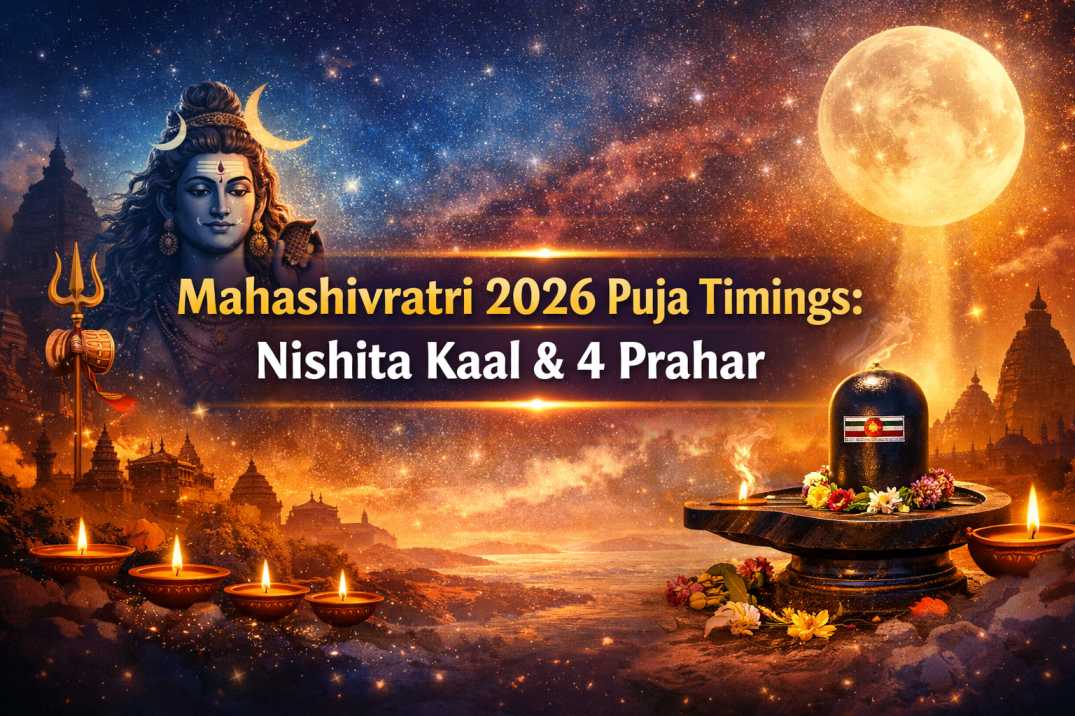
Mahashivratri is one of the most sacred nights in the Hindu calendar, dedicated to Lord Shiva, the Supreme Consciousness and destroyer of ignorance. For Indian devotees, this festival is a night-long vigil of devotional worship, fasting, mantra chanting, and introspection. In 2026, Mahashivratri will be observed on Sunday, 15 February 2026, with spiritual practices extending into the early hours of Monday, 16 February 2026 (IST).
This blog provides a clear guide to updated puja timings, including Nishita Kaal, the 4 Prahar schedule, and fasting rules-backed by traditional panchang timings.
Mahashivratri 2026 Date & Tithi Details (IST)
According to the official Hindu panchang:
- Festival Date: 15 February 2026 (Sunday)
- Chaturdashi Tithi Begins: 15 Feb 2026, 05:04 PM (IST)
- Chaturdashi Tithi Ends: 16 Feb 2026, 05:34 PM (IST)
Mahashivratri is celebrated on Krishna Paksha Chaturdashi of Phalguna month, representing the ideal cosmic alignment for Shiva worship.
🌙 Nishita Kaal Puja Time (Most Auspicious Night Muhurat)
- 12:09 AM to 01:01 AM on 16 February 2026 (IST)
Nishita Kaal is considered the most powerful moment of Mahashivratri for Abhishek (ritual bathing of Shiva Lingam), deep mantra chanting, and meditation. In Vedic tradition, this is when cosmic stillness peaks and Shiva Tattva is most accessible to seekers.
🕯️ Mahashivratri 2026 4 Prahar Puja Schedule (IST)
Devotees traditionally perform puja across four Prahars (three-hour segments) of the night.
🌆 First Prahar
06:11 PM – 09:23 PM (15 Feb 2026)
🌙 Second Prahar
09:23 PM – 12:35 AM (15–16 Feb 2026)
🌌 Third Prahar
12:35 AM – 03:47 AM (16 Feb 2026)
🌄 Fourth Prahar
03:47 AM – 06:59 AM (16 Feb 2026)
Each Prahar supports a progressive rhythm of devotion, representing stages of spiritual purification from waking the inner self to deepest meditation.
Fasting Rules (Vrat Vidhi) for Mahashivratri
Fasting on Mahashivratri is a discipline of body and mind that enhances spiritual focus.
Types of Fasts
- Nirjala Vrat: No food or water (advanced practitioners).
- Phalahar Vrat: Fruits, milk, and light sattvic foods.
- Partial Fast: One light meal before sunset.
General Fasting Guidelines
- Start fasting on 15 Feb 2026 morning or before sunset.
- Avoid grains, onion, garlic, and tamasic foods.
- Keep fast until after Parana (breaking fast) on 16 Feb 2026—06:59 AM to 03:24 PM (IST).
- Stay hydrated and avoid strenuous work if fasting strictly.
Fasting is both a physical and mental discipline that helps clear the mind, especially during the sensitive lunar phase of Chaturdashi.
Puja Vidhi: Step-by-Step Rituals
Perform a simple home puja or temple visit with these steps:
- Clean the Puja Area: Place a Shiva Lingam or idol/picture of Lord Shiva.
- Jal Abhishek: Offer pure water and Ganga Jal.
- Dugdha Abhishek: Offer milk (unboiled) to the Shiva Lingam.
- Bilva Leaves: Offer bel patra (most sacred for Shiva).
- Light Diya: Use sesame oil or ghee lamp.
- Chant Mantras: “ॐ नमः शिवाय” or Maha Mrityunjaya Mantra.
An authentic Sanskrit invocation often recited:
“करचरण कृतं वाक्कायजं कर्मजं वा ।
श्रवणनयनजं वा मानसं वापराधम् ॥
विहितमविहितं वा सर्वमेतत् क्षमस्व ।
जय जय करुणाब्धे श्री महादेव शम्भो ॥”
This verse seeks forgiveness and inner transformation.
Astrological Significance
Mahashivratri coincides with a weakened Moon (Krishna Paksha), which in astrology represents fluctuations in mind and emotions. Worshipping Shiva on this night is believed to:
- Stabilise mental energies.
- Align Saturn (discipline) with spiritual detachment.
- Encourage deep meditation and introspection.
Planetary influences (Moon, Saturn, Rahu, and Ketu) symbolise inner refinement rather than fate determination.
Practical Remedies & Spiritual Tips
- Chant Mata Mrityunjaya Mantra: 21 or 108 times for health and peace.
- Donate white food items (rice/milk): For Moon peace.
- Meditate during Nishita Kaal: Deep breathing or mindfulness helps calm the mind.
- Offer Bilva & Rudraksha: For emotional balance.
These practices build focus, patience, and inner stability.
Conclusion
Mahashivratri 2026 on 15–16 February (IST) is a spiritually potent occasion for devotion, fasting, and inner reflection. Following the Nishita Kaal and 4 Prahar puja timings helps align your rituals with traditional Vedic rhythms. The fasting practices and mantra chanting enhance mental clarity and calmness, especially during Chaturdashi Tithi’s lunar influence.
Approach this night as a time for introspection and disciplined devotion rather than mere ritual observance. This balanced perspective can help you get meaningful spiritual and psychological benefits from Mahashivratri.
FAQs
1. What is the date of Mahashivratri 2026?
Mahashivratri 2026 will be observed on Sunday, 15 February 2026 (IST).
According to Drik Panchang, Chaturdashi Tithi begins on 15 Feb at 05:04 PM and ends on 16 Feb at 05:34 PM.
Tips:
- Puja and fast are primarily observed on the night of 15 Feb.
- Continue rituals into early morning of 16 Feb.
2. When is the Nishita Kaal for Mahashivratri?
The Nishita Kaal puja time is 12:09 AM to 01:01 AM on 16 February 2026 (IST).
This midnight window is considered most auspicious for Shiva worship and meditation.
Why it matters:
- Focus on mantra chanting.
- Perform Shiva Lingam Abhishek.
3. How do I observe the Mahashivratri fast?
Fasting includes abstaining from grains and only consuming fruits/milk or fasting completely (nirjala).
Fasting strengthens self-discipline and is aligned with spiritual goals.
Quick guidelines:
- Eat sattvic foods before sunset.
- Avoid tamasic foods and break fast after sunrise next day.
4. What are the 4 Prahar puja timings for Mahashivratri?
The four Prahar segments are:
- 06:11 PM – 09:23 PM (15 Feb)
- 09:23 PM – 12:35 AM (15–16 Feb)
- 12:35 AM – 03:47 AM (16 Feb)
- 03:47 AM – 06:59 AM (16 Feb)
Tips:
- Offer water, milk, honey in each Prahar.
- Chant “Om Namah Shivaya” regularly.
5. Can Mahashivratri help with emotional imbalance?
Yes—rituals like mantra chanting, meditation, and fasting are aimed at calming the mind and improving emotional stability.
Astrology links Mahashivratri with balancing lunar (mind) and Saturn (discipline) energies.
Simple practices:
- Meditate during Nishita Kaal.
- Offer Bilva leaves for mental grounding.