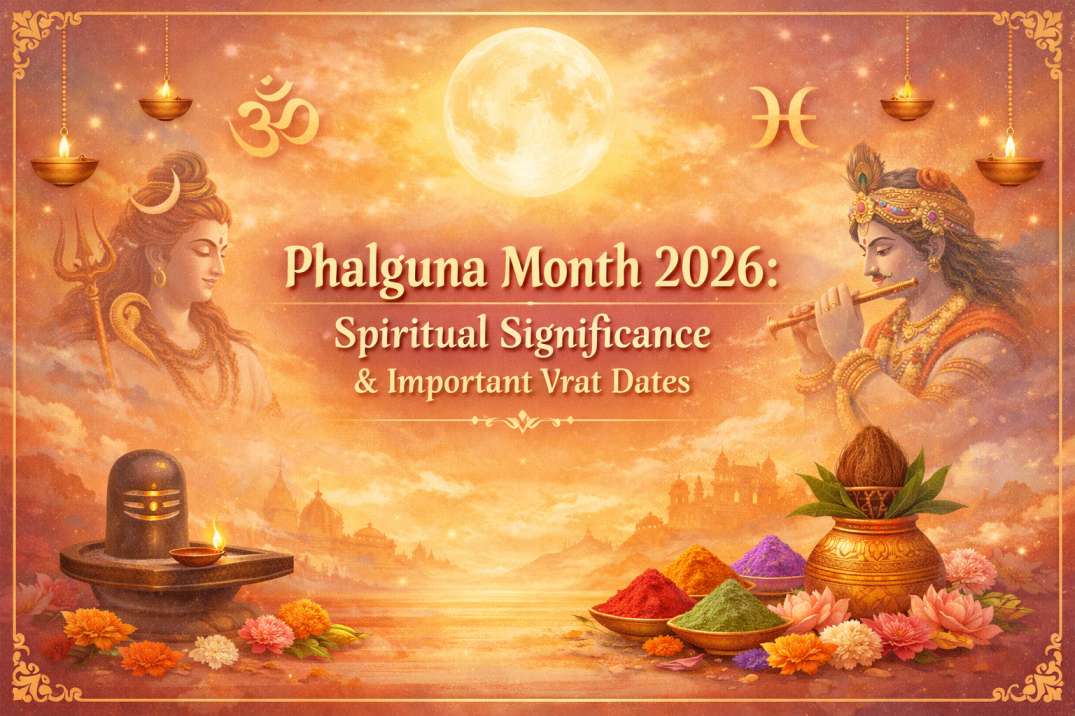
Phalguna is the twelfth and final month of the Hindu lunar calendar, marking the spiritual transition from the old year toward renewal and celebration. In Vedic tradition, this sacred month symbolizes purification, gratitude, and divine celebration, culminating in the joyful festival of Holi.
Astrologically, Phalguna usually occurs when the Sun transits Aquarius (Kumbha) and later Pisces (Meena). These zodiac energies encourage spiritual reflection, charity, forgiveness, and emotional healing. The month is also associated with devotion to Lord Shiva, Lord Vishnu, and Goddess Lakshmi through various vrats and festivals.
For many households across India, Phalguna brings a balance of devotion, family rituals, and seasonal transformation. Observing the important fasting days and spiritual practices during this period is believed to enhance inner peace, karmic cleansing, and spiritual growth.
Astrological Significance of Phalguna Month
In Vedic astrology, each lunar month reflects certain planetary energies. Phalguna is strongly connected with Jupiter’s wisdom, Venus’s celebration, and the Moon’s emotional cycle.
Sun’s Transit and Its Meaning
During Phalguna, the Sun moves through:
- Aquarius (Kumbha Rashi) – Focus on humanitarian values and collective well-being.
- Pisces (Meena Rashi) – Encourages spiritual surrender, compassion, and introspection.
This transition reflects a shift from intellectual understanding to spiritual realization.
Lunar Influence
Since Hindu festivals follow the Moon’s phases, Phalguna highlights:
- Full Moon (Purnima) – Associated with celebration and Holi.
- Krishna Paksha (waning phase) – Time for introspection and detachment.
- Shukla Paksha (waxing phase) – Encourages growth, devotion, and positivity.
These cycles influence rituals, fasting days, and meditation practices.
Key Vrat & Festival Dates in Phalguna 2026 (IST)
Below are some major religious observances during the month.
Important Dates
- Vijaya Ekadashi – February 13, 2026
Dedicated to Lord Vishnu, this vrat is believed to remove obstacles and bring success. Devotees observe fasting and chant Vishnu mantras.
- Maha Shivaratri – February 15, 2026
One of the most powerful nights for Lord Shiva worship. Devotees perform night-long prayers, Rudrabhishek, and meditation.
A famous shloka associated with the day:
“ॐ नमः शिवाय”
This Panchakshari mantra symbolizes surrender to divine consciousness.
- Phalguna Purnima (Holi) – March 4, 2026
The full moon marks the festival of colors, celebrating the victory of devotion and righteousness.
It is linked to the legend of Prahlad and Holika, symbolizing protection of faith.
- Amalaki Ekadashi – February 27, 2026
This Ekadashi honors Lord Vishnu and the sacred Amla tree. Observing the fast is believed to promote health and spiritual purity.
Spiritual Themes of Phalguna Month
Phalguna carries several important spiritual messages in Vedic philosophy.
1. Celebration of Divine Love
Festivals like Holi reflect joy, forgiveness, and the removal of social barriers.
2. Purification Before the New Cycle
Since Phalguna ends the lunar year, it encourages people to:
- Reflect on past actions
- Seek forgiveness
- Start fresh with spiritual clarity
3. Strengthening Devotional Energy
Rituals performed in this month focus on:
- Shiva worship
- Vishnu devotion
- Charity and service
Simple Astrological Remedies for Phalguna
Practicing small spiritual disciplines during this month can create positive mental and emotional balance.
Daily Spiritual Practices
- Offer water to the rising Sun every morning
- Chant “Om Namah Shivaya” 108 times on Mondays
- Light a ghee lamp in the evening
- Practice gratitude or short meditation
Charity and Good Deeds
Phalguna encourages compassion and generosity.
Recommended acts include:
- Donating clothes or food
- Feeding cows or birds
- Supporting community service
Home Energy Cleansing
- Burn natural incense or camphor
- Keep the home clean and well-lit
- Play soft devotional music or mantras
These actions create a calm spiritual atmosphere.
Zodiac Signs Most Influenced During Phalguna
Certain zodiac signs may feel stronger planetary shifts during this period.
Pisces (Meena)
- Emotional sensitivity increases
- Spiritual activities bring peace
Aquarius (Kumbha)
- Focus on humanitarian goals
- Time for networking and social contribution
Leo (Simha)
- Opportunities for leadership and recognition
- Need to balance ego with humility
However, these influences depend on individual birth charts, so experiences may vary.
Cultural Importance Across India
Phalguna is celebrated differently across regions but carries a unified spiritual theme.
Examples include:
- Holi celebrations in North India
- Dol Purnima in West Bengal
- Phalguna Utsav in temples of Vrindavan and Mathura
These festivals emphasize community bonding and spiritual joy.
Conclusion
Phalguna Month 2026 holds deep spiritual and astrological significance in the Hindu calendar. It marks the completion of the lunar year, encouraging reflection, forgiveness, and celebration.
Through important vrats like Vijaya Ekadashi, Maha Shivaratri, and Amalaki Ekadashi, devotees connect with divine energies and strengthen their spiritual discipline. At the same time, festivals such as Holi remind us of joy, unity, and the triumph of devotion over negativity.
By observing simple rituals, practicing charity, and staying mindful of planetary influences, individuals can use this sacred month as a period of emotional renewal and spiritual preparation for the new cycle ahead.
FAQs
1. What is the significance of Phalguna month in Hindu astrology?
Phalguna represents the completion of the lunar year and symbolizes spiritual purification before a new cycle begins.
In Vedic astrology, the Sun’s movement from Aquarius to Pisces during this month encourages emotional healing and spiritual introspection. Many important festivals and vrats occur during this time, strengthening devotional energy.
Key practices include:
- Prayer and meditation
- Charity and service
- Observing Ekadashi fasts
These actions help align personal energy with cosmic cycles.
2. Which festivals are celebrated during Phalguna 2026?
Major festivals include Maha Shivaratri, Amalaki Ekadashi, and Holi.
These festivals reflect different spiritual themes; devotion to Lord Shiva, purification through fasting, and celebration of divine love.
Important celebrations:
- Vijaya Ekadashi
- Maha Shivaratri
- Phalguna Purnima (Holi)
- Rangwali Holi
Each festival carries symbolic and cultural meaning.
3. Why is Maha Shivaratri important in Phalguna?
Maha Shivaratri honors Lord Shiva and symbolizes spiritual awakening.
According to traditional texts, this night represents the cosmic union of Shiva and Shakti. Devotees stay awake, meditate, and perform abhishek rituals to seek divine blessings.
Common practices include:
- Fasting during the day
- Night-long prayer and chanting
- Offering milk and bilva leaves to Shiva Lingam
These rituals promote mental clarity and inner discipline.
4. What remedies are recommended during Phalguna month?
Simple spiritual practices help maintain balance and positivity.
Vedic traditions suggest daily prayer, meditation, and acts of charity during this sacred period. These actions cultivate gratitude and emotional stability.
Helpful remedies:
- Chant Shiva or Vishnu mantras
- Donate food or clothes
- Light a ghee lamp at home
- Practice mindfulness and gratitude
Such habits strengthen spiritual awareness.
5. How does Phalguna affect zodiac signs?
Phalguna’s planetary transitions influence emotional awareness and spiritual growth.
Because the Sun moves toward Pisces energy, people may feel more introspective and compassionate during this time. However, the exact effect depends on individual birth charts.
General suggestions:
- Focus on emotional balance
- Avoid unnecessary conflicts
- Engage in meditation or prayer
These practices help align with the month’s spiritual energy.