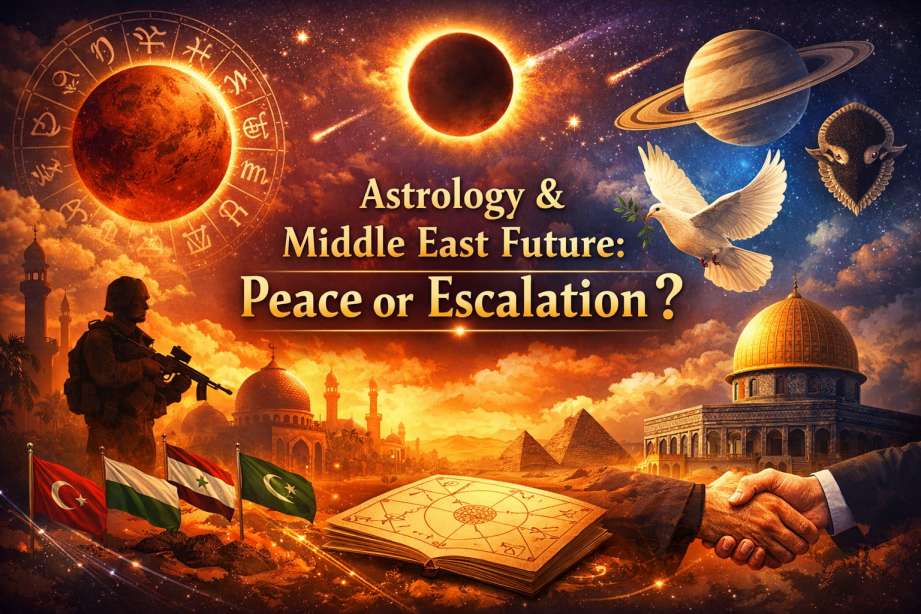
Can astrology offer clues about global peace or rising tensions? In Vedic astrology, planetary transits (गोचर) are believed to influence not only individuals but also nations and collective consciousness. Regions like the Middle East- historically sensitive and geopolitically complex are often studied through the lens of planetary alignments, especially those involving Mars (Mangal), Saturn (Shani), and Rahu.
For an Indian audience familiar with Jyotish Shastra, understanding these cosmic patterns provides a broader perspective on diplomacy, conflict cycles, and global stability. While astrology does not replace political analysis, it offers symbolic insights into timing, trends, and potential outcomes.
Let’s explore whether upcoming planetary movements indicate peace, escalation, or a delicate balance between the two.
Planetary Influences on Global Conflict & Peace
Mars (Mangal): The Planet of War and Aggression
Mars represents:
- Military actions
- Assertiveness and territorial disputes
- Sudden escalations
When Mars is strong or afflicted (especially in Aries, Scorpio, or Capricorn), it can indicate:
- Heightened tensions
- Military conflicts
- Aggressive diplomacy
Key Insight:
Periods when Mars transits fiery signs or forms conjunctions with Rahu often correlate with impulsive decisions and geopolitical instability.
Saturn (Shani): The Planet of Karma and Stability
Saturn governs:
- Long-term consequences
- Law, order, and structure
- Diplomatic negotiations
When Saturn is well-placed:
- Peace treaties and structured dialogue improve
- Nations focus on rebuilding and stability
When afflicted:
- Prolonged conflicts
- Economic strain and sanctions
Example (IST Reference):
A major Saturn transit around early 2026 (around 6:20 PM IST) signals a shift toward accountability and long-term consequences in global politics.
Rahu-Ketu Axis: Illusion vs Reality
Rahu and Ketu are shadow planets that influence:
- Sudden, unexpected events
- Misinformation and propaganda
- Karmic cycles of nations
Their impact includes:
- Diplomatic confusion
- Hidden agendas
- Rapid escalation followed by sudden de-escalation
Important Note:
When Rahu aligns with Mars, it can amplify unpredictability and aggressive narratives.
Key Astrological Combinations to Watch
1. Mars–Rahu Conjunction
- Signals sudden conflict or military escalation
- Increases emotional decision-making by leaders
2. Saturn–Jupiter Alignment
- Promotes balanced diplomacy
- Encourages peace talks and negotiations
3. Lunar Eclipses (Chandra Grahan)
- Trigger emotional unrest among populations
- Can lead to protests or civil instability
4. Solar Eclipses (Surya Grahan)
- Affect leadership decisions
- Bring hidden political agendas to light
Zodiac Signs and National Energy Patterns
While countries don’t have fixed zodiac signs universally agreed upon, astrologers often analyze charts based on independence dates or key historical moments.
Certain signs tend to reflect specific tendencies:
- Aries & Scorpio (Mars-ruled): Aggressive, action-oriented responses
- Capricorn (Saturn-ruled): Strategic and patient diplomacy
- Pisces (Jupiter-ruled): Humanitarian focus and peace efforts
Trend Insight:
If Mars dominates transit charts, escalation becomes more likely. If Jupiter and Saturn dominate, diplomacy and peace-building gain strength.
2026 Astrological Outlook (IST Perspective)
Early 2026 (January–March, IST)
- Mars influence remains strong
- Possibility of tensions rising quickly
- Diplomatic efforts may struggle initially
Mid-2026 (April–August, IST)
- Jupiter’s influence increases
- Opportunities for peace talks and alliances
- Focus shifts toward humanitarian concerns
Late 2026 (September–December, IST)
- Saturn stabilizes the energy
- Long-term agreements and structured diplomacy emerge
- Gradual de-escalation possible
Practical Remedies for Collective Peace
While individuals cannot control geopolitics, Vedic astrology emphasizes collective consciousness and intention.
Spiritual & Astrological Remedies
- Chant:
“ॐ शान्तिः शान्तिः शान्तिः”
(Promotes universal peace and calm energy) - Strengthen Jupiter (Guru):
- Donate yellow items (turmeric, chana dal) on Thursdays
- Practice gratitude and wisdom-based decisions
- Balance Mars energy:
- Engage in physical discipline like yoga or Surya Namaskar
- Avoid impulsive reactions in daily life
- Support Saturn:
- Offer sesame oil (til) on Saturdays
- Practice patience and responsibility
Real-Life Relevance for Indian Readers
Why does this matter to you?
- Global conflicts affect oil prices, economy, and inflation in India
- Diplomatic shifts impact trade and job markets
- Emotional stress from global news affects mental well-being
Understanding planetary cycles helps:
- Stay mentally balanced
- Avoid panic-driven decisions
- Focus on long-term stability
Conclusion
Astrology does not predict exact events but highlights patterns and possibilities. The planetary alignments of 2026 suggest a mixed phase—initial tension followed by gradual stabilization through diplomacy.
Mars may trigger moments of escalation, but Saturn and Jupiter indicate that long-term peace efforts are likely to gain strength. The future of the Middle East, astrologically speaking, lies in a delicate balance between conflict and cooperation.
As individuals, focusing on inner peace and conscious action contributes to the collective energy of harmony.
FAQs Section
1. Can astrology really predict global conflicts?
Answer: Astrology suggests timing and tendencies, not exact events.
Astrology studies planetary cycles that influence collective behavior. While it cannot predict specific wars, it highlights periods of tension or peace based on planetary alignments.
Tips:
- Focus on trends, not exact predictions
- Combine astrology with real-world analysis
2. Which planet is most responsible for war?
Answer: Mars is the primary planet associated with war and aggression.
Mars governs action, energy, and conflict. When negatively influenced, it can lead to impulsive decisions and confrontations.
Remedies:
- Chant Hanuman Chalisa
- Practice discipline and patience
- Avoid anger-driven actions
3. How does Saturn influence peace?
Answer: Saturn promotes structure, discipline, and long-term stability.
It slows things down, forcing nations to think carefully and act responsibly. This often supports diplomacy and peace agreements.
Tips:
- Practice patience
- Respect rules and systems
- Strengthen Saturn through service
4. What role does Rahu play in global politics?
Answer: Rahu creates भ्रम (illusion) and sudden, unexpected events.
It can amplify misinformation, confusion, and hidden agendas, making situations appear more volatile than they are.
Remedies:
- Stay informed from reliable sources
- Practice meditation for clarity
- Avoid reacting to rumors
5. Can individuals influence global peace through astrology?
Answer: Yes, through collective consciousness and positive actions.
Vedic astrology believes that collective energy shapes reality. When individuals cultivate peace, it contributes to the larger environment.
Simple Practices:
- Daily meditation
- Chanting peace mantras
- Acts of kindness and charity