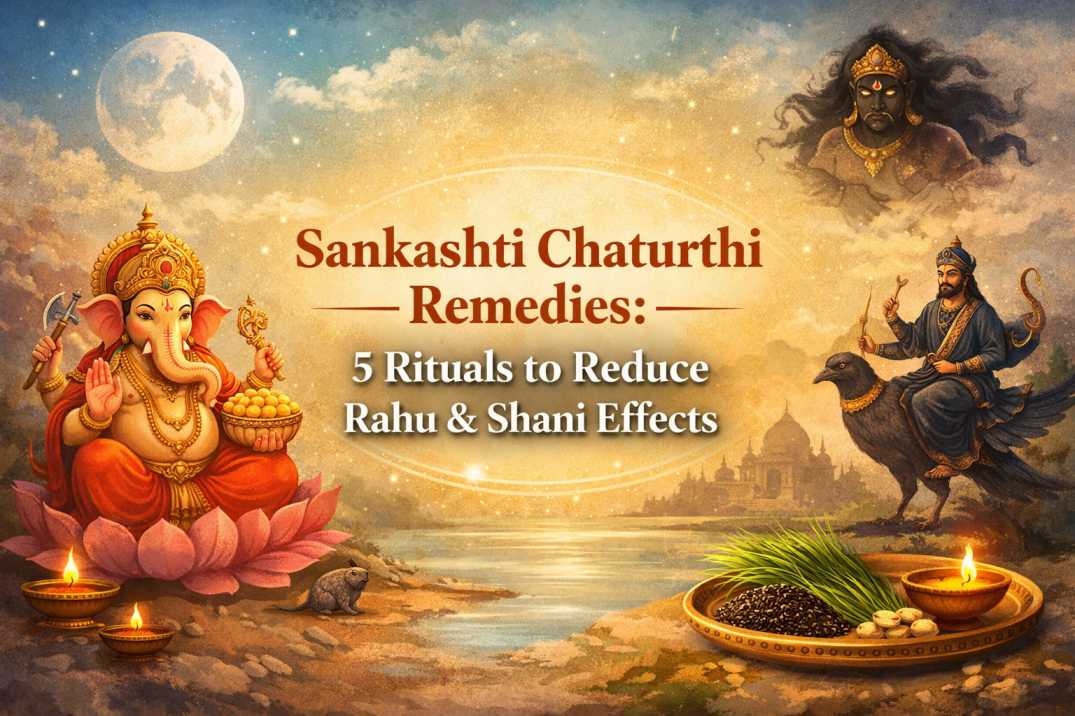
In Vedic astrology, Sankashti Chaturthi is considered one of the most powerful days to seek the blessings of Lord Ganesha, the remover of obstacles. The word “Sankashti” means relief from difficulties, while “Chaturthi” refers to the fourth day of the Krishna Paksha (waning moon phase) in the lunar calendar.
Astrologically, this day holds special importance for reducing the challenging effects of Rahu and Shani (Saturn). Both planets are known to bring karmic lessons, delays, confusion, and sudden obstacles in life. When their influence becomes strong in a horoscope- such as during Rahu Mahadasha, Shani Sade Sati, or difficult planetary transits—traditional remedies dedicated to Lord Ganesha are often recommended.
Observing Sankashti Chaturthi fast and performing simple rituals can help create emotional stability, mental clarity, and spiritual protection. These practices are rooted in classical astrology texts and devotional traditions followed across India.
Astrological Significance of Sankashti Chaturthi
Why Lord Ganesha Is Associated With Planetary Remedies
In Vedic tradition, Lord Ganesha is known as “Vighnaharta”, the remover of obstacles. Many astrologers suggest worshipping Ganesha when planetary combinations create challenges in life.
The following astrological conditions are often linked with Rahu and Shani disturbances:
- Rahu placed in the 1st, 5th, 7th, or 8th house
- Shani affecting the Moon sign
- Ongoing Sade Sati or Shani Dhaiya
- Rahu–Shani conjunction in the birth chart
- Rahu Mahadasha or Shani Antardasha
Because Ganesha governs wisdom, clarity, and beginnings, his worship is believed to balance the psychological and karmic pressures associated with these planets.
5 Simple Sankashti Chaturthi Remedies for Rahu and Shani
These remedies are simple, culturally practiced rituals that can be followed at home. Most are performed during the moonrise time on Sankashti Chaturthi (IST).
1. Observe Sankashti Chaturthi Fast
Fasting is one of the most common and effective remedies associated with this day.
How to follow the fast:
- Begin the fast from sunrise.
- Consume only fruits, water, or milk during the day.
- Break the fast after moonrise (IST) by offering prayers to Lord Ganesha.
Fasting is believed to calm the mind and reduce the restlessness often associated with Rahu while strengthening discipline linked with Saturn.
2. Chant the Ganesh Mantra 108 Times
Mantra chanting is considered a powerful vibrational remedy in Vedic traditions.
A commonly recited mantra is:
“ॐ गं गणपतये नमः”
Om Gam Ganapataye Namah
Chanting this mantra 108 times on Sankashti Chaturthi evening helps improve concentration and reduce mental confusion linked with Rahu.
Benefits often associated with this practice include:
- Better decision-making
- Reduced anxiety
- Improved focus and clarity
3. Offer Durva Grass to Lord Ganesha
Durva (sacred grass) is considered one of the most preferred offerings to Lord Ganesha.
Astrological symbolism:
- Durva represents humility and simplicity.
- It is believed to cool planetary aggression, especially Rahu’s intense energy.
How to offer:
- Offer 21 blades of Durva grass to the Ganesha idol during the evening puja.
- Recite the Ganesh mantra while making the offering.
This ritual is often recommended by astrologers for individuals facing unexpected obstacles or recurring delays.
4. Donate Black Sesame or Food to the Needy
Charity plays an important role in balancing Saturn’s karmic influence.
On Sankashti Chaturthi, donating the following items is considered beneficial:
- Black sesame seeds (til)
- Cooked food or grains
- Clothes to the needy
- Feeding cows or birds
These acts align with Saturn’s principle of service and humility, helping reduce the heavier karmic effects of Shani.
5. Read or Listen to the Sankashti Vrat Katha
Reading the Sankashti Chaturthi Vrat Katha after moonrise is an important part of the ritual.
The story emphasizes:
- Devotion to Lord Ganesha
- Faith during difficult times
- Removal of obstacles through sincerity
Listening to the Katha helps reinforce the spiritual intention behind the fast and strengthens emotional resilience.
Practical Benefits of These Remedies
While these rituals are rooted in tradition, their psychological and spiritual effects are also meaningful.
Many devotees report:
- Increased mental calm
- Better control over impulsive decisions
- Emotional balance during stressful periods
- Greater patience in long-term goals
In astrology, Rahu represents illusion and restlessness, while Shani represents discipline and karma. Sankashti Chaturthi practices symbolically bring balance between these two energies.
Conclusion
Sankashti Chaturthi offers a meaningful opportunity to pause, reflect, and reconnect with spiritual practices rooted in Indian tradition. In Vedic astrology, rituals dedicated to Lord Ganesha are believed to help reduce the challenging effects of planets like Rahu and Shani.
The remedies discussed; fasting, mantra chanting, offering Durva grass, charity, and listening to the Vrat Katha—are simple and accessible for most people. Rather than promising instant results, these practices encourage discipline, mindfulness, and devotion.
Over time, consistent observance of Sankashti Chaturthi can strengthen inner stability and create a more balanced approach to life’s challenges.
If you regularly face delays, confusion, or sudden obstacles, incorporating these rituals into your monthly spiritual routine may provide both symbolic and psychological support.
FAQs
1. Can Sankashti Chaturthi reduce Rahu and Shani effects?
Yes, Sankashti Chaturthi rituals are traditionally believed to help reduce the negative effects of Rahu and Shani through Lord Ganesha worship.
In Vedic astrology, Lord Ganesha symbolizes wisdom and obstacle removal. Worshipping him is considered beneficial when a person experiences planetary challenges like Rahu Mahadasha or Shani Sade Sati.
Helpful practices include:
- Fasting until moonrise
- Chanting Ganesh mantras
- Offering Durva grass
- Performing acts of charity
2. What is the best mantra for Sankashti Chaturthi?
The most widely recommended mantra is “Om Gam Ganapataye Namah.”
This mantra is associated with Lord Ganesha’s energy of wisdom, clarity, and protection. Chanting it regularly is believed to calm mental disturbances often linked with Rahu.
Tips for chanting:
- Recite 108 times using a mala
- Chant during evening puja after sunset
- Focus on calm breathing while chanting
3. Why is moonrise important on Sankashti Chaturthi?
Moonrise marks the moment when devotees break their fast and complete the ritual.
According to tradition, devotees offer Arghya (water) to the Moon and then pray to Lord Ganesha. The Moon also represents the mind in astrology, so this ritual symbolically restores emotional balance.
Steps include:
- Observe fast during the day
- Offer water to the Moon at moonrise (IST)
- Perform Ganesh puja and then break the fast
4. Who should observe Sankashti Chaturthi fast?
Anyone seeking relief from obstacles, stress, or planetary challenges can observe the fast.
It is especially recommended for people experiencing:
- Rahu Mahadasha
- Shani Sade Sati
- Career delays or repeated obstacles
- Mental restlessness or confusion
Following the fast with devotion and consistency is considered more important than strict ritual perfection.
5. Can Sankashti Chaturthi improve career or finances?
Indirectly, yes—because the rituals aim to remove obstacles and improve clarity.
In astrology, Rahu can create sudden disruptions while Shani tests patience and discipline. When their effects are balanced, individuals often experience smoother progress in long-term goals.
Supportive practices include:
- Monthly Sankashti fasting
- Consistent mantra chanting
- Charity and service activities
- Meditation or spiritual reflection