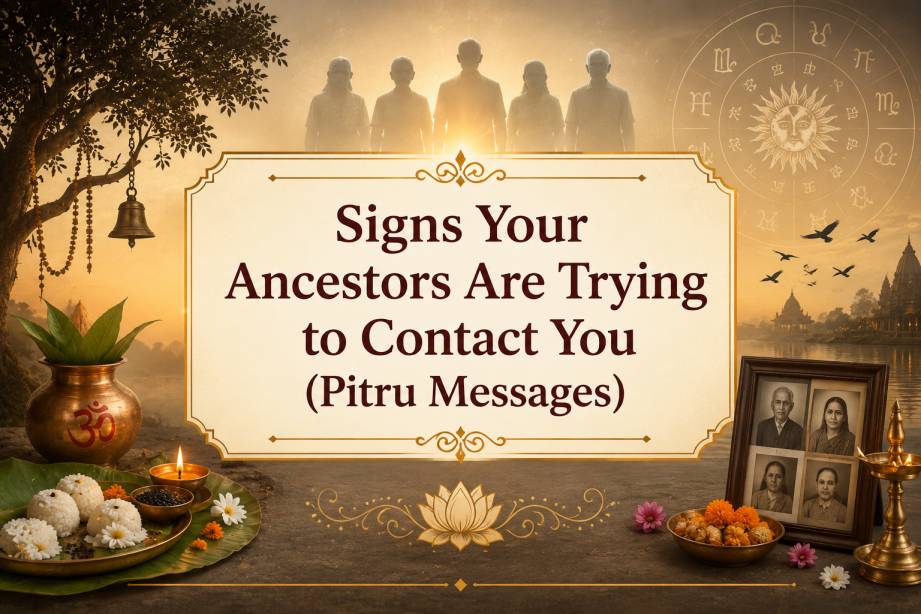
In Vedic astrology and Sanatan Dharma, ancestors (Pitru) are believed to continue blessing and guiding their descendants through subtle spiritual connections. While these experiences are deeply personal and may also have natural psychological or environmental explanations, ancient texts suggest that certain dreams, intuitions, recurring symbols, or life events may encourage self-reflection about one’s ancestral lineage. These are often referred to as Pitru Messages.
The concept is closely associated with the 9th house, Sun, Moon, Saturn, Ketu, and the observance of Pitru Paksha. Rather than viewing every unusual event as supernatural, Vedic astrology encourages balancing spiritual practices with practical wisdom. If you seek guidance through astrology or rituals, always follow timings in IST (Indian Standard Time) and consult a qualified astrologer for a complete horoscope analysis.
Understanding Pitru Messages in Vedic Astrology
According to Vedic astrology, ancestors represent one’s lineage, blessings, values, and karmic inheritance. A harmonious connection with the Pitrus is believed to support family harmony, prosperity, and spiritual growth.
Key Astrological Factors
- Sun (Surya): Represents father, ancestors, authority, and family legacy.
- Moon (Chandra): Emotional connection with family traditions.
- Saturn (Shani): Past karmas and responsibilities.
- Ketu: Spiritual experiences and ancestral karma.
- 9th House: Blessings, dharma, and forefathers.
- 8th House: Mysticism, transformation, and inherited karma.
A complete birth chart, not just one placement; helps determine whether ancestral themes are prominent.
Common Signs Your Ancestors May Be Trying to Guide You
1. Meaningful Dreams About Ancestors
One of the most frequently discussed signs in traditional belief is dreaming about deceased parents, grandparents, or elders.
Such dreams may involve:
- Receiving advice
- Blessings
- Smiling faces
- Family gatherings
- Visiting ancestral homes
Not every dream carries spiritual significance. Stress, memories, or emotions can also influence dreams. However, recurring dreams with emotional clarity may inspire personal reflection.
2. Strong Emotional Connection to Family Traditions
You may suddenly feel drawn toward:
- Visiting ancestral temples
- Learning family history
- Performing traditional rituals
- Preserving family values
This often reflects a growing appreciation for one’s roots rather than being proof of supernatural communication.
3. Repeated Appearance of Crows During Rituals
In Hindu tradition, crows are symbolically associated with Pitru offerings during Shraddha and Pitru Paksha.
If crows arrive naturally during ancestral rituals, many families consider it auspicious.
However, ordinary sightings outside ritual contexts are common and should not automatically be interpreted as spiritual messages.
4. Increased Interest in Spiritual Practices
Many people report feeling naturally inclined toward:
- Meditation
- Bhagavad Gita reading
- Charity
- Temple visits
- Mantra chanting
These practices often promote inner peace and gratitude while strengthening one’s connection to family values.
5. Recurring Family Patterns
Repeated experiences such as:
- Similar career paths
- Shared talents
- Family traditions
- Generational habits
may encourage reflection on inherited influences, whether cultural, psychological, or spiritual.
6. Feeling Guided During Difficult Decisions
Some individuals experience sudden clarity while making important life decisions.
This may arise from:
- Inner intuition
- Experience
- Family teachings
- Spiritual reflection
Traditional belief sometimes interprets such moments as ancestral blessings.
7. Visiting Sacred Places Feels Meaningful
Unexpected opportunities to visit:
- Ancient temples
- Sacred rivers
- Family pilgrimage sites
- Ancestral villages
can deepen one’s appreciation of heritage and spiritual identity.
Astrological Combinations Linked with Pitru Karma
Some horoscope combinations traditionally associated with ancestral themes include:
Strong Indicators
- Sun connected with the 9th house
- Ketu influencing the 9th or 8th house
- Saturn connected with ancestral houses
- Pitru Dosha combinations identified through a complete horoscope
- Benefic Jupiter supporting the 9th house
These combinations do not automatically indicate problems. Their interpretation depends on the entire birth chart.
Practical Remedies to Honor Ancestors
Traditional Vedic practices encourage gratitude toward ancestors rather than fear.
Simple Remedies
- Perform Shraddha according to family tradition.
- Offer water (Tarpan) during Pitru Paksha if appropriate.
- Feed cows, birds, or needy people.
- Donate food and clothes in memory of departed elders.
- Respect parents and senior family members.
- Maintain family harmony.
Mantra
A commonly recited prayer is:
ॐ पितृभ्यो नमः।
This simple salutation expresses respect and remembrance.
Importance of Pitru Paksha
Pitru Paksha is a sacred fortnight dedicated to expressing gratitude toward departed ancestors.
During this period, families traditionally:
- Perform Tarpan
- Offer Pind Daan where appropriate
- Donate food
- Pray for family well-being
- Remember family elders
These practices emphasize remembrance, charity, and gratitude rather than fear or superstition.
Real-Life Relevance
Modern psychology suggests that remembering loved ones, maintaining family traditions, and expressing gratitude can positively influence emotional well-being.
Similarly, Vedic philosophy encourages:
- Honouring family heritage
- Learning from previous generations
- Practising compassion
- Living ethically
Whether viewed spiritually or culturally, these values strengthen family bonds across generations.
Conclusion
The idea of ancestors communicating through Pitru messages occupies an important place in Vedic tradition. Dreams, meaningful coincidences, spiritual inspiration, or renewed interest in family traditions can encourage reflection on one’s roots. At the same time, astrology advises avoiding hasty conclusions based on isolated events. A complete horoscope analysis, along with practical wisdom, offers a balanced perspective.
Rather than searching for extraordinary signs, focus on expressing gratitude through charity, family harmony, ethical living, and traditional rituals where appropriate. Honouring your ancestors is ultimately about preserving their values and carrying their blessings forward with humility and compassion.
FAQs
1. How do I know if my ancestors are trying to contact me?
Recurring meaningful dreams, a stronger connection to family traditions, or spiritual reflection may inspire thoughts about your ancestors, but they are not definitive proof of communication.
Traditional beliefs interpret certain experiences as symbolic reminders to remember and honour one’s lineage. However, such experiences can also have natural emotional or psychological explanations.
Helpful tips:
- Maintain a dream journal.
- Reflect calmly before drawing conclusions.
- Honour ancestors through gratitude and charity.
2. Which planet represents ancestors in Vedic astrology?
The Sun is primarily associated with ancestors, while Saturn, Ketu, the Moon, and the 9th house also play important roles.
Astrologers study the complete birth chart to understand ancestral influences rather than relying on a single planetary placement.
Helpful tips:
- Strengthen the Sun through Surya Arghya.
- Respect parents and elders.
- Consult an experienced astrologer for chart analysis.
3. What is Pitru Dosha?
Pitru Dosha refers to specific astrological combinations traditionally linked with unresolved ancestral karmic influences.
It is determined through a detailed horoscope analysis and should not be assumed based on general life challenges.
Helpful tips:
- Avoid self-diagnosis.
- Perform appropriate rituals only after expert guidance.
- Focus on ethical living and family harmony.
4. Can dreams about deceased relatives have spiritual meaning?
Some traditions consider recurring, peaceful dreams about ancestors meaningful, while psychology also recognises dreams as a natural part of emotional processing.
The significance often depends on personal circumstances, emotions, and cultural beliefs.
Helpful tips:
- Observe recurring patterns.
- Avoid fear-based interpretations.
- Use such dreams as an opportunity for remembrance and gratitude.
5. What are the best remedies to seek ancestral blessings?
Acts of remembrance, charity, Shraddha, Tarpan where appropriate, and respectful conduct toward parents and elders are widely recommended in Vedic tradition.
These practices are intended to cultivate gratitude, compassion, and continuity with family values rather than serve as guaranteed solutions to life’s problems.
Helpful tips:
- Donate food in memory of ancestors.
- Participate in Pitru Paksha rituals according to family tradition.
- Maintain honesty, kindness, and respect within the family.