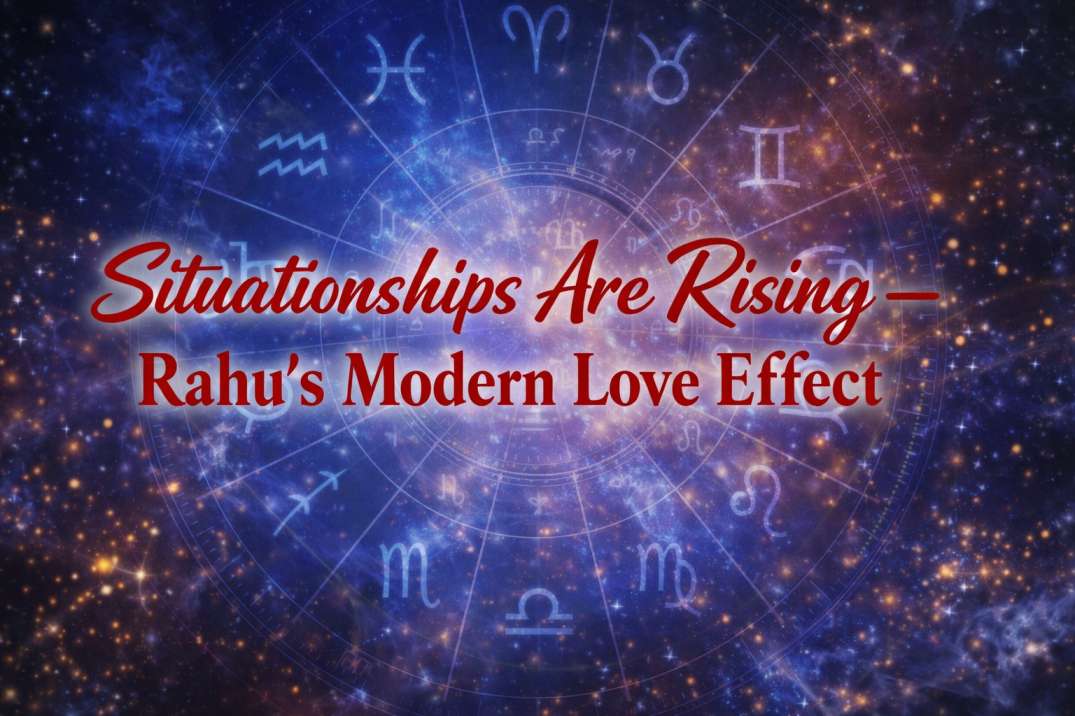
In recent years, the idea of “situationships”; relationships without clear labels, commitments, or long-term plans, has quietly become part of everyday dating culture, especially among urban Indian youth. While social media and changing lifestyles play a role, Vedic astrology offers a deeper lens to understand this shift. At the heart of this trend lies Rahu, the shadow planet associated with ambiguity, desire, and modern disruptions.
In astrology, Rahu represents what is unconventional, experimental, and psychologically compelling. Its influence often blurs boundaries- between attachment and detachment, love and convenience, commitment and freedom. As Rahu’s transits activate relationship houses and Venusian themes, many individuals find themselves emotionally involved yet hesitant to define bonds clearly. Understanding Rahu’s role helps bring clarity, grounded choices, and emotional awareness into modern love dynamics.
Rahu’s Role in Modern Relationships
What Rahu Symbolizes in Vedic Astrology
Rahu is not a physical planet but a chhaya graha (shadow planet). Its energy is subtle yet powerful. Traditionally, Rahu is linked to:
- Illusions and unconventional desires
- Sudden attractions and obsessions
- Breaking societal norms
- Confusion between reality and perception
In relationships, Rahu often creates strong emotional pull without emotional stability.
“राहुः शनैश्चरवत् फलं ददाति ।”
Rahu gives results slowly, like Saturn, but often through confusion before clarity.
Why Situationships Are Increasing Now
Rahu + Venus Influence
Situationships rise when Rahu interacts with Venus, the planet of love and relationships. This combination can:
- Create intense attraction without clarity
- Prioritize experience over emotional security
- Delay discussions on commitment
When Venus is weak or afflicted and Rahu is dominant, people may enjoy closeness but avoid responsibility.
Key Astrological Factors Supporting Situationships
- Rahu in the 5th house: Casual romance, emotional experimentation
- Rahu in the 7th house: Fear of traditional marriage structures
- Rahu–Moon connection: Emotional confusion and mixed signals
- Air sign dominance (Gemini, Libra, Aquarius): Overthinking relationships
Zodiac Signs Most Affected by Rahu’s Modern Love Effect
While everyone experiences Rahu, some signs feel its impact more strongly during certain transits.
Signs Experiencing High Relationship Ambiguity
- Gemini & Aquarius: Intellectual connection without emotional depth
- Libra: Difficulty choosing between freedom and partnership
- Pisces: Idealism meets illusion, leading to emotional disappointment
These signs may feel “emotionally involved but mentally unsure.”
Houses That Trigger Situationship Patterns
Situationships are more likely when Rahu influences:
- 5th House (Romance): Attraction without long-term vision
- 7th House (Commitment): Fear of legal or social bindings
- 11th House (Social Circles): Relationships emerging from networks, not emotions
Such placements encourage connections that feel significant but remain undefined.
Psychological Impact of Rahu-Driven Relationships
Situationships may appear modern and flexible, but astrologically they can cause:
- Emotional anxiety and overthinking
- Attachment without security
- Delayed healing after breakups
Rahu amplifies desire but weakens satisfaction, leading to cycles of hope and confusion.
Practical Astrological Remedies for Clarity in Love
These remedies are not superstitious but rooted in traditional balance principles.
Simple, Grounded Remedies
- Strengthen Venus:
- Wear clean, light-colored clothes on Fridays
- Practice gratitude in relationships
- Calm Rahu Energy:
- Avoid impulsive emotional decisions after 9:00 PM IST
- Limit digital overexposure in personal relationships
- Mental Balance:
- Meditation on Wednesdays or Saturdays
- Journaling emotions before reacting
“शनैः शनैः उपरमेत् ।” — Progress comes gradually with awareness.
Rahu Periods and Relationship Timing (IST Reference)
During Rahu Mahadasha or Antardasha, relationships formed between 6:00 PM and 11:00 PM IST tend to be emotionally intense but unclear. Awareness during these times helps in making conscious choices rather than reactive ones.
Conclusion
Situationships are not inherently negative; they reflect changing social values and emotional needs. However, astrology reveals that Rahu’s influence often fuels confusion, attachment without direction, and fear of commitment. By understanding Rahu’s role and strengthening grounding planetary energies like Venus and Moon, individuals can move from emotional uncertainty toward conscious connection.
Rather than rejecting modern relationships, Vedic astrology encourages clarity, self-awareness, and emotional responsibility. Reflecting on planetary influences allows love to evolve with intention, not illusion.
FAQs
1. Are situationships caused by Rahu in astrology?
Yes, Rahu often creates attraction without clarity, leading to undefined relationships.
Rahu amplifies desire but blurs long-term vision, making people emotionally involved yet hesitant to commit.
Tips:
- Observe relationship patterns during Rahu periods
- Strengthen Venus for emotional balance
2. Which planet supports commitment in relationships?
Venus supports commitment when strong and unafflicted.
A balanced Venus promotes emotional stability, trust, and mutual respect in partnerships.
Remedies:
- Friday discipline and self-care
- Avoid impulsive relationship decisions
3. Is a situationship always negative astrologically?
No, it becomes challenging only when clarity and emotional honesty are missing.
Astrology emphasizes awareness rather than judgment.
Guidance:
- Communicate expectations early
- Avoid emotional dependency
4. How can I know if Rahu is affecting my love life?
Frequent confusion, mixed signals, and attraction without direction are common signs.
A birth chart analysis confirms Rahu’s influence.
Signs to watch:
- Repeating unclear relationship patterns
- Emotional highs followed by detachment
5. Can remedies really improve relationship clarity?
Yes, remedies work by stabilizing mindset and emotional responses.
They support conscious choices rather than forced outcomes.
Simple practices:
- Mindful communication
- Regular self-reflection and grounding routines