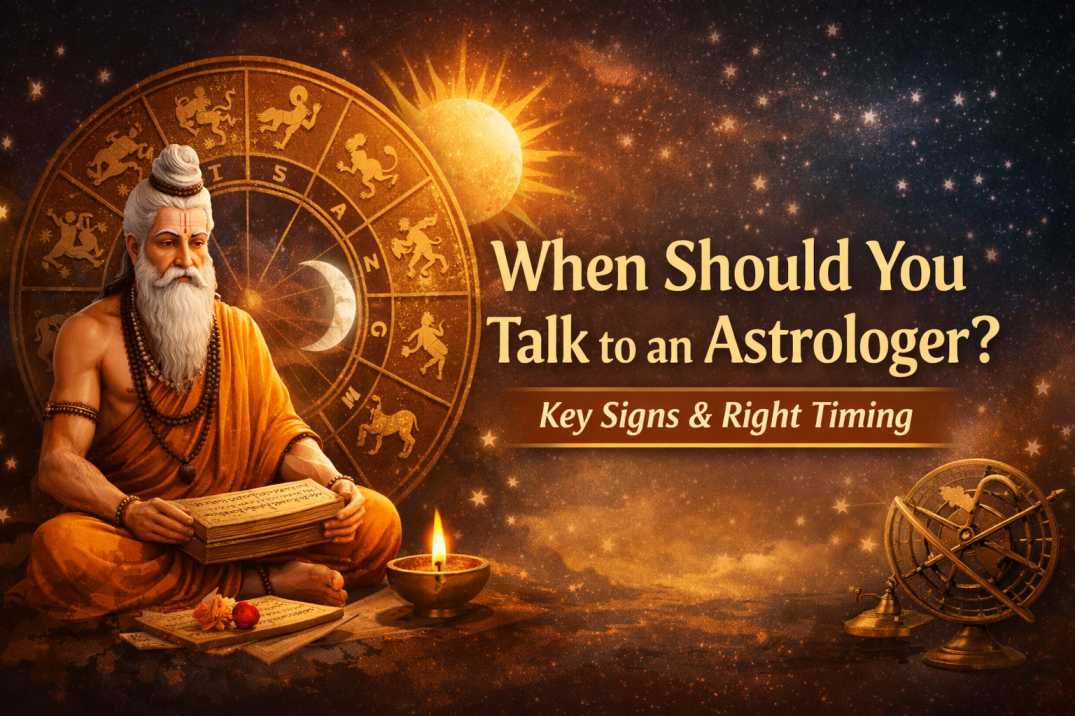
Astrology in India has always been more than future prediction; it is a guidance system rooted in observation, timing, and self-awareness. The question is not “Should I consult an astrologer?” but rather “When is the right time to seek astrological guidance?”
In Vedic astrology, planetary movements influence emotions, decisions, and external events. When these influences intensify, especially during dashas (planetary periods) or major transits (gochar)– clarity can reduce confusion and stress. Consulting an astrologer at the right moment helps you make informed choices, not blind leaps of faith.
This article explains practical, logical, and culturally relevant situations when talking to an astrologer makes sense, backed by traditional astrological principles and real-life relevance.
Astrological Context: Timing Matters More Than Fear
In Jyotish Shastra, time (kaal) is as important as action (karma). A well-known verse states:
कालः कर्म फल दाता
Time determines the results of actions.
Astrology helps interpret how time is unfolding in your life. Seeking guidance during key phases can bring awareness, preparation, and emotional balance.
Key Life Situations When You Should Talk to an Astrologer
1. During Major Life Transitions
Astrology is most useful when you are at a decision point, such as:
- Career change or job instability
- Marriage, divorce, or relationship uncertainty
- Business start, partnership, or financial risk
- Relocation, foreign travel, or education decisions
These phases often coincide with Saturn, Rahu, or Jupiter influences on the 1st, 7th, or 10th houses.
Why astrology helps:
It provides timing clarity- when to act, wait, or reassess.
2. When You Feel Emotionally Drained Without Clear Reason
Persistent anxiety, confusion, or lack of motivation, despite no obvious cause can indicate:
- Moon affliction (Chandra dosha)
- Rahu-Ketu transit over the Moon or Lagna
- Saturn’s aspect causing mental heaviness
Consulting an astrologer during such phases helps identify emotional cycles, not label them as “bad luck.”
Tip: Emotional heaviness during evenings after 7:00 PM IST is often linked to Moon-related stress.
3. During Dasha or Antardasha Changes
In Vedic astrology, Mahadasha and Antardasha shifts are major turning points.
You should talk to an astrologer when:
- A new Mahadasha begins
- A challenging planet’s Antardasha starts
- Life patterns suddenly change direction
Example:
A stable career suddenly becoming uncertain often aligns with Rahu or Saturn periods.
4. When Repeated Patterns Keep Occurring
Astrology is especially relevant when you notice recurring issues, such as:
- Similar relationship failures
- Financial ups and downs at fixed intervals
- Health concerns reappearing seasonally
These patterns often relate to:
- Weak house lords
- Unresolved karmic themes
- Natal chart combinations (yogas)
An astrologer helps decode why the pattern exists and how to manage it practically.
5. Before Important Muhurats and Auspicious Timings
Astrology is traditionally used before action, not only after problems arise.
Common examples:
- Marriage dates
- Griha Pravesh (house entry)
- Business launch
- Property registration
Choosing a favorable muhurat in IST aligns personal charts with cosmic timing, reducing resistance.
Practical Remedies Often Suggested (Simple & Grounded)
Astrological remedies are not magical fixes, they are discipline-based adjustments.
Common practical remedies include:
- Adjusting daily routines with planetary hours
- Charity aligned with specific planetary energies
- Mantra repetition with focus and consistency
- Lifestyle corrections (sleep, diet, discipline)
These remedies aim to stabilize mindset and action, not change destiny overnight.
When You May Not Need an Astrologer
For balance and clarity, astrology is not required when:
- Decisions are purely technical or legal
- You seek instant solutions without self-effort
- You want dependency instead of understanding
Astrology works best as a decision-support system, not a substitute for responsibility.
Conclusion: Astrology as a Tool, Not a Crutch
Talking to an astrologer is most beneficial when you seek clarity, timing, and perspective, not fear-based predictions. In Indian tradition, astrology is meant to help you align effort with time, especially during transitions, emotional uncertainty, or repeated life patterns.
Used wisely, astrology encourages reflection, patience, and better decision-making. The right consultation does not remove challenges, it helps you navigate them consciously.
Before reaching out, ask yourself:
“Am I seeking understanding or escape?”
That answer determines whether the timing is right.
FAQs
1. When is the best time to talk to an astrologer?
Answer: The best time is during life transitions or major planetary changes.
Astrologically, dasha shifts, Saturn transits, or emotional instability signal the need for guidance.
Tip: Consult during daytime hours, ideally before 6:00 PM IST, for clarity-focused discussions.
2. Can astrology help with career confusion?
Answer: Yes, astrology helps identify timing and strengths related to career decisions.
The 10th house, its lord, and current dashas reveal professional trends.
Remedy: Strengthen discipline and routine aligned with Saturn energy.
3. Should I consult an astrologer during stress or anxiety?
Answer: Yes, if stress feels cyclical or unexplained.
Moon and Rahu influences often affect emotional balance.
Tip: Simple grounding practices alongside astrological insight work best.
4. How often should one talk to an astrologer?
Answer: Only during meaningful changes or planning phases.
Over-consultation can reduce personal judgment and clarity.
Guideline: Once or twice a year, or during major transitions, is sufficient.
5. Are astrological remedies really effective?
Answer: Remedies work when applied with understanding and consistency.
They help adjust mindset and behavior, not override destiny.
Reminder: Remedies support effort—they do not replace it.