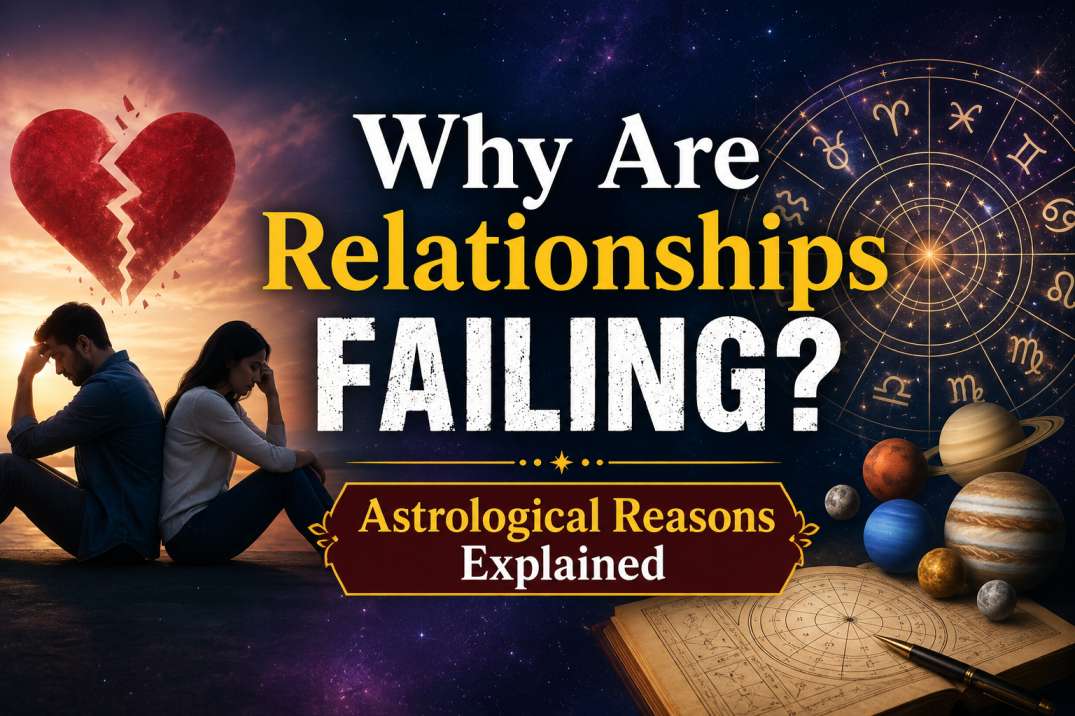
Relationships thrive on trust, communication, respect, and emotional understanding. However, many people also wonder whether astrology plays a role in repeated misunderstandings, delayed marriages, emotional distance, or unexpected breakups. In Vedic astrology, a birth chart does not “cause” relationship failure, but it can highlight tendencies, emotional patterns, and timing that may influence personal relationships.
Planetary combinations, the condition of the 7th house, Venus, Mars, Moon, and the running Mahadasha or Antardasha can offer valuable insights into relationship dynamics. Rather than predicting inevitable outcomes, astrology provides guidance that helps individuals understand themselves and improve their connections.
This article explores the major astrological reasons behind relationship challenges, practical remedies, and how self-awareness can strengthen bonds.
Astrological Factors Behind Relationship Problems
1. The Importance of the 7th House
The 7th house is considered the primary house of marriage, partnerships, and long-term relationships.
If this house is:
- Occupied by challenging planets
- Weak due to unfavorable aspects
- Ruled by a debilitated lord
- Affected by Rahu, Ketu, Saturn, or Mars
relationship delays, misunderstandings, or compatibility issues may become more noticeable.
However, no single placement determines one’s relationship destiny. The complete horoscope must always be studied.
2. Venus – The Planet of Love
Venus (Shukra) governs:
- Romance
- Attraction
- Harmony
- Beauty
- Emotional satisfaction
A strong Venus often indicates:
- Healthy emotional expression
- Mutual attraction
- Better relationship balance
A weakened Venus may indicate:
- Emotional dissatisfaction
- Unrealistic expectations
- Lack of affection
- Difficulty maintaining harmony
This is especially relevant in both marriage and long-term partnerships.
3. The Moon and Emotional Compatibility
The Moon represents:
- Feelings
- Mental peace
- Emotional security
- Sensitivity
When the Moon is afflicted by Saturn, Rahu, Ketu, or Mars, people may experience:
- Mood swings
- Emotional insecurity
- Overthinking
- Difficulty trusting others
Since relationships depend heavily on emotional stability, the Moon plays a significant role in compatibility.
Mars and Relationship Conflicts
Mars represents energy, courage, passion, and assertiveness.
An imbalanced Mars may create:
- Frequent arguments
- Anger issues
- Ego clashes
- Impatience
This is one reason why Manglik Dosha is examined carefully in traditional Vedic astrology before marriage. Modern astrologers, however, recommend evaluating the entire horoscope rather than relying only on Manglik Dosha.
Rahu and Ketu: Karmic Lessons in Relationships
Rahu often creates:
- Obsession
- Confusion
- Sudden attractions
- Unrealistic expectations
Ketu may produce:
- Emotional detachment
- Lack of communication
- Spiritual distance
- Difficulty expressing feelings
These shadow planets often indicate karmic learning rather than permanent relationship failure.
Saturn’s Influence on Love and Marriage
Saturn teaches patience and responsibility.
Its influence may lead to:
- Delayed marriage
- Slow emotional growth
- Distance due to career responsibilities
- Testing periods within relationships
Although Saturn may delay commitment, it often rewards sincerity, maturity, and long-term dedication.
Zodiac Signs and Relationship Tendencies
Every zodiac sign expresses love differently.
Some general patterns include:
- Aries: Direct and passionate.
- Taurus: Loyal but sometimes possessive.
- Gemini: Communicative and curious.
- Cancer: Emotional and nurturing.
- Leo: Affectionate and expressive.
- Virgo: Practical and thoughtful.
- Libra: Harmony-seeking and diplomatic.
- Scorpio: Deeply emotional and intense.
- Sagittarius: Independent and adventurous.
- Capricorn: Responsible and reserved.
- Aquarius: Intellectual and freedom-loving.
- Pisces: Compassionate and idealistic.
These are broad tendencies and should never replace an individual birth chart analysis.
Can Planetary Periods Affect Relationships?
Yes. During certain Mahadasha or Antardasha periods, people may experience significant changes in relationships.
Examples include:
- Marriage proposals
- Breakups
- Reconciliation
- Emotional healing
- Increased responsibilities
These periods are interpreted using the complete birth chart, including planetary strength and transits.
Practical Astrological Remedies
Traditional Vedic astrology recommends remedies as supportive practices rather than guaranteed solutions.
Some commonly suggested remedies include:
- Respect parents and elders.
- Practice honest communication.
- Offer white flowers during Friday prayers for Venus.
- Meditate regularly to strengthen emotional stability.
- Chant the following mantra with devotion:
ॐ शुक्राय नमः
- Donate white sweets or rice on Fridays.
- Avoid making important relationship decisions in anger.
- Seek horoscope matching before marriage for deeper compatibility analysis.
Consistency and positive behavior remain more important than rituals alone.
Real-Life Relevance
Many relationship issues arise from:
- Poor communication
- Financial stress
- Career pressure
- Family expectations
- Emotional misunderstandings
Astrology helps identify personal tendencies but should be combined with:
- Mutual respect
- Emotional maturity
- Honest conversations
- Professional counselling when needed
This balanced approach aligns with the traditional purpose of Vedic astrology—guidance rather than fear.
Conclusion
Relationship success depends on much more than planetary positions. Vedic astrology offers a symbolic framework for understanding emotional patterns, compatibility, timing, and personal growth. A challenging horoscope does not guarantee failure, just as a favorable chart does not ensure lifelong happiness.
By understanding the role of the 7th house, Venus, Moon, Mars, Saturn, Rahu, and Ketu, individuals can become more aware of their strengths and challenges. Combined with patience, empathy, and open communication, astrology can become a valuable tool for building healthier relationships.
Instead of fearing planetary influences, use them as opportunities for self-improvement and stronger emotional connections.
FAQs
1. Can astrology predict relationship failure?
Astrology can indicate relationship challenges, but it cannot guarantee failure.
A birth chart highlights emotional tendencies, compatibility, and timing rather than fixed outcomes. Free will, communication, and mutual effort remain equally important.
Helpful tips:
- Study the complete horoscope.
- Focus on communication.
- Avoid making decisions based solely on one planetary placement.
2. Which planet is most important for love and marriage?
Venus is generally considered the primary planet for love and relationships.
Venus represents affection, romance, attraction, and harmony. The Moon and the 7th house also play major roles in relationship happiness.
Helpful remedies:
- Chant ॐ शुक्राय नमः.
- Practice kindness in relationships.
- Wear clean white clothes on Fridays if culturally appropriate.
3. Does Manglik Dosha always cause divorce?
No, Manglik Dosha alone does not cause divorce.
Modern Vedic astrology evaluates the entire birth chart before drawing conclusions. Many people with Manglik Dosha enjoy successful and fulfilling marriages.
Remember:
- Check complete horoscope compatibility.
- Consider planetary strengths.
- Consult an experienced astrologer for balanced guidance.
4. How does Saturn affect relationships?
Saturn usually brings delays, responsibility, and maturity rather than permanent obstacles.
People influenced by Saturn often experience slower relationship development but may enjoy lasting partnerships once commitment is established.
Helpful practices:
- Develop patience.
- Fulfil responsibilities sincerely.
- Avoid rushing important decisions.
5. Can astrological remedies improve relationships?
Astrological remedies may support emotional balance and self-awareness when practiced with sincerity.
Traditional remedies are intended to complement positive behaviour—not replace communication, trust, or professional guidance where needed.
Useful suggestions:
- Meditate regularly.
- Strengthen family relationships.
- Practice gratitude.
- Be honest in communication.
- Seek counselling if relationship conflicts persist.