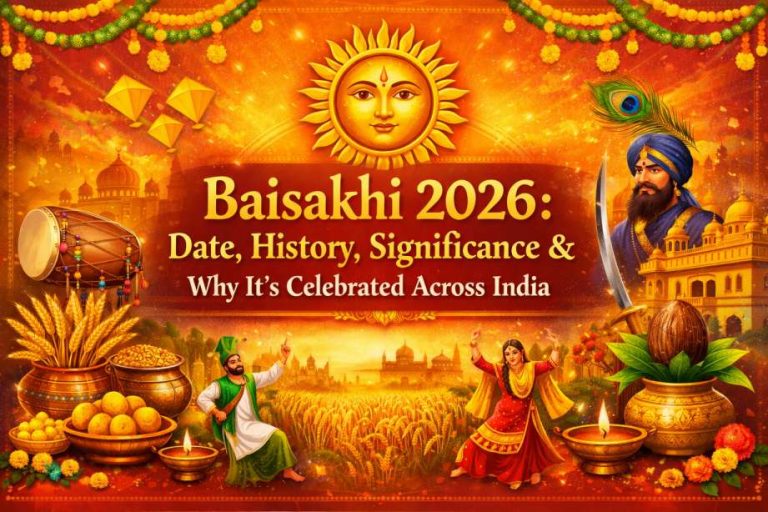
Baisakhi is one of the most sacred festivals in Sikhism, celebrated every year around April 14 (IST). While many Indians recognize it as a harvest festival, its deeper spiritual significance lies in the historic formation of the Khalsa by Guru Gobind Singh in 1699.
From an astrological perspective, Baisakhi coincides with the Sun’s transition into Aries (Mesha Sankranti), marking a powerful new solar cycle. This alignment symbolizes courage, renewal, and righteous action, qualities deeply reflected in the Khalsa tradition. Understanding this festival helps connect cultural heritage with planetary influences and daily spiritual practice.
Why Baisakhi Is Important in Sikhism
The Historic Khalsa Formation
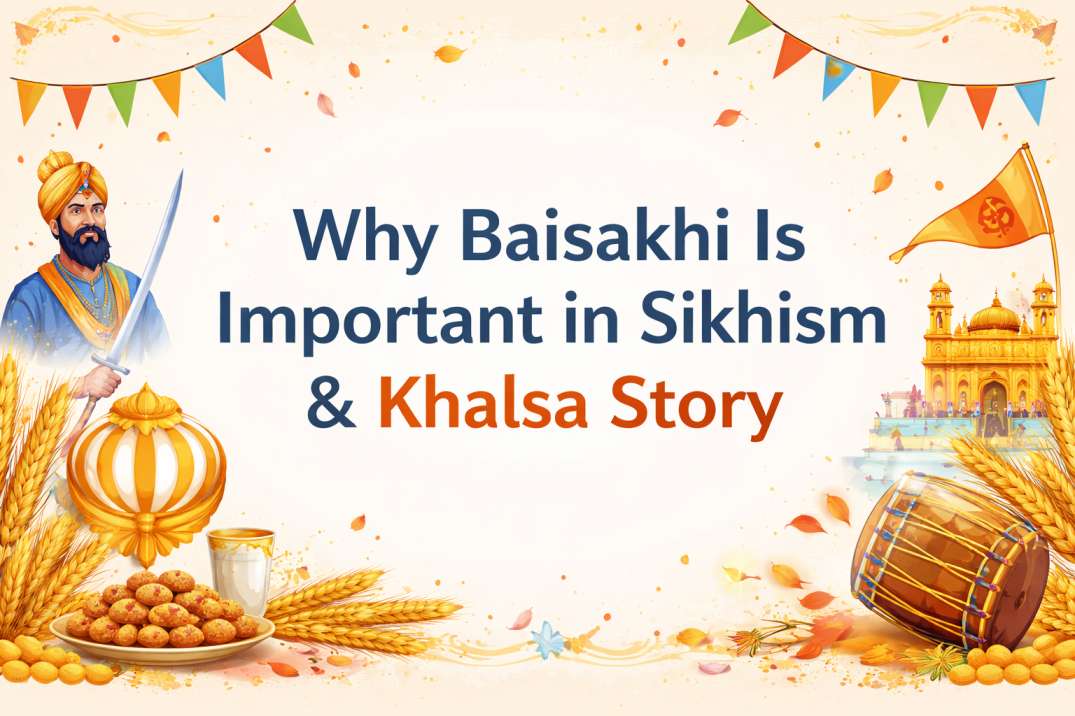
The foundation of Khalsa took place at Anandpur Sahib during the Vaisakhi 1699.
On this day, Guru Gobind Singh called upon devotees to demonstrate ultimate faith. Five volunteers, known as the Panj Pyare, stepped forward and were initiated into the Khalsa through the Amrit Sanchar ceremony.
Key significance:
- Established equality beyond caste and social divisions
- Promoted courage, discipline, and spiritual purity
- Introduced the identity of “Singh” and “Kaur”
- Created a collective spiritual force rooted in Dharma
This moment transformed Sikhism into a spiritually empowered and socially active path.
Astrological Significance of Baisakhi
Sun Enters Aries (Mesha Rashi)
Baisakhi aligns with Surya Sankranti into Aries, which is considered the Sun’s exaltation sign in Vedic astrology.
Astrological meaning:
- Boost in confidence and leadership qualities
- Beginning of a new zodiac cycle (solar new year)
- Increased focus on action, courage, and purpose
This perfectly mirrors the Khalsa ideals of bravery and righteousness.
Planetary Energies During Baisakhi (IST)
Around mid-April (IST), these general influences are observed:
- Sun (Surya): Strong in Aries → leadership, vitality
- Mars (Mangal): Natural ruler of Aries → courage, discipline
- Jupiter (Guru): Supports dharma and wisdom
- Moon (Chandra): Emotional renewal depending on tithi
Interpretation:
The cosmic environment encourages individuals to take bold decisions aligned with truth and justice—values central to Sikh teachings.
Zodiac Signs Most Influenced
Aries, Leo, Sagittarius (Fire Signs)
- Experience heightened energy and ambition
- Good time for leadership roles and new beginnings
Taurus, Virgo, Capricorn (Earth Signs)
- Focus on financial stability and long-term planning
- Grounded growth and discipline
Gemini, Libra, Aquarius (Air Signs)
- Improved communication and networking
- Spiritual discussions and learning
Cancer, Scorpio, Pisces (Water Signs)
- Emotional healing and inner transformation
- Strong intuition and devotion
Spiritual & Practical Remedies for Baisakhi
Baisakhi is not just a celebration, it’s a powerful day for spiritual alignment.
Simple Remedies (Follow in IST timing)
- Morning (6:00 AM – 9:00 AM IST):
- Take a bath and offer water to the Sun (Surya Arghya)
- Recite:
“ॐ सूर्याय नमः
- Visit a Gurudwara:
- Participate in Langar (community service)
- Listen to Kirtan for mental clarity
- Charity & Seva:
- Donate food or clothes
- Help the needy without expectation
- Personal Discipline:
- Avoid anger and ego-driven decisions
- Practice honesty and humility
Real-Life Relevance of Baisakhi
The story of Khalsa is not just historical, it offers practical lessons:
- Courage in daily life: Stand for truth even in difficult situations
- Equality mindset: Treat everyone with respect, beyond social labels
- Discipline: Follow routines that align with your higher purpose
- Community spirit: Engage in selfless service
Astrologically, this period supports new beginnings, making it ideal for setting goals, starting projects, or redefining personal values.
Conclusion
Baisakhi beautifully blends spirituality, history, and astrology. The formation of Khalsa under Guru Gobind Singh represents courage, unity, and divine purpose, while the Sun’s transition into Aries energizes action and transformation.
By aligning with these cosmic and spiritual energies, individuals can cultivate strength, clarity, and purpose in their lives. This Baisakhi, reflect on your inner discipline and take steps toward a more meaningful and courageous path.
FAQs Section
1. Why is Baisakhi important in Sikhism?
Baisakhi marks the formation of the Khalsa by Guru Gobind Singh in 1699.
It represents equality, courage, and spiritual discipline in Sikhism. The day transformed the Sikh community into a unified and fearless group committed to justice.
Tips:
- Visit a Gurudwara
- Practice seva
- Reflect on personal values
2. What is the astrological significance of Baisakhi?
Baisakhi coincides with the Sun entering Aries, starting a new solar cycle.
This transition enhances leadership, confidence, and action-oriented energy, making it ideal for new beginnings.
Remedies:
- Offer water to the Sun
- Start new projects
- Avoid laziness
3. How does Baisakhi affect zodiac signs?
It mainly energizes fire signs but influences all signs differently.
Each element (fire, earth, air, water) experiences growth in areas like action, stability, communication, and emotions.
Tips:
- Fire signs: Take initiative
- Earth signs: Plan finances
- Air signs: Communicate clearly
- Water signs: Focus on healing
4. What are simple remedies to follow on Baisakhi?
Offer prayers, perform charity, and maintain discipline.
These actions align you with positive solar energy and spiritual growth.
Remedies:
- Surya mantra chanting
- Food donation
- Meditation
5. What life lessons can we learn from Khalsa formation?
It teaches courage, equality, and commitment to truth.
These values help individuals navigate challenges and lead a purposeful life.
Practical steps:
- Stand up for what is right
- Avoid discrimination
- Practice self-discipline