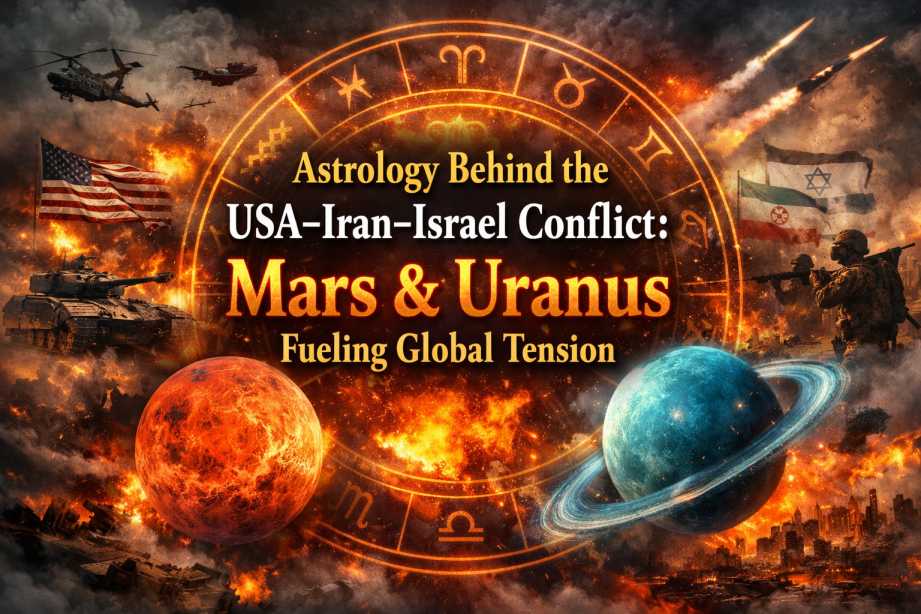
Global conflicts often appear purely political or strategic, yet astrology suggests that planetary cycles can mirror collective emotions and geopolitical shifts. Recent tensions involving the United States, Iran, and Israel have sparked discussions among astrologers about the influence of powerful planetary energies.
In Vedic and modern astrology, planets such as Mars and Uranus are strongly associated with sudden conflicts, military actions, technological warfare, and unexpected geopolitical shifts. When these planets form tense alignments, they can symbolize periods of heightened global instability.
While astrology does not predict specific events, it helps interpret energetic patterns that influence collective behavior. Understanding these planetary dynamics can provide insight into why tensions escalate during certain periods and how individuals can maintain emotional balance during uncertain times.
Planetary Forces Behind Global Conflict
Mars: The Planet of War and Aggression
In both Vedic and Western astrology, Mars represents:
- Military power
- Courage and aggression
- Strategic action
- Conflict and competition
When Mars becomes strongly activated through transits or aspects, geopolitical tensions often intensify. Astrologers frequently observe that periods of global conflict coincide with strong Mars placements.
Current Mars Influence
Recent Mars transits have activated key zodiac signs linked with leadership and power struggles. In mundane astrology (the astrology of world events), Mars can symbolize:
- Military mobilization
- Strategic defense responses
- Escalation of political disputes
Countries with sensitive Mars placements in their national charts may experience stronger reactions during such periods.
Uranus: The Planet of Sudden Disruption
While Mars represents direct confrontation, Uranus symbolizes unpredictability and sudden upheaval.
Astrologically, Uranus is associated with:
- Revolutions and rebellions
- Technological warfare
- Unexpected political developments
- Sudden global shocks
When Mars and Uranus interact through aspects like conjunctions or squares, astrologers often interpret this as a period of volatile energy.
Such alignments can coincide with:
- Rapid escalation of conflicts
- Cyber warfare or technological disruptions
- Unexpected military responses
- Sudden geopolitical alliances or confrontations
This is why the Mars–Uranus dynamic is often studied closely during periods of international tension.
Saturn’s Role: Karmic Consequences and Global Order
Another key planetary influence in global conflicts is Saturn.
Saturn represents:
- Authority and governance
- Law, order, and restrictions
- Long-term consequences
When Saturn forms strong aspects with Mars, tensions may become prolonged or structured through diplomatic negotiations, sanctions, or political pressure.
Astrologers interpret Saturn’s involvement as a reminder that conflicts eventually demand accountability and resolution.
Mundane Astrology: How Astrologers Study Nations
Mundane astrology analyzes the birth charts of nations and global planetary transits.
Important factors include:
1. National Birth Charts
Each country has a symbolic birth chart based on its founding date. Astrologers analyze these charts to understand national tendencies.
2. Planetary Transits
When major planets transit sensitive points in a country’s chart, significant events may unfold.
3. Eclipse Cycles
Solar and lunar eclipses often coincide with turning points in world affairs.
4. Retrograde Cycles
Mercury or Mars retrograde phases can indicate delays, miscommunication, or unexpected escalations in diplomacy.
Why Mars–Uranus Periods Feel More Intense
When Mars interacts with Uranus, astrologers describe the energy as explosive and unpredictable.
Common themes during such periods include:
- Sudden military developments
- Technologic or cyber warfare
- Political unrest
- Mass public reactions
- Unexpected global announcements
This energy does not guarantee conflict but increases the likelihood of dramatic shifts in the global narrative.
Astrological Remedies for Collective Peace
While individuals cannot directly influence global politics, Vedic astrology suggests spiritual practices that promote inner peace and collective harmony.
1. Strengthening Positive Mars Energy
Chanting Mars-related mantras can balance aggressive energy.
Sanskrit mantra:
“ॐ अंगारकाय नमः”
Om Angarakaya Namah
Recommended practice:
- Chant 108 times on Tuesdays
- Offer red flowers to Lord Hanuman
- Practice disciplined physical activity
2. Meditation During Planetary Tension
Meditation helps reduce collective fear and anxiety during uncertain global situations.
Simple practice:
- Sit quietly for 10 minutes daily
- Focus on slow breathing
- Visualize global peace
3. Charity for Balance
Vedic traditions recommend charity to harmonize planetary influences.
Suggested acts:
- Donate food on Tuesdays
- Support humanitarian causes
- Offer help to those affected by conflicts
What Astrology Suggests About Future Global Trends
Astrology does not claim to predict wars or specific political outcomes. Instead, it highlights periods when global energy may feel more intense.
The interaction of Mars, Uranus, and Saturn suggests a phase of:
- Rapid geopolitical change
- Technological shifts in warfare
- Strong diplomatic negotiations
Historically, such planetary cycles often push humanity toward transformation and new global structures.
Conclusion
The tensions involving the United States, Iran, and Israel reflect complex political realities, but astrology offers a symbolic lens through which we can understand the emotional and energetic climate surrounding such events.
Mars symbolizes conflict and action, Uranus represents sudden disruption, and Saturn reminds us of the long-term consequences of global decisions. Together, these planetary forces can mirror moments of heightened international tension.
Rather than predicting outcomes, astrology encourages awareness and balance. By cultivating calmness, compassion, and responsible action, individuals can contribute to a more peaceful collective mindset during turbulent times.
As ancient wisdom suggests, cosmic cycles influence the atmosphere—but human choices ultimately shape the future.
FAQs
1. Can astrology really explain global conflicts?
Answer: Astrology cannot cause or predict wars but can symbolically reflect periods of heightened tension.
Astrology studies patterns in planetary movements and their correlation with historical events. When astrologers observe strong Mars or Uranus influences, they often associate these periods with increased volatility in global affairs.
These interpretations are symbolic rather than deterministic. Political, economic, and human decisions ultimately drive world events.
Helpful perspective:
- View astrology as a tool for reflection
- Avoid fear-based interpretations
- Focus on personal emotional balance
2. Why is Mars linked with war in astrology?
Answer: Mars represents aggression, courage, and military action in traditional astrology.
In ancient astrology, Mars was associated with warriors and battles because of its fiery nature and reddish appearance in the sky.
This symbolism carried into both Vedic and Western traditions, where Mars represents energy, competition, and assertiveness.
Ways to balance Mars energy:
- Physical exercise
- Discipline and structured goals
- Chanting Mars mantras
3. What does Uranus symbolize in world astrology?
Answer: Uranus represents sudden change, innovation, and unexpected events.
In mundane astrology, Uranus is linked with revolutions, technological breakthroughs, and social upheaval.
When Uranus forms tense aspects with Mars or Saturn, astrologers interpret it as a time when established systems may face sudden disruption.
Ways to handle Uranian energy:
- Stay adaptable
- Avoid impulsive decisions
- Focus on innovation and learning
4. Can planetary transits affect entire countries?
Answer: Astrologers believe planetary transits can activate sensitive points in a nation’s birth chart.
Countries have symbolic charts based on their founding moments. When major planets interact with these charts, significant political or social developments may occur.
However, astrology provides context rather than certainty.
Key factors astrologers analyze:
- Planetary transits
- Eclipse cycles
- Retrograde periods
5. How can individuals stay calm during global tensions?
Answer: Spiritual practices and mindful routines can help maintain emotional balance.
News of international conflicts can create stress and anxiety. Astrology encourages grounding practices that strengthen inner stability.
Practical steps:
- Limit excessive news consumption
- Practice meditation or prayer
- Support humanitarian causes
- Spend time with family and community