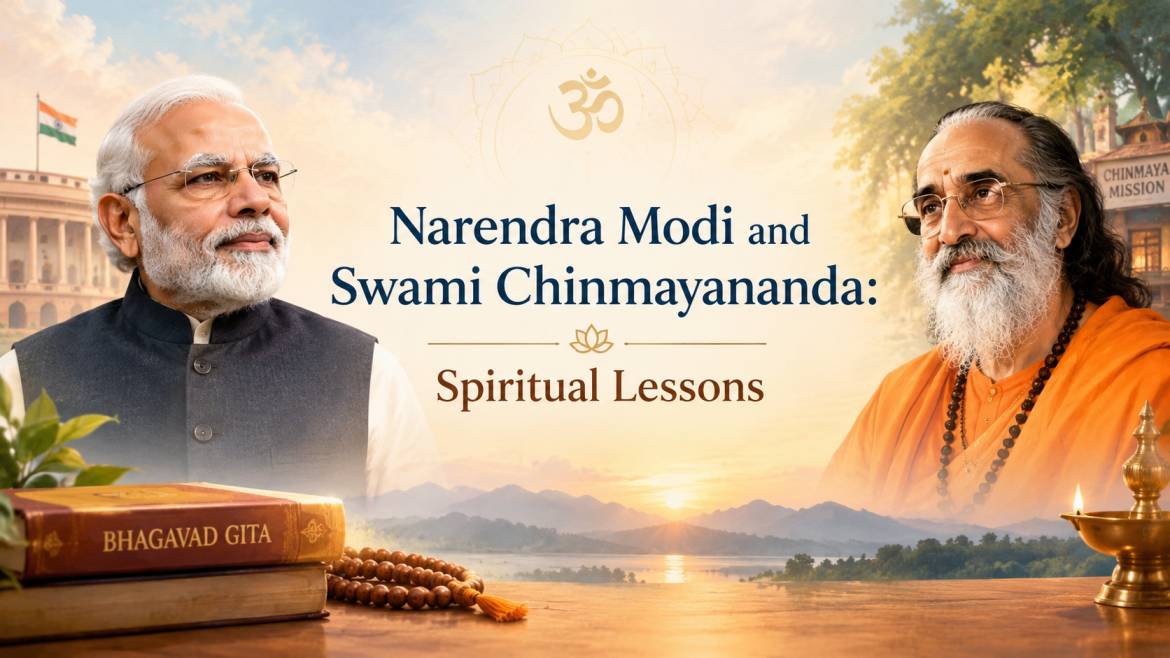
The relationship between Narendra Modi and Swami Chinmayananda offers an interesting perspective on spirituality, leadership, self-discipline, and India’s philosophical traditions. Their connection is documented through Modi’s recollections of meeting the spiritual teacher in Vadodara in 1993 and his public tributes to Chinmayananda’s contribution to Indian spiritual education.
Swami Chinmayananda (1916–1993), the founder of Chinmaya Mission, dedicated his life to explaining the Bhagavad Gita and Advaita Vedanta in accessible language. His teachings emphasised self-knowledge, disciplined action, and service to society.
Although this topic is primarily spiritual and historical rather than astrological, Vedic astrology offers a traditional framework for reflecting on qualities such as wisdom, responsibility, determination, and service. Understanding the symbolism of Jupiter, Saturn, the Sun, and the ninth house can help readers connect these timeless teachings with everyday decisions—without assuming that planetary positions prove a person’s character or spiritual achievements.
Narendra Modi and Swami Chinmayananda: What Was Their Connection?
Narendra Modi recalled meeting Swami Chinmayananda in Vadodara in February–March 1993. Modi had approached him to invite him to the centenary celebrations of the Parliament of the World’s Religions in Chicago, marking 100 years since Swami Vivekananda’s historic address in 1893.
According to Modi’s public recollection in October 2026, their final conversation centred on building youth power and developing a strong, capable India. Chinmayananda accepted the invitation and travelled to the United States, but passed away in San Diego on 3 August 1993, before the Chicago gathering in September.
Modi has also praised Chinmayananda’s ability to combine spiritual knowledge with practical action. During the release of a commemorative coin in 2015, he described the teacher as an example of both Gyan Marg (the path of knowledge) and Karma Marg (the path of action).
This documented association is meaningful, but it is important to distinguish a spiritual encounter and mutual respect from a formal, lifelong guru-shishya relationship. Public accounts establish their meeting and Modi’s admiration for Chinmayananda; they do not, by themselves, establish that Modi was his formal disciple.
Swami Chinmayananda’s Core Spiritual Teachings
1. Self-knowledge through Vedanta
Advaita Vedanta explores the nature of the self and the ultimate reality. Chinmayananda made these philosophical ideas more accessible through lectures, study programmes, and commentaries on Hindu scriptures.
His approach encourages people to examine their thoughts, understand their motivations, and respond to challenges with greater awareness.
Practical lesson: Before making an important decision, identify the difference between an immediate emotional reaction and a considered response.
2. The Bhagavad Gita and disciplined action
The Bhagavad Gita teaches the importance of fulfilling one’s responsibilities while developing a balanced attitude towards success and failure.
A well-known verse explains this principle:
कर्मण्येवाधिकारस्ते मा फलेषु कदाचन।
Meaning: You have a right to action, but should not regard its results as entirely within your control.
The verse comes from Bhagavad Gita 2.47. It does not suggest abandoning goals. Instead, it encourages sincere effort without allowing anxiety about outcomes to dominate every decision.
3. Spiritual growth through service
Chinmayananda connected spiritual understanding with education, youth development, and social contribution. His work demonstrates how philosophical study can extend beyond personal reflection into organised community service.
For modern readers, this teaching can be applied through mentoring young people, helping family members, volunteering, and using professional skills responsibly.
Vedic Astrology: Planets and Houses That Symbolise These Lessons
Vedic astrology, or Jyotish, traditionally associates particular planets and houses with wisdom, discipline, leadership, and spiritual development. These associations are symbolic interpretations within the astrological tradition, not scientifically established explanations of a person’s achievements.
Jupiter (Guru): Knowledge and guidance
Jupiter, known as Guru or Brihaspati, represents wisdom, teachers, ethical judgement, learning, and philosophical understanding in traditional Jyotish.
Its symbolism connects naturally with the study of Vedanta and the importance of learning from experienced teachers.
Practical application:
- Read a passage from the Bhagavad Gita regularly.
- Seek advice from knowledgeable, trustworthy mentors.
- Practise thoughtful decision-making rather than relying on impulse.
Saturn (Shani): Discipline and responsibility
Saturn symbolises perseverance, duty, patience, and the consequences of one’s actions in Vedic astrology.
These qualities can be reflected in a disciplined daily routine, honest work, and the willingness to accept responsibility.
Practical application:
- Complete important tasks consistently.
- Keep promises and respect other people’s time.
- Help people in need without expecting recognition.
The Sun (Surya): Leadership and purpose
The Sun is associated with authority, vitality, confidence, and responsibility. Its traditional symbolism can be used to reflect on leadership that combines clarity with accountability.
A constructive approach to leadership involves listening to different perspectives, communicating clearly, and placing responsibility above personal recognition.
The Ninth and Tenth Houses
The ninth house is traditionally associated with teachers, dharma, higher knowledge, and spiritual principles. The tenth house relates to career, public responsibilities, reputation, and action in the world.
Astrologers may examine these houses, their lords, planetary placements, and relevant dashas when interpreting a birth chart. However, no single placement guarantees wisdom, political success, spiritual attainment, or a particular relationship with a guru.
Practical Spiritual Remedies Inspired by These Teachings
Spiritual practices can help cultivate attention, gratitude, and consistency. They should be approached as personal disciplines, not guaranteed methods of changing planetary outcomes.
Daily practices for wisdom and balance
- For Jupiter: Dedicate time to scripture, learning, or guidance from a qualified teacher. Thursday prayers may be meaningful to those who observe traditional Guru-related practices.
- For Saturn: Follow a consistent routine, fulfil responsibilities, and offer practical help to elderly people or those facing hardship.
- For the Sun: Spend a quiet moment in morning prayer or gratitude. Some Hindu traditions include offering water to Surya at sunrise.
- For spiritual clarity: Read a short passage from the Bhagavad Gita and reflect on how to apply it in daily life.
- For mental discipline: Practise five to ten minutes of quiet breathing or meditation, adjusting the duration to your comfort.
Mantras, fasting, gemstones, and other traditional remedies are matters of personal faith and custom. They should not replace medical care, sound financial planning, professional advice, or responsible decision-making.
Life Lessons for Modern India
The spiritual ideas associated with Chinmayananda’s work and Modi’s public recollections offer several lessons relevant to students, professionals, leaders, and families.
- Knowledge should lead to action: Learning becomes meaningful when applied ethically.
- Discipline supports long-term goals: Regular effort is often more useful than short bursts of motivation.
- Leadership involves responsibility: Authority should be accompanied by accountability and service.
- Spirituality requires reflection: Religious study can encourage people to examine their conduct and assumptions.
- Young people need guidance and opportunity: Mentoring and education help individuals develop confidence and useful skills.
These lessons do not depend on a particular zodiac sign or planetary combination. They can be practised by anyone, regardless of their birth chart or religious background.
Conclusion
Narendra Modi’s documented meetings with Swami Chinmayananda illustrate a connection grounded in spiritual respect and a shared interest in India’s cultural and intellectual traditions. Modi’s recollections highlight Chinmayananda’s emphasis on youth development, spiritual education, and the relationship between personal growth and national progress.
From a Vedic astrology perspective, Jupiter represents wisdom, Saturn represents discipline, the Sun represents leadership, and the ninth and tenth houses symbolise higher principles and worldly responsibilities. These traditional associations provide a framework for reflection rather than proof of destiny.
The most useful takeaway is practical: study thoughtfully, act responsibly, serve others, and remain open to learning. Whether approached through the Bhagavad Gita, Vedanta, or Jyotish, spiritual development becomes more meaningful when its principles improve everyday choices and relationships.