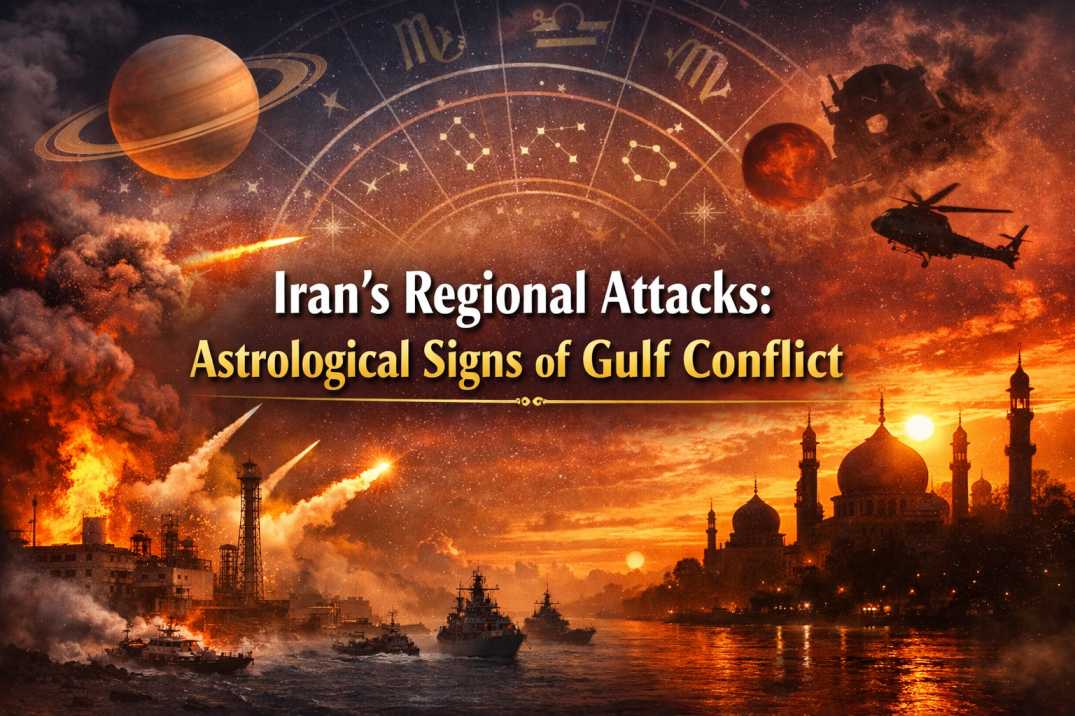
Geopolitical tensions in the Middle East often ripple across the world, affecting oil prices, diplomacy, and global stability. Recent regional attacks linked to Iran have again placed the Gulf region under scrutiny. Countries around the Persian Gulf; including Saudi Arabia, United Arab Emirates, and Qatar are closely watching developments as tensions rise.
From a Vedic astrology perspective, global conflicts are often associated with powerful planetary movements involving Mars (war), Saturn (pressure), and Rahu (unexpected events). When these planets form intense alignments, the world may experience military escalation, diplomatic standoffs, or strategic retaliation.
This article explores what current planetary patterns suggest about the possibility of continued conflict in the Gulf region and how astrology interprets these global cycles.
Planetary Forces Behind Regional Conflict
Mars: The Planet of War and Military Action
In Vedic astrology, Mars (Mangal) represents aggression, military power, and strategic action. When Mars becomes dominant in global charts, nations often adopt assertive or defensive strategies.
Recent planetary cycles indicate:
- Mars transiting a fiery sign increases the likelihood of military demonstrations.
- Strong Mars aspects to Saturn or Rahu can trigger sudden escalations.
- Countries ruled by Mars-dominant charts may respond quickly to perceived threats.
For example, when Mars aligns with Rahu, astrologers often see unexpected attacks, missile activity, or technological warfare.
A classical Sanskrit verse from Brihat Parashara Hora Shastra highlights Mars’ nature:
“भौमः क्रूरो युद्धकारकः”
Mars is fierce and the significator of war.
This does not mean conflict is inevitable, but such alignments often correspond with periods of heightened geopolitical activity.
Saturn: Long-Term Pressure and Strategic Rivalries
While Mars ignites immediate action, Saturn (Shani) represents long-term struggles and geopolitical pressure.
Saturn’s influence often manifests as:
- Extended political standoffs
- Sanctions and economic pressure
- Slow-moving but persistent regional rivalries
In the current planetary climate, Saturn’s position suggests that tensions may remain unresolved for an extended period rather than ending quickly.
Saturn’s involvement can indicate:
- Strategic patience among nations
- Gradual escalation rather than sudden war
- Diplomatic negotiations under pressure
This pattern aligns with real-world geopolitical behavior where conflicts become prolonged strategic contests rather than direct large-scale wars.
Rahu: Sudden Escalations and Technological Warfare
Rahu, the shadow planet in Vedic astrology, is strongly connected to:
- Unexpected events
- Cyber warfare and technology
- Psychological or unconventional warfare
When Rahu interacts with Mars or Saturn, astrologers often observe:
- Surprise attacks or covert operations
- Use of drones, missiles, or electronic warfare
- Confusion in global narratives and information wars
This influence reflects modern geopolitical dynamics where conflicts are increasingly technological and strategic rather than purely battlefield-based.
Key Astrological Periods to Watch (IST)
Astrologers often examine planetary transits and lunar phases to understand potential turning points.
Important windows in the coming cycle may include:
Mars Transit Windows
When Mars shifts signs or forms strong aspects, military activity can increase.
Potential sensitive periods (approximate astrological windows):
- Late evening planetary alignments around 9:30 PM IST
- Lunar conjunction phases around 4:00 AM IST
- New Moon and Full Moon periods
These times do not predict exact events but highlight moments of heightened energetic intensity in global astrology charts.
Zodiac Signs Influencing Global Power Dynamics
In mundane astrology, certain zodiac signs are associated with geopolitical themes.
Aries Influence
- Represents military initiative
- Linked with leadership and decisive action
- Strong Aries energy may encourage bold political moves
Scorpio Influence
- Associated with secrecy, intelligence operations, and strategic depth
- Often linked to covert missions and hidden alliances
Capricorn Influence
- Represents governments, institutions, and state authority
- Strong Capricorn transits often bring structural political shifts
When these signs dominate planetary alignments, geopolitical developments tend to intensify.
Practical Spiritual Remedies for Global Peace
While individuals cannot control world politics, Vedic astrology suggests spiritual practices that promote collective harmony and personal balance.
Mars-Balancing Practices
- Chant Hanuman Chalisa on Tuesdays
- Offer red flowers to Lord Hanuman
- Practice disciplined physical activity or yoga
Saturn Peace Remedies
- Light a sesame oil lamp on Saturdays
- Donate black sesame seeds or blankets
- Serve the elderly or underprivileged
Rahu Stabilization
- Meditation during Brahma Muhurta (around 4:30–5:30 AM IST)
- Avoid spreading misinformation or fear
- Practice mindfulness and emotional restraint
These practices are traditionally believed to reduce the negative expression of planetary energies.
Real-World Relevance of Mundane Astrology
Astrology does not replace political analysis, but it offers an additional symbolic framework for understanding global cycles.
Historically, major geopolitical events—from wars to economic crises—have often coincided with strong Mars-Saturn or Rahu alignments.
Astrologers therefore observe:
- Long planetary cycles
- National charts of countries
- Eclipse patterns affecting geopolitical regions
These insights help astrologers interpret periods of tension and transformation.
Conclusion
The Gulf region continues to experience complex geopolitical dynamics, and recent developments involving Iran have intensified concerns among neighboring states. From a Vedic astrology perspective, the combined influence of Mars, Saturn, and Rahu suggests that tensions may persist in cycles rather than disappearing immediately.
However, astrology also teaches that planetary periods evolve. What begins as conflict can eventually transform into negotiation, strategic balance, or diplomatic realignment.
For individuals observing these events from afar, the best approach is to remain informed, maintain inner balance, and remember that planetary cycles ultimately move toward restoration of cosmic equilibrium.
FAQs
1. Can astrology predict wars or conflicts?
Astrology cannot predict specific wars but can identify periods of heightened tension.
In mundane astrology, planetary alignments—especially involving Mars, Saturn, and Rahu—often correspond with geopolitical instability. These alignments symbolize aggression, pressure, and sudden events.
However, astrology highlights possibilities and cycles, not guaranteed outcomes.
Helpful practices:
- Observe major planetary transits
- Study historical correlations
- Use astrology as a symbolic guide, not absolute prediction
2. Why is Mars linked with war in astrology?
Mars represents aggression, courage, and military strength in Vedic astrology.
Ancient texts describe Mars as a fiery and assertive planet that governs warriors, weapons, and battles. When Mars becomes dominant in global charts, nations may adopt more assertive policies.
In mundane astrology, Mars influences:
- Military actions
- Strategic operations
- Political assertiveness
Mars balancing tips:
- Chant Hanuman Chalisa
- Engage in disciplined physical activity
- Avoid unnecessary anger or conflict
3. What role does Rahu play in modern conflicts?
Rahu symbolizes unconventional warfare and unexpected developments.
Unlike traditional battlefield conflict, Rahu often manifests through cyber attacks, propaganda, technological warfare, and surprise strategies.
Rahu’s influence can bring:
- Sudden escalations
- Misinformation campaigns
- Advanced technological weapons
Rahu-balancing tips:
- Practice meditation
- Avoid fear-based news consumption
- Chant “Om Raam Rahave Namah”
4. Does Saturn cause long-lasting tensions between countries?
Yes, Saturn often indicates prolonged political pressure and unresolved disputes.
Saturn represents discipline, karma, and structural systems such as governments and institutions. When Saturn strongly influences geopolitical charts, conflicts may evolve slowly but persist for years.
Saturn cycles typically involve:
- Diplomatic stalemates
- Economic sanctions
- Strategic patience
Saturn remedies:
- Donate black sesame seeds
- Help the elderly or needy
- Light a sesame oil lamp on Saturdays
5. Can spiritual practices influence global peace?
Spiritual practices promote personal balance and collective positive energy.
While they cannot directly change geopolitical decisions, practices like meditation, prayer, and charitable acts are believed in Vedic tradition to uplift collective consciousness.
Positive practices include:
- Group prayers for peace
- Meditation during Brahma Muhurta
- Charity and service activities