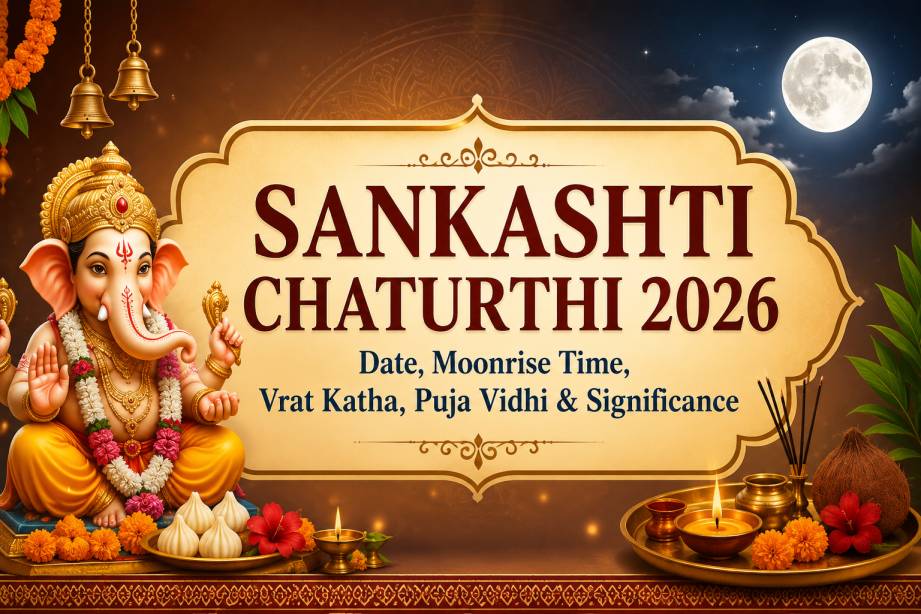
Sankashti Chaturthi is a monthly Hindu vrat dedicated to Lord Ganesha and is observed on the Chaturthi Tithi of Krishna Paksha, after the full moon. Devotees traditionally observe a fast during the day and perform Ganesha Puja after sighting the Moon at night. The fast is associated with overcoming obstacles, developing clarity and seeking Ganesha’s blessings for wisdom and success.
In 2026, Sankashti Chaturthi occurs approximately once every lunar month. The exact Moonrise time varies according to location, so devotees should follow their local Panchang rather than applying one timing throughout India. According to Drik Panchang’s Delhi calculations, the upcoming Heramba Sankashti Chaturthi falls on Monday, August 31, 2026, with Moonrise at approximately 8:29 PM IST. The Krishna Chaturthi Tithi begins at 8:50 AM on August 31 and ends at 7:41 AM on September 1.
Sankashti Chaturthi 2026 Date and Moonrise Time
Sankashti fasting is generally concluded after Moonrise and Ganesha Puja. Since Moonrise changes from city to city, the local timing should be checked before beginning the evening rituals.
Important 2026 Sankashti Chaturthi Dates
According to location-based Panchang calculations, the major Sankashti dates in 2026 include:
- January 6, Tuesday – Lambodara Sankashti
- February 5, Thursday – Dwijapriya Sankashti
- March 6, Friday – Bhalachandra Sankashti
- April 5, Sunday – Vikata Sankashti
- May 5, Tuesday – Ekadanta Sankashti
- June 3/4, Wednesday/Thursday – Vibhuvana Sankashti, depending on local Panchang convention
- July 3, Friday – Krishnapingala Sankashti
- August 2, Sunday – Gajanana Sankashti
- August 31, Monday – Heramba Sankashti
- September 29, Tuesday – Vighnaraja Sankashti
- October 29, Thursday – Vakratunda Sankashti
- November 27, Friday – Ganadhipa Sankashti
- December 26, Saturday – Akhuratha Sankashti
Panchang notes that Sankashti Chaturthi is observed every lunar month, while the name associated with the vrat changes from month to month.
Why Moonrise Is Important
Unlike many daytime Hindu fasts, Sankashti Chaturthi has a strong connection with Moonrise. Devotees generally wait for the Moon to become visible before completing the fast.
The sequence is simple:
- Observe the fast during the day.
- Perform Lord Ganesha Puja in the evening.
- Wait for the local Moonrise.
- Offer Arghya to the Moon.
- Pray to Lord Ganesha.
- Break the fast according to one’s health and traditional family practice.
For Delhi, the August 31, 2026 Moonrise is around 8:29 PM IST. Other cities can have noticeably different timings.
Sankashti Chaturthi Vrat Katha
The traditional Sankashti Chaturthi Vrat Katha emphasizes the power of devotion, discipline and faith in Lord Ganesha.
A commonly narrated tradition tells of a devotee facing serious difficulties and obstacles in life. Despite repeated challenges, the devotee remained devoted to Ganesha and observed the Sankashti vrat with sincerity. Pleased with the devotion, Lord Ganesha removed the obstacles and restored peace and prosperity.
The deeper message of the Katha is not merely about receiving material rewards. It teaches devotees to approach difficulties with patience, discrimination, humility and faith. Ganesha, as Vighnaharta, represents the ability to recognize obstacles and develop the wisdom required to overcome them.
Devotees may read or listen to the Sankashti Chaturthi Vrat Katha after completing the main Puja.
Sankashti Chaturthi Puja Vidhi
The ritual can be performed at home with simple and clean arrangements.
Step-by-Step Puja
- Wake up early and take a bath.
- Wear clean clothes and make a Sankalpa for the vrat.
- Clean the Puja space and place an image or idol of Lord Ganesha.
- Light a diya and incense.
- Offer water, flowers, Durva grass and fruits.
- Apply sandalwood paste and offer sweets such as modak or ladoo.
- Recite “Om Gan Ganapataye Namah” or Ganesha prayers.
- Read the Sankashti Chaturthi Vrat Katha.
- Perform Ganesha Aarti.
- At Moonrise, offer Arghya to the Moon.
- Pray to Lord Ganesha and conclude the fast according to personal and family tradition.
Durva grass and modak are traditionally associated with Ganesha worship and add cultural authenticity to the Puja.
Astrological Significance of Sankashti Chaturthi
From a traditional astrological perspective, Ganesha worship is associated with Budhi, intelligence, discrimination and removal of obstacles. Mercury, or Budha, is also traditionally connected with intellect, communication and analytical ability.
The Moon has particular importance on Sankashti because the vrat culminates around Moonrise. In Jyotish, the Moon represents the mind, emotions, mental stability and adaptability. Therefore, the practice can be viewed symbolically as combining Ganesha’s wisdom with the Moon’s mental influence.
For people experiencing indecision, communication difficulties or mental restlessness, Sankashti observance can become a structured spiritual practice for reflection and discipline. However, individual astrological results depend on the person’s birth chart, planetary periods and transits rather than the festival alone.
Simple Sankashti Chaturthi Remedies
Traditional remedies can be kept simple and practical:
- Offer 21 Durva blades to Lord Ganesha, if available.
- Chant “Om Gan Ganapataye Namah” 108 times.
- Offer modak or another sattvic sweet as Naivedya.
- Donate food to someone in need.
- Avoid unnecessary arguments and harsh speech.
- Spend some time in prayer, meditation or quiet reflection.
- Seek Ganesha’s blessings before beginning an important task.
Fasting should be adapted to one’s health, age and daily responsibilities. People with medical dietary requirements should not undertake restrictive fasting without appropriate professional advice.
Significance in Daily Life
The real-life value of Sankashti Chaturthi extends beyond ritual observance. A monthly vrat creates an opportunity to pause, review one’s priorities and consciously work on habits that create obstacles.
The symbolism is especially relevant to modern life: Ganesha represents thoughtful action before action itself. Instead of reacting impulsively to problems, devotees can use the day to cultivate patience, planning and better decision-making.
Conclusion
Sankashti Chaturthi 2026 provides devotees with a monthly opportunity to worship Lord Ganesha, observe discipline and seek clarity while dealing with life’s challenges. The upcoming Heramba Sankashti on August 31, 2026 is particularly important for devotees planning their next observance, with Delhi’s Moonrise occurring at approximately 8:29 PM IST.
The most important practical point is to check the local Moonrise and Panchang timings, because they differ across Indian cities. Whether observed through fasting, Puja, Katha, mantra or quiet reflection, Sankashti Chaturthi can serve as a meaningful monthly practice for developing patience, wisdom and inner discipline.
FAQs
1. When is Sankashti Chaturthi in August 2026?
August 31, 2026, Monday is the next Sankashti Chaturthi in August 2026.
It is known as Heramba Sankashti and falls during Bhadrapada Krishna Paksha according to the Purnimanta calendar. In Delhi, the Chaturthi Tithi begins at 8:50 AM on August 31 and ends at 7:41 AM on September 1.
Tips: Check your city’s Panchang for Moonrise before planning the evening Puja.
2. What is the Moonrise time for Sankashti Chaturthi 2026?
The Moonrise time depends on the city, so there is no single Moonrise time for all of India.
For August 31, 2026, the Delhi Panchang gives a Moonrise of approximately 8:29 PM IST. Mumbai, Kolkata, Bengaluru and other cities can have different timings.
Tips: Use the local Moonrise time to determine when to offer Arghya and conclude the fast.
3. What should be offered to Lord Ganesha on Sankashti Chaturthi?
Durva grass, flowers, fruits and modak or other traditional sweets are commonly offered to Lord Ganesha.
The offerings symbolize devotion and purity rather than material value. A simple home Puja performed with sincerity is traditionally considered appropriate.
Recommended offerings:
- Durva grass
- Modak or ladoo
- Fruits
- Flowers
- Sandalwood
- Diya and incense
4. Can Sankashti Chaturthi fasting be done without food?
Yes, traditional fasting practices vary, and devotees may choose a suitable form of fasting according to health and personal circumstances.
Some observe a strict fast, while others take fruits, milk or permitted fasting foods. There is no need to compromise health to follow a religious practice.
Remember: Choose a sustainable fasting method and follow medical dietary requirements when applicable.
5. Why is the Moon worshipped on Sankashti Chaturthi?
The fast is traditionally concluded after Moonrise, making the Moon an important part of the Sankashti ritual.
In Jyotish symbolism, the Moon represents the mind and emotional state, while Ganesha represents wisdom and obstacle removal. The ritual therefore carries a meaningful theme of bringing greater clarity and steadiness to the mind.
Practice: Offer Arghya to the Moon and spend a few quiet moments in prayer after the evening Puja.
6. Which mantra is suitable for Sankashti Chaturthi?
“Om Gan Ganapataye Namah” is a simple and widely used Ganesha mantra for Sankashti Chaturthi.
Devotees can chant it with concentration before or after Puja. The emphasis should be on consistency and sincere prayer rather than treating a particular number of repetitions as a guarantee of results.
Simple practice: Chant the mantra 108 times while maintaining a calm and focused mind.