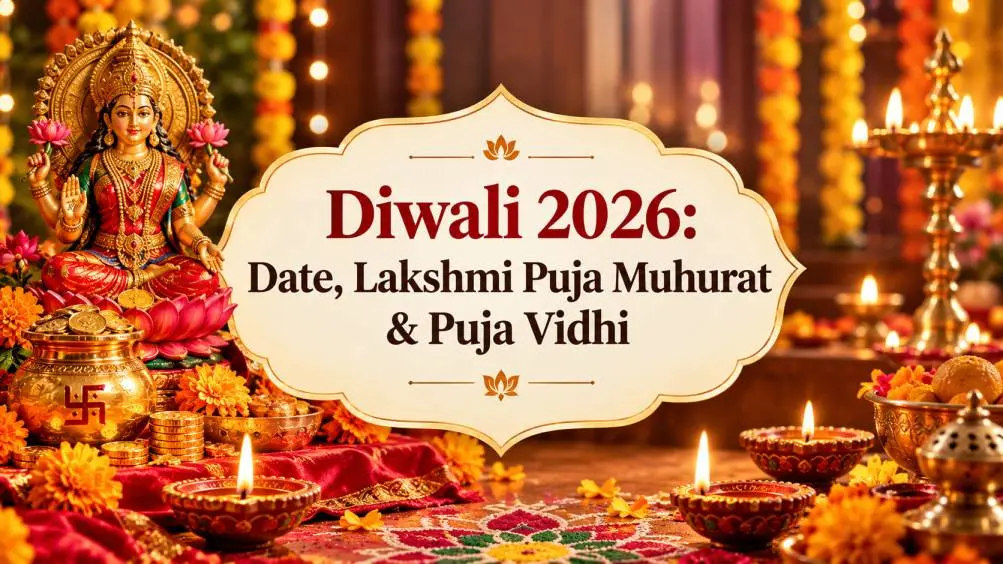
Diwali, also known as Deepavali, is one of India’s most widely celebrated festivals, symbolising the victory of light over darkness and good over evil. Families decorate their homes with diyas, prepare festive foods, exchange gifts, and worship Goddess Lakshmi for prosperity and well-being. Lakshmi Puja is traditionally performed on the Amavasya Tithi of the Hindu month of Kartik.
Diwali 2026 is expected to fall on Sunday, 8 November 2026, according to the commonly followed festival calendar. However, festival dates and puja timings should be verified against a reliable Panchang because local traditions and calendar calculations can differ.
From a Vedic astrology perspective, Diwali is associated with Lakshmi worship, auspicious beginnings, and reflection on wealth and responsibility. Knowing the date, local Muhurat, and traditional puja vidhi can help families prepare for the festival with devotion and clarity.
Diwali 2026: Date and Important Details
- Festival: Diwali (Deepavali)
- Expected date: Sunday, 8 November 2026
- Main worship: Goddess Lakshmi and Lord Ganesha
- Lunar occasion: Kartik Amavasya, subject to Panchang confirmation
- Traditionally associated themes: Prosperity, wisdom, cleanliness, gratitude, and new beginnings
Diwali is the central day of a five-day festive period that generally includes Dhanteras, Naraka Chaturdashi or Choti Diwali, Lakshmi Puja, Govardhan Puja, and Bhai Dooj. The exact dates of individual observances should be checked in a local Hindu calendar.
Lakshmi Puja Muhurat for Diwali 2026
Lakshmi Puja is traditionally performed during the evening, with many household observances planned around Pradosh Kaal. Some traditions also consider the Vrishabha Lagna, or Taurus ascendant, when selecting the puja period.
Exact Lakshmi Puja Muhurat timings for 8 November 2026 are not included here because a verified city-specific Panchang calculation is needed. Timings can vary with location, sunset, and the applicable lunar-day calculations. All clock times should be read in Indian Standard Time (IST).
How to Choose the Right Puja Timing
Before finalising your celebration:
- Confirm the Diwali date and Amavasya Tithi for your city.
- Check the local Pradosh Kaal and recommended Lakshmi Puja Muhurat.
- Follow your family’s established religious tradition where applicable.
- Prepare the puja area in advance so the ritual can begin calmly within the chosen period.
A Muhurat is a traditional religious timing, not a guarantee of financial success or a particular outcome.
Lakshmi Puja Vidhi: Step-by-Step Guide
Lakshmi Puja is generally performed in a clean, peaceful space with offerings made according to family customs.
1. Clean and Decorate the Home
Clean the house before the festival and organise the worship area. Decorate the entrance with rangoli, flowers, and diyas. Many families consider cleanliness a symbol of readiness to welcome prosperity.
Keep open flames away from curtains, decorations, and other combustible materials.
2. Prepare the Puja Samagri
Common items include:
- Images or idols of Goddess Lakshmi and Lord Ganesha
- A clean puja chowki and red or yellow cloth
- Flowers, garlands, and seasonal fruits
- Kumkum, turmeric, rice grains, and sandalwood paste
- Diyas, cotton wicks, and suitable oil or ghee
- Incense, sweets, and a water vessel
- Coins or a household account book, if customary
The exact list varies by region and family tradition. Elaborate arrangements are not necessary for a sincere observance.
3. Worship Lord Ganesha First
Begin with a prayer to Lord Ganesha, who is traditionally worshipped before other deities during auspicious ceremonies. Offer flowers, rice, and a diya according to your custom.
A commonly recited mantra is:
Om Gan Ganapataye Namah.
The mantra is an invocation seeking wisdom and the removal of obstacles.
4. Perform Goddess Lakshmi Puja
Place the image or idol of Goddess Lakshmi in the prepared worship area. Offer flowers, kumkum, sweets, fruits, and a lit diya. Recite a Lakshmi mantra or devotional prayer that your family follows.
A widely used mantra is:
Om Shreem Mahalakshmyai Namah.
Offerings and recitations differ among regional traditions. Follow the method you know or the guidance of a trusted priest.
5. Light Diyas and Offer Prasad
Light diyas around the home where it is safe to do so. Offer prasad to the deities and distribute it among family members after the puja.
Many families also pray for wisdom in managing money, harmony at home, good health, and the ability to support others.
6. Complete the Puja Respectfully
Conclude with an aarti and a prayer of gratitude. Store worship items respectfully and maintain fire sDiwali 2026: City-Wise Lakshmi Puja Timings
The following timings provide examples of the traditional evening Lakshmi Puja Muhurat for selected Indian cities on Sunday, 8 November 2026.
| City | Lakshmi Puja Muhurat (IST) |
| New Delhi | 5:54 PM–7:50 PM |
| Indore | 6:10 PM–8:08 PM |
| Mumbai | 6:27 PM–8:27 PM |
| Jaipur | 6:03 PM–8:00 PM |
| Kolkata | 5:20 PM–7:18 PM |
These timings are based on published city-specific Panchang calculations and may differ by a minute or two across sources. Check the local consult a local priest before performing the puja. The listed times are local Indian times (IST).
Astrological Significance of Diwali
Amavasya and Goddess Lakshmi
Diwali falls on Kartik Amavasya in the commonly followed Hindu calendar. Amavasya is the new-moon lunar phase, traditionally associated with worship, remembrance, and spiritual observances.
Lakshmi Puja during the evening is a central Diwali custom. Devotees pray for prosperity, harmony, and the wisdom to use resources responsibly.
The Significance of Venus and Jupiter
In Vedic astrology, Venus (Shukra) is associated with comforts, beauty, luxury, and material enjoyment. Jupiter (Guru or Brihaspati) is traditionally associated with wisdom, ethical conduct, learning, and expansion.
These planetary associations offer a symbolic way to reflect on prosperity: material comfort is valuable when balanced with sound judgement and responsible choices. They should not be interpreted as scientific proof that a particular ritual will change financial outcomes.
Simple Diwali Remedies
You may follow these traditional practices according to your family’s beliefs:
- Lakshmi mantra: Recite “Om Shreem Mahalakshmyai Namah” during worship.
- Charity: Donate food, clothes, or other useful items to people in need.
- Financial planning: Review savings, household expenses, and financial goals.
- Clean surroundings: Organise your home and worship space before the festival.
- Safe celebrations: Use diyas carefully and choose environmentally considerate festivities.
These practices can make Diwali more meaningful without requiring expensive offerings or costly rituals.
Conclusion
Diwali 2026 will be celebrated on Sunday, 8 November, with Lakshmi Puja traditionally performed during the evening Pradosh period while the relevant lunar conditions are present. The exact Shubh Muhurat depends on your city, so checking a reliable local Panchang is an important step before planning the ceremony.
By cleaning your home, preparing puja samagri, worshipping Goddess Lakshmi and Lord Ganesha, and lighting diyas safely, you can observe the festival in a thoughtful way. Traditional mantras, charity, and gratitude may also deepen its spiritual meaning.
Remember that prosperity involves more than rituals: good health, supportive relationships, financial discipline, and ethical decisions matter in everyday life. Celebrate according to your beliefs and family customs, and let Diwali inspire a balanced and hopeful beginning.
Frequently Asked Questions (FAQs)
1. When is Diwali in 2026?
Diwali will be celebrated on Sunday, 8 November 2026, according to the commonly followed Indian festival calendar.
The main Lakshmi Puja is traditionally performed in the evening when Kartik Amavasya coincides with the appropriate period. Some regional observances may follow additional customs.
Tip: Confirm the date with your local Panchang before finalising puja preparations.
2. What is the Lakshmi Puja Muhurat for Diwali 2026?
The Lakshmi Puja Muhurat varies by city; for example, published timings for New Delhi are approximately 5:54 PM–7:50 PM IST on 8 November 2026.
These timings are based on the overlap of traditional astrological and lunar-calendar considerations. Other cities have different sunset times and corresponding Muhurats.
Tip: Use a city-specific Panchang rather than applying Delhi’s timings throughout India.
3. What items are needed for Diwali Lakshmi Puja?
Common puja samagri includes images of Lakshmi and Ganesha, flowers, kumkum, rice grains, a diya, incense, sweets, fruits, and a clean worship vessel.
Families may also prepare a kalash, coins, a puja thali, and other items according to their regional traditions. The list does not need to be elaborate.
Tip: Prepare the essentials in advance and keep the puja area clean and safe.
4. Why is Lakshmi Puja performed on Diwali?
Lakshmi Puja is performed to honour Goddess Lakshmi, who represents prosperity, abundance, and well-being in Hindu tradition.
Devotees pray for harmony, good fortune, and responsible use of resources. These are religious beliefs and should not be treated as guarantees of wealth.
Tip: Combine prayer with gratitude, generosity, and careful financial planning.
5. What is the significance of Amavasya on Diwali?
Amavasya is the new-moon lunar phase, and Diwali is traditionally observed on Kartik Amavasya.
The festival’s lamps symbolically illuminate the darkest night and represent hope, knowledge, and the victory of good over evil. Regional interpretations and accompanying rituals may vary.
Tip: Light diyas safely and use the occasion to reflect on positive changes in daily life.
6. Which mantra is recited during Lakshmi Puja?
“Om Shreem Mahalakshmyai Namah” is a commonly recited mantra dedicated to Goddess Lakshmi.
Devotees may repeat it during puja as an expression of devotion and a prayer for well-being. Families can also follow their customary Lakshmi aarti or other traditional prayers.
Tip: Recite the mantra calmly and respectfully; elaborate rituals are not essential for every household.
7. Can Lakshmi Puja be performed at home without a priest?
Yes, families can perform a simple Lakshmi-Ganesha puja at home according to their beliefs and traditions.
Clean the worship area, arrange basic offerings, offer prayers, light a diya safely, and conclude with an aarti. People who follow a specific ritual tradition may consult a priest for guidance.
Tip: Focus on sincere observance, preparation, and safety rather than feeling pressured to perform every ritual.
8. What should be avoided during Diwali celebrations?
It is sensible to avoid unsafe firework use, unattended flames, excessive spending, and unnecessary waste during Diwali.
Some families also follow religious restrictions concerning food, conduct, or particular activities. These customs vary, so follow the practices meaningful to your household.
Tip: Celebrate responsibly, protect children and pets, and keep emergency precautions in mind.
afety throughout the celebration. Never leave burning diyas or candles unattended.