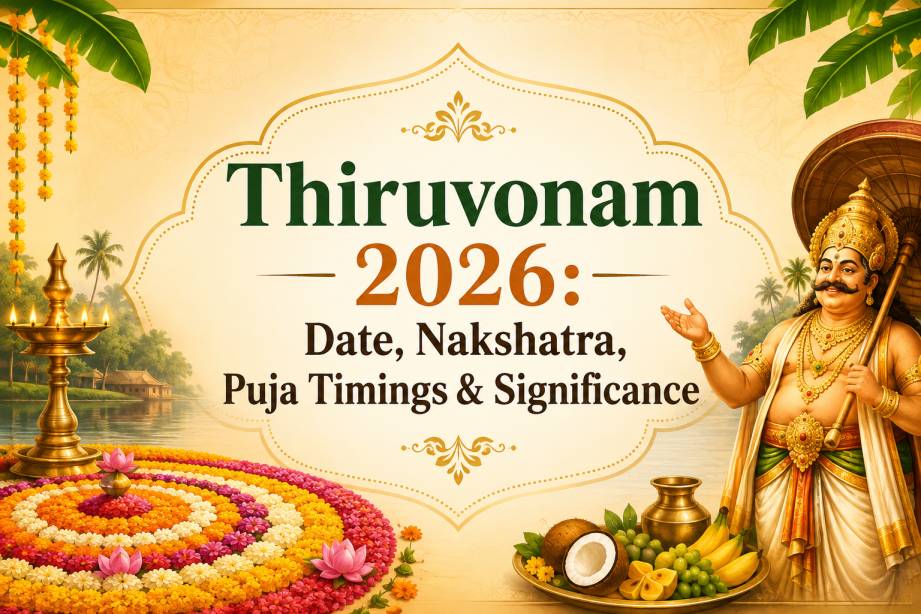
Thiruvonam 2026 will be celebrated on Wednesday, August 26, 2026, as the most important day of the traditional 10-day Onam festival in Kerala. Thiruvonam is associated with Shravana Nakshatra, known as Thiruvonam in Malayalam, and falls during the Malayalam month of Chingam.
Unlike festivals determined primarily by a lunar tithi, the main Onam date is traditionally identified through the occurrence of Thiruvonam Nakshatra in the month of Chingam. The festival carries cultural, spiritual and astrological importance through its association with Lord Vishnu’s Vamana Avatar and King Mahabali.
For devotees, Thiruvonam is a day for gratitude, family harmony, prayer, charity and remembrance of values such as generosity and righteous conduct.
Thiruvonam 2026 Date and Nakshatra Timings
The main observance will take place on Wednesday, August 26, 2026.
According to Panchang calculations for Kerala, Thiruvonam Nakshatra begins at 10:51 PM on August 25 and ends at 12:48 AM on August 27, 2026. Therefore, the nakshatra prevails during the important daytime observance on August 26.
Quick Panchang Details
- Festival: Thiruvonam / Onam
- Date: Wednesday, August 26, 2026
- Malayalam Month: Chingam
- Nakshatra: Thiruvonam (Shravana)
- Nakshatra Begins: August 25 at 10:51 PM IST
- Nakshatra Ends: August 27 at 12:48 AM IST
- Main Deities/Traditions: Lord Vishnu in Vamana form and King Mahabali
- Festival Duration: Atham to Thiruvonam, traditionally 10 days
Because Panchang calculations can vary slightly by location, devotees outside Kerala should check their local Panchang before following a location-specific muhurat.
Thiruvonam Puja Timings 2026
There is no single universally fixed Thiruvonam puja muhurat applicable to every household. Onam observances are closely connected with the daytime presence of Thiruvonam Nakshatra and local Kerala traditions.
For household worship, devotees can preferably complete their morning prayers, lamp lighting and offerings after sunrise, while maintaining the family’s traditional puja schedule.
A practical Thiruvonam worship routine can include:
- Early morning: Bath, house cleaning and lighting of the Nilavilakku.
- Morning: Pookalam preparation and prayers to Lord Vishnu and remembrance of Mahabali.
- Late morning to afternoon: Preparation and offering of Onasadya.
- Evening: Lighting lamps and offering prayers with family members.
The exact sunrise and muhurat can differ between Thiruvananthapuram, Kochi, Thrissur, Kozhikode and other locations, so a city-specific Malayalam Panchang is preferable for precise timing.
Astrological Significance of Thiruvonam Nakshatra
In Vedic astrology, Shravana Nakshatra is traditionally associated with listening, learning, communication, knowledge and the preservation of wisdom. Its ruling planet is Moon (Chandra), while its presiding deity is Lord Vishnu.
This makes Thiruvonam symbolically relevant for activities connected with:
- Learning and acquiring knowledge
- Listening to elders and teachers
- Spiritual study
- Family discussions
- Maintaining relationships
- Charity and community service
- Setting disciplined personal goals
The connection with Vishnu also gives the festival a theme of preservation, balance and dharma rather than material achievement alone.
Thiruvonam and the Zodiac
Thiruvonam, or Shravana, falls within Makara Rashi (Capricorn) in the sidereal zodiac. This gives the nakshatra a practical and disciplined dimension.
For astrology enthusiasts, the symbolism can be understood as a combination of Moon’s emotional awareness and Capricorn’s structured approach. It is therefore a suitable occasion to reflect on whether personal goals are supported by patience, responsibility and consistent effort.
This should be treated as a traditional astrological interpretation rather than a guarantee of specific events.
Why Is Thiruvonam Important?
The central story of Onam revolves around King Mahabali, remembered in Kerala tradition as a generous and respected ruler. According to the traditional narrative, Lord Vishnu appeared as Vamana and later granted Mahabali permission to return to his people periodically.
Thiruvonam celebrates this symbolic homecoming and the values associated with Mahabali’s rule.
The festival therefore represents:
- Generosity – sharing food and resources with others.
- Equality – welcoming people without social barriers.
- Gratitude – acknowledging nature, agriculture and prosperity.
- Family unity – bringing relatives together.
- Dharma – remembering ethical and responsible conduct.
The famous Pookalam, traditional Onasadya, temple visits, cultural performances and family gatherings make these values part of everyday celebration.
Thiruvonam Puja Vidhi and Simple Remedies
A simple home observance does not need elaborate arrangements. The emphasis can remain on cleanliness, devotion and gratitude.
Suggested Puja Steps
- Clean the prayer area and entrance of the home.
- Take a bath and wear clean traditional clothes.
- Light a Nilavilakku or another clean lamp.
- Create or complete the Thiruvonam Pookalam.
- Offer flowers, fruits and traditional food.
- Pray to Lord Vishnu and remember the story of Mahabali.
- Recite “Om Namo Bhagavate Vasudevaya” with concentration.
- Share food with family members, guests or someone in need.
- Consider making a donation or offering food as a form of seva.
Practical Thiruvonam Remedies
For those who follow traditional astrological remedies, simple actions are more appropriate than expensive rituals:
- Donate food to people who need it.
- Offer fruits or flowers at a Vishnu temple.
- Read or listen to Vishnu-related devotional literature.
- Respect parents, teachers and elders.
- Avoid unnecessary arguments during the festival.
- Practice mindful listening and compassionate communication.
These practices connect well with the traditional themes of Shravana Nakshatra: listening, learning and preserving wisdom.
Thiruvonam 2026 and Real-Life Relevance
The deeper value of Thiruvonam goes beyond astrology. In modern life, the festival provides an opportunity to slow down and reconnect with family, culture and community.
The tradition of preparing and sharing Onasadya encourages collective participation. Pookalam reflects creativity and patience, while the story of Mahabali encourages reflection on generosity and responsible leadership.
For young people especially, Thiruvonam can be a meaningful way to learn about Kerala’s history, Malayalam traditions, Hindu mythology and the broader Indian festival calendar.
Conclusion
Thiruvonam 2026 will be observed on Wednesday, August 26, with Thiruvonam Nakshatra prevailing from August 25 night until early August 27.
Astrologically, Shravana or Thiruvonam Nakshatra is connected with listening, knowledge, discipline and the sustaining energy traditionally associated with Lord Vishnu. Culturally, the day celebrates the return of King Mahabali and highlights generosity, equality, gratitude and family unity.
Rather than focusing only on a particular muhurat or predicted outcome, devotees can use Thiruvonam as a day for prayer, seva, mindful communication and meaningful family time. For exact puja timings, always consult the Panchang for your specific city and follow your family tradition.
FAQs
1. When is Thiruvonam 2026?
Thiruvonam 2026 will be celebrated on Wednesday, August 26, 2026.
It is the tenth and most important day of the traditional Onam celebrations in Kerala. The festival is observed during the Malayalam month of Chingam when Thiruvonam Nakshatra prevails.
Related tips:
- Check your local Panchang for exact timings.
- Begin the day with cleanliness and prayer.
- Complete the Pookalam according to family tradition.
2. What is the Thiruvonam Nakshatra timing in 2026?
Thiruvonam Nakshatra begins at 10:51 PM on August 25 and ends at 12:48 AM on August 27, 2026, in the Kerala Panchang calculations.
This means Thiruvonam Nakshatra remains active throughout the main daytime celebration on August 26. Exact calculations may vary slightly according to location.
Related tips:
- Use a city-specific Panchang when planning rituals.
- Avoid applying timings from another city without checking.
- Follow established family customs for puja.
3. What is the significance of Thiruvonam Nakshatra?
Thiruvonam, known as Shravana in Sanskrit, is traditionally associated with listening, learning, knowledge and Lord Vishnu.
In Vedic astrology, Shravana is ruled by the Moon and falls in Makara Rashi. Its symbolism encourages attentive listening, disciplined learning and preservation of knowledge.
Related practices:
- Read Vishnu-related scriptures.
- Listen to devotional recitations.
- Spend time learning from elders and teachers.
4. Who is worshipped on Thiruvonam?
Thiruvonam is traditionally associated with Lord Vishnu, particularly his Vamana Avatar, while King Mahabali is remembered as the central figure of the Onam tradition.
The festival’s mythology connects Vamana and Mahabali through themes of dharma, devotion, generosity and humility. Many families combine devotional worship with cultural traditions such as Pookalam and Onasadya.
Simple observances:
- Light a traditional lamp.
- Offer flowers and fruits.
- Recite “Om Namo Bhagavate Vasudevaya.”
- Share food with others.
5. What should we do on Thiruvonam 2026?
Devotees can clean the home, prepare a Pookalam, offer prayers, prepare Onasadya and spend meaningful time with family.
The festival is traditionally a celebration of prosperity, gratitude and community rather than merely an individual ritual. Acts of charity and food sharing can add a practical dimension to the observance.
Good practices:
- Keep the home and prayer space clean.
- Wear clean clothes.
- Offer food to guests or people in need.
- Avoid unnecessary conflict.
6. Is there a fixed Thiruvonam puja muhurat?
There is no single universal puja time for every location and household; morning worship during the festival day is a practical traditional choice.
Because sunrise, nakshatra calculations and other Panchang elements vary by location, devotees should use their local Malayalam or regional Panchang for an exact muhurat.
For accurate observance:
- Check your city-specific Panchang.
- Follow your family tradition.
- Give importance to devotion and cleanliness over elaborate rituals.